On 3 February 1928, a ship carrying seven British parliamentarians docked at Bombay. They had been sent to decide how India should be governed for the next stage of its constitutional life, and none of them was Indian. They were met with black flags, shuttered shops and a slogan that would follow them across the country for more than a year: "Simon Go Back."
The Indian Statutory Commission, better known by its chairman's name, was meant to be a routine review. Instead it gave a divided national movement a cause to agree on, cost one of its best-known leaders his life, and pushed Indians to write a constitution of their own. Within two years of the commission's arrival, the Congress had formally adopted complete independence.
Seven men from Westminster
The Government of India Act of 1919 had promised that a commission would review how its reforms were working after ten years. That would have meant 1929. In November 1927 the Conservative government in London brought the review forward by two years. Historians generally read this as a political calculation: the Conservatives expected that a general election due by 1929 might bring Labour to power, and preferred to choose the commissioners themselves (Sumit Sarkar, Modern India[4]).
The man chosen to lead it was Sir John Simon, a senior Liberal lawyer and MP. The royal warrant named six others, all from the two Houses of Parliament: Viscount Burnham, Lord Strathcona, Edward Cadogan, George Lane-Fox, and two Labour members, Clement Attlee and Vernon Hartshorn, who replaced the ailing Stephen Walsh before the commission first met (Indian Statutory Commission, Report, Vol. 1[1]). Attlee would be Prime Minister when India became independent twenty years later.
The government's explanation for leaving out Indians was that this was a parliamentary commission, so its members had to come from Parliament. Few Indians accepted the argument. The commission was there to judge whether Indians were fit for more self-government, and Indians were to have no say in the verdict. The Secretary of State for India, Lord Birkenhead, made things worse. He doubted that Indians could ever agree among themselves, and challenged them to produce a constitution all their parties would accept (Bipan Chandra et al., India's Struggle for Independence[3]).
"Simon Go Back"
The insult brought together groups that had spent the 1920s apart. After Non-Cooperation was called off in 1922 and the Khilafat alliance fell apart, the national movement had split into factions and Hindu-Muslim relations had worsened through a series of riots. Now the Indian National Congress, at its Madras session in December 1927, resolved to boycott the commission "at every stage and in every form." The same session declared complete national independence to be the Congress's goal. The Liberal Federation of Tej Bahadur Sapru joined the boycott, as did the Hindu Mahasabha and the section of the Muslim League that followed Muhammad Ali Jinnah. A rival League faction under Sir Muhammad Shafi chose to cooperate.
On the day the commission landed, a hartal closed shops and businesses in Bombay, Calcutta, Madras, Delhi, Lahore and other cities. Wherever the commissioners went, on their first tour that winter and on a second, longer one from October 1928 to April 1929, they were met by black-flag processions and crowds shouting the same three words (Bipan Chandra et al., India's Struggle for Independence[3]). In the Central Legislative Assembly, members carried a resolution moved by Lala Lajpat Rai refusing to have anything to do with the commission.
The boycott was never total. Several provincial councils set up committees to work alongside the commission, and some groups that felt the Congress did not speak for them chose to give evidence. Among them was B. R. Ambedkar, who submitted a memorandum and testified on behalf of the Depressed Classes, arguing for reserved seats for them in the legislatures under adult suffrage.
The lathis at Lahore
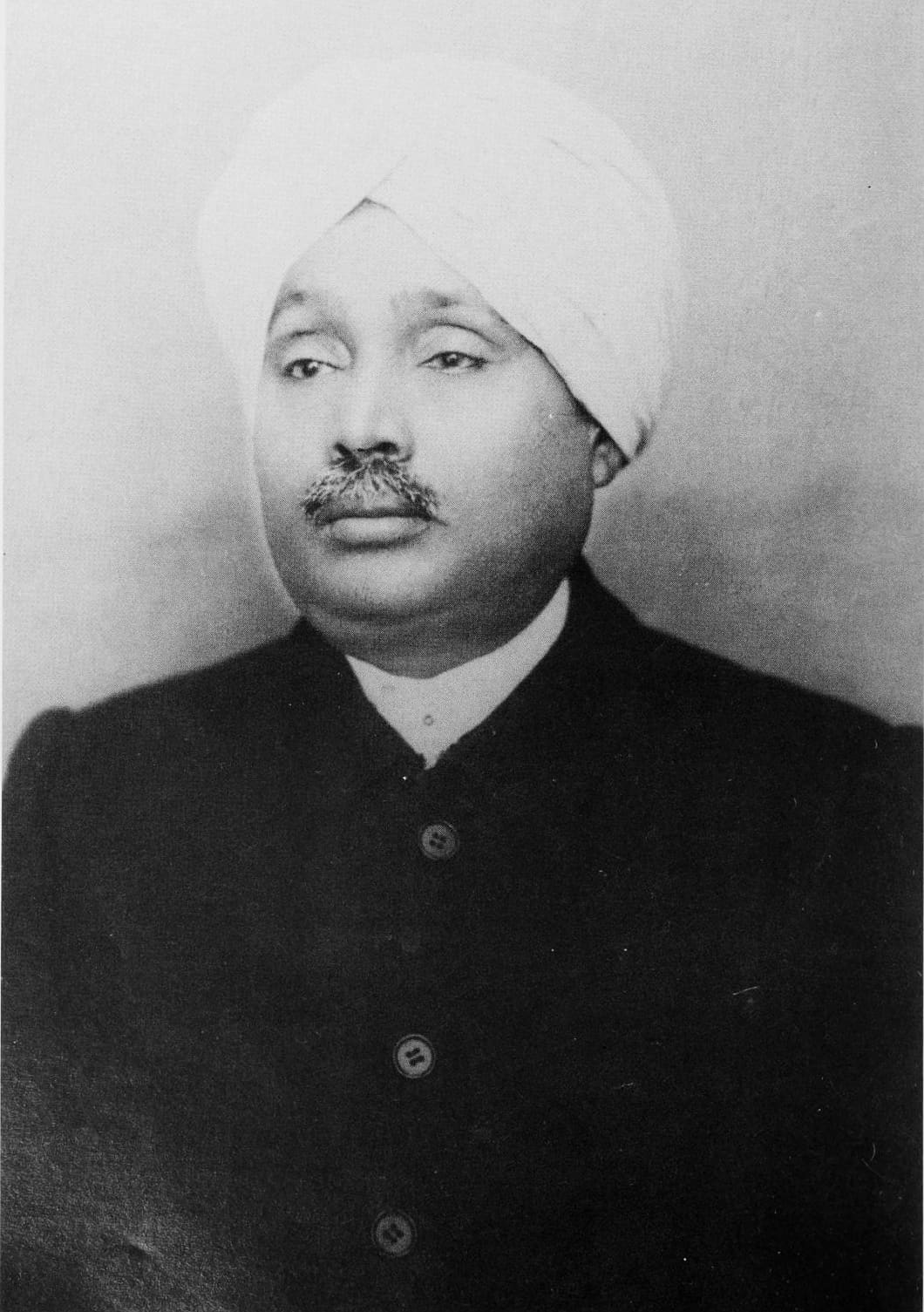
On 30 October 1928 the commission arrived in Lahore. Lala Lajpat Rai, the 63-year-old Punjab leader who had been one of the "Lal-Bal-Pal" trio of the Swadeshi years, led a silent march to the railway station to meet it with black flags. The police superintendent, James Scott, ordered a lathi charge, and Rai was struck repeatedly on the chest. That evening he told a public meeting that the blows struck at him would be "the last nails in the coffin of British rule in India."
He died on 17 November 1928. The government denied that the beating had caused his death, and Rai had a history of heart trouble, so the medical link was disputed then and cannot be settled now. To nationalists it made no difference. A month later, on 17 December, Bhagat Singh and Shivaram Rajguru, members of the Hindustan Socialist Republican Association, shot dead a young assistant superintendent, John Saunders, in Lahore, mistaking him for Scott (Bipan Chandra et al., India's Struggle for Independence[3]). The killing made Bhagat Singh, already active in revolutionary politics, one of the best-known figures of the freedom struggle.
Lahore was not the only place where protesters were beaten. At Lucknow in late November, police charged a procession that included Jawaharlal Nehru and Govind Ballabh Pant. Pant was left with injuries that troubled him for the rest of his life.
India's own constitution
Birkenhead's challenge was taken up. An All Parties Conference set up a committee chaired by Motilal Nehru, with members including Tej Bahadur Sapru, Subhas Chandra Bose, Ali Imam, Shuaib Qureshi, M. S. Aney and Sardar Mangal Singh, chosen so that the main Hindu, Muslim, Sikh and Liberal viewpoints were represented (All Parties Conference, Report of the Committee[2]). Its report, published in August 1928, was the most complete constitution Indians had yet drafted for themselves, and the first agreed by a committee of all the main parties.
The Nehru Report asked for dominion status, the same self-government within the empire that Canada and Australia had. It proposed joint electorates instead of the separate Muslim electorates in place since 1909, with seats reserved for Muslims at the centre and in provinces where they were a minority, but not in Punjab and Bengal, where they were a majority. It also set out a list of fundamental rights, adult suffrage, and equal rights for women, ideas that would return, much developed, in the Constitution of 1950.
The consensus did not hold. Younger Congress leaders, Jawaharlal Nehru and Subhas Bose among them, objected that dominion status fell short of the independence the party had declared as its goal at Madras. At an All Parties Convention in Calcutta in December 1928, Jinnah proposed amendments: a third of the seats in the central legislature for Muslims, reserved seats in Punjab and Bengal in proportion to population, and residuary powers for the provinces. They were voted down. Jinnah went on to set out his own Fourteen Points in March 1929, and the brief alliance between his League and the Congress came apart.
A report already out of date
The Congress session at Calcutta that December reached a compromise. It accepted the Nehru Report but gave the British government until the end of 1929 to accept dominion status, after which the Congress would demand complete independence and launch a campaign of civil disobedience. On 31 October 1929 the Viceroy, Lord Irwin, announced that dominion status was the natural goal of India's constitutional progress and that a Round Table Conference would be held in London. Simon, whose commission had not yet reported, was unhappy that the announcement had been made in advance of its findings. To the Congress, the promise was too vague. At Lahore in December 1929 it adopted purna swaraj, complete independence, as its goal, and within months Gandhi had begun the Salt March.
The commission's report was signed in May 1930 and published soon afterwards, in two volumes. It recommended ending dyarchy, the system of divided power in the provinces, and giving the provinces responsible government. It kept separate electorates, proposed no responsible government at the centre, and did not mention dominion status (Indian Statutory Commission, Report, Vol. 2[5]). By then the Round Table Conferences had taken its place as the forum where India's future would be argued, though parts of its provincial scheme reappeared in the Government of India Act of 1935.