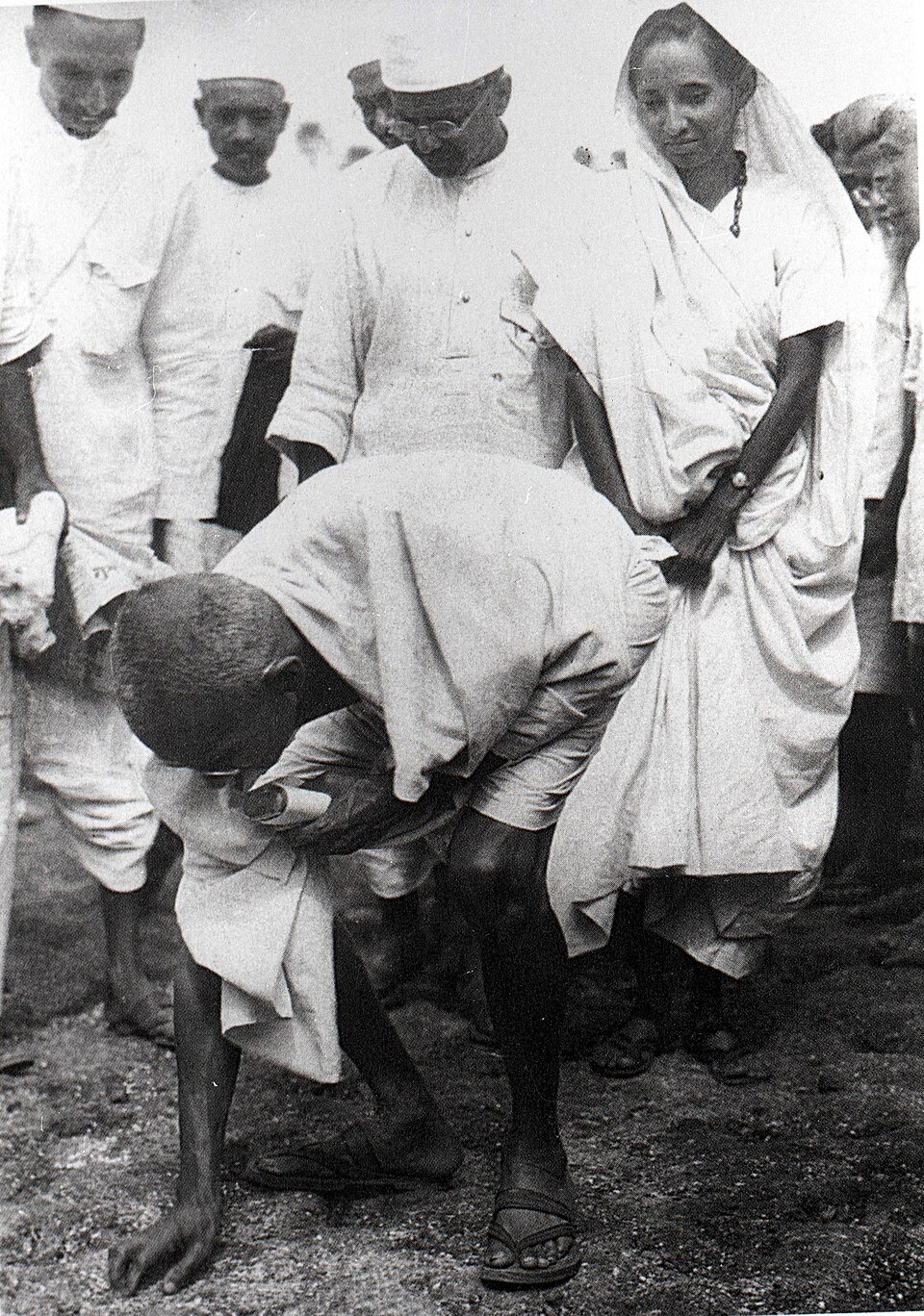
On 12 March 1930, Mahatma Gandhi set out from his Sabarmati Ashram near Ahmedabad with a small group of followers — accounts differ slightly on the exact number, generally placing it between 78 and 80 — on a 24-day, roughly 390-kilometre walk to the coastal village of Dandi in Gujarat. The march, undertaken to break the British salt laws, opened the Civil Disobedience Movement and followed the Indian National Congress's declaration, at its Lahore session that January, of Purna Swaraj, or complete independence, as its goal rather than the more limited dominion status Congress had previously sought. Gandhi chose salt deliberately: under British law, Indians were forbidden from producing or selling salt independently and required to buy it, taxed, from a government monopoly, even though salt was a daily necessity for rich and poor alike in a hot climate. The tax's revenue was modest by imperial standards, but Gandhi judged that a law touching every household, regardless of caste, religion, or income, would resonate more broadly than an abstract argument about constitutional representation, and would let ordinary Indians break an unjust law without any need for weapons, English education, or urban connections.
Walking to the sea
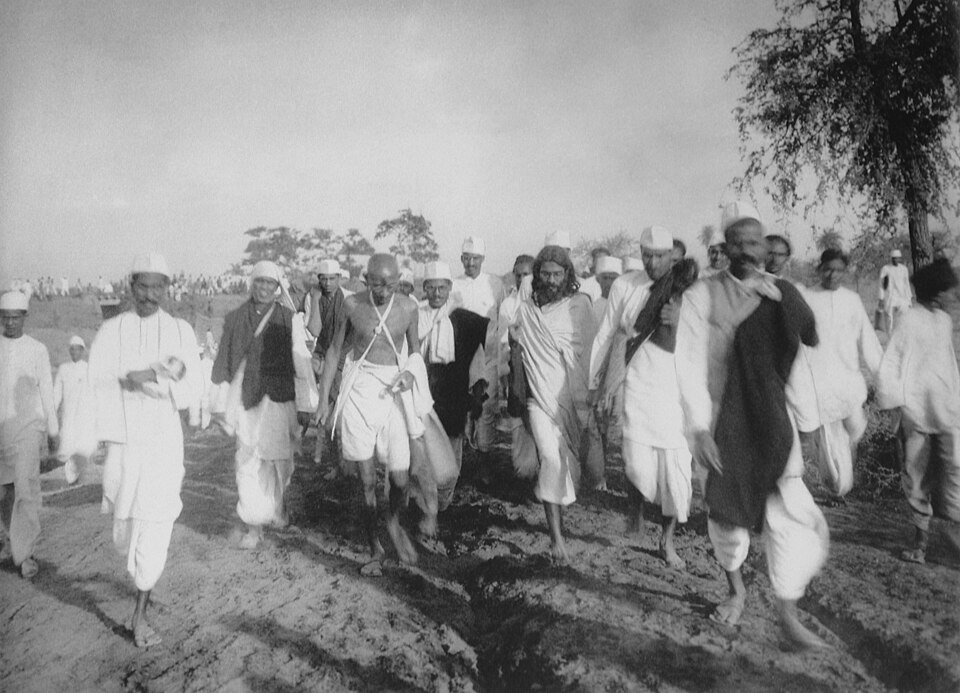
The march itself became a moving political event. Gandhi and his companions walked through Gujarati villages at a deliberate pace, stopping to address gathered crowds each evening, and the group grew steadily as local supporters joined along the route; by the time it reached the Arabian Sea coast at Dandi on 5 April, the march had drawn international press coverage, including from Time magazine, which named Gandhi its Man of the Year for 1930. On the morning of 6 April, Gandhi picked up a lump of natural salt from the beach, breaking the law in a deliberately public act of civil disobedience. The gesture triggered a wave of imitation across India: people illegally made or sold salt in cities and villages nationwide, boycotted foreign cloth and liquor, and refused to pay certain taxes, and the British responded with mass arrests — over the following year, by most estimates, more than 60,000 Indians were jailed.
Dharasana, arrests, and a negotiated pact
Gandhi himself was arrested on 4 May 1930, before he could lead a planned raid on the government salt works at Dharasana; leadership of that action passed to the poet and Congress leader Sarojini Naidu, and the ensuing Dharasana Satyagraha, in which unarmed satyagrahis advanced in successive lines to be beaten back by police lathis without retaliating, was witnessed and reported by the American journalist Webb Miller, whose widely syndicated account of the volunteers' discipline under violence did significant damage to Britain's international standing. Women joined the movement in large numbers for the first time in a mass Congress campaign, both in the salt satyagraha itself and in the associated boycotts, a participation historians treat as a genuine turning point in bringing women into organized nationalist politics. The movement did not immediately win self-rule: it ended formally with the Gandhi-Irwin Pact of March 1931, in which the Viceroy, Lord Irwin, agreed to release political prisoners and permit limited coastal salt production in exchange for Gandhi's agreement to suspend civil disobedience and attend the Second Round Table Conference in London as the Congress's sole representative. Constitutionally, that conference achieved little of what Congress wanted. But the Salt March itself had already done its work: it demonstrated, to Indians and to a global audience, that colonial law could be defied openly, nonviolently, and on a mass scale, and it fixed Gandhi's method of satyagraha as the Congress's central strategy for the remainder of the independence struggle.