In July 1905 the Government of India announced that Bengal, its largest province, would be cut in two. The order came from the Viceroy, Lord Curzon, and was presented as a matter of administration: Bengal, which then included Bihar and Orissa, held some 78 million people, too many for one Lieutenant-Governor to run. Educated Bengalis read it differently. They saw a plan to break up the province where Indian nationalism was most organised and most vocal, and to set its Hindus and Muslims against each other. Their answer was the Swadeshi Movement. After twenty years of petitions and resolutions, it was the first campaign in which Indian nationalists asked ordinary people to act (Sumit Sarkar, The Swadeshi Movement in Bengal[1]).
Why did Curzon partition Bengal?
The administrative case was real. Bengal was unwieldy, and plans to move some of its eastern districts to Assam had been discussed since the 1890s. But the scheme that emerged in 1904 and 1905 went much further, and the officials who drafted it were candid in private about what else it would do. Herbert Risley, the Home Secretary to the Government of India, wrote in 1904: "Bengal united is a power; Bengal divided will pull in several different ways" (Bipan Chandra et al., India's Struggle for Independence[2]).
The final plan joined the eastern districts of Bengal, including Dacca, Rajshahi and Chittagong, to Assam to form a new province, Eastern Bengal and Assam, with its capital at Dacca. It had a Muslim majority. What remained of Bengal, with Bihar and Orissa still attached, had a Hindu majority and, in the line drawn, more Hindi- and Oriya-speakers than Bengalis. Speaking at Dacca in February 1904, Curzon told Muslim audiences that the new province would give them a unity they had not had since the days of the old Muslim viceroys and kings. Most historians since have concluded that splitting Bengali political life, by language and by religion, was one of the partition's aims (Sumit Sarkar, Modern India[3]).
How did Bengal respond?
For more than a year, while the scheme was discussed, Bengal protested the way it always had: newspaper editorials, resolutions at public meetings, memorials sent to London. None of it had any effect. Once the final plan was announced, the protest changed. On 7 August 1905 a mass meeting at the Calcutta Town Hall passed a resolution to boycott British goods, above all Manchester cloth, until the partition was withdrawn. This is the date usually taken as the formal start of the Swadeshi Movement (Bipan Chandra et al., India's Struggle for Independence[2]). Swadeshi means "of one's own country": the other half of the boycott was a pledge to buy Indian-made goods instead.
The partition took effect on 16 October 1905, and Bengal kept it as a day of mourning. Shops shut for a hartal and many households cooked nothing that day. In Calcutta, crowds walked to the Ganga to bathe. At Rabindranath Tagore's suggestion people tied rakhis, the threads usually tied between brothers and sisters, on one another's wrists as a sign that Bengal remained one. Tagore wrote songs for the movement, among them "Amar Sonar Bangla", and "Bande Mataram", from Bankim Chandra Chatterjee's novel Anandamath, became its anthem (Sumit Sarkar, The Swadeshi Movement in Bengal[1]).
What did the Swadeshi Movement do?
The boycott did the most immediate damage. Students picketed shops that sold foreign cloth, and foreign goods went onto public bonfires. In some places priests and washermen refused to serve anyone who used them. Imports of British cloth into Bengal fell noticeably in 1905 and 1906.
The movement also built things, and much of what it built outlasted it (NCERT, Our Pasts III, Ch. 8[4]). Swadeshi textile mills, soap and match factories, tanneries and banks opened. Prafulla Chandra Ray's Bengal Chemical and Pharmaceutical Works, founded a few years earlier, grew on the new demand, and outside Bengal V. O. Chidambaram Pillai launched the Swadeshi Steam Navigation Company at Tuticorin in 1906 to take on British shipping along the coast.
The National Council of Education, founded in 1906, ran schools and colleges outside government control. Aurobindo Ghose was the first principal of its Bengal National College, and a separate Bengal Technical Institute taught applied science. In the districts, volunteer bodies called samitis, such as Ashwini Kumar Dutt's Swadesh Bandhab Samiti in Barisal, enforced the boycott, organised relief and settled disputes by arbitration so that people could stay out of British courts. Abanindranath Tagore painted his Bharat Mata in these years, and the painters around him turned away from European academic models.
Sumit Sarkar distinguished four strands within the movement: moderate protest by petition and meeting, "constructive swadeshi" of the kind above, political extremism that sought mass boycott and self-rule, and a revolutionary strand that turned to violence. They overlapped in people and in time, and the balance between them shifted as the movement went on (Sumit Sarkar, The Swadeshi Movement in Bengal[1]).
How did Swadeshi change Congress?
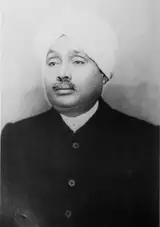
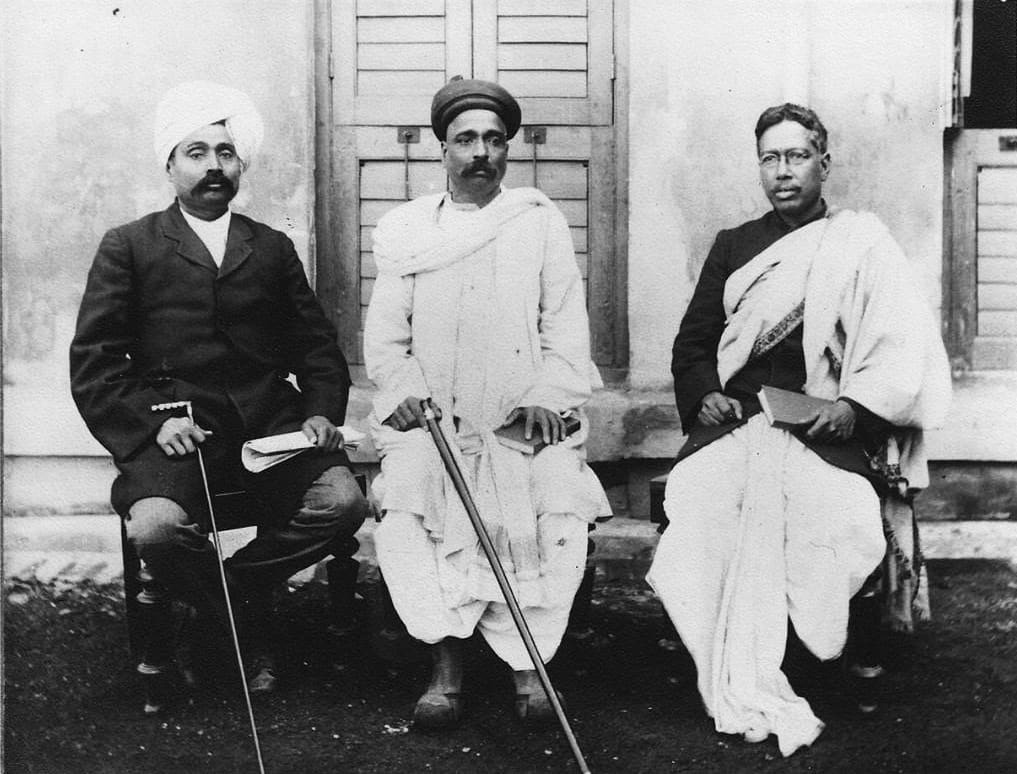
The movement spread well beyond Bengal through leaders who wanted to use it as a national weapon: Bal Gangadhar Tilak in Maharashtra, Lala Lajpat Rai in Punjab, Bipin Chandra Pal and Aurobindo Ghose in Bengal. Lajpat Rai, Tilak and Pal became known together as "Lal-Bal-Pal". They argued that boycott should extend to every part of India and to government service, schools and courts as well as goods, and that the aim should be self-rule, swaraj, rather than reform (Bipan Chandra et al., India's Struggle for Independence[2]).
This brought them into conflict with the older leaders of the Indian National Congress, such as Gopal Krishna Gokhale and Pherozeshah Mehta, who supported the boycott in Bengal but feared that a wider campaign would provoke repression and lose them the hearing they had in London. At the Calcutta session of December 1906, presided over by Dadabhai Naoroji, Congress adopted swaraj as its goal and passed resolutions supporting swadeshi, boycott and national education. A year later, at Surat in December 1907, the two sides could not agree on a president or on whether to keep those resolutions, and the session broke up in disorder. The "Moderates" kept control of Congress; the "Extremists" were outside it until the two wings reunited at Lucknow in 1916 (NCERT, Our Pasts III, Ch. 8[4]).
How did the British respond?
The government restricted public meetings and processions. Shouting "Bande Mataram" in the street could bring a fine or a beating, and students who picketed lost scholarships or were expelled. Lajpat Rai and Ajit Singh were deported from Punjab without trial in 1907. In 1908 Tilak was sentenced to six years' imprisonment in Mandalay for articles in his newspaper Kesari (Bipan Chandra et al., India's Struggle for Independence[2]).
As open protest was shut down, some younger activists turned to secret societies. The Anushilan Samiti and the circle around the Calcutta paper Jugantar trained members and made bombs. In April 1908 Khudiram Bose and Prafulla Chaki threw a bomb at a carriage in Muzaffarpur they believed carried the magistrate Douglas Kingsford; it killed two British women instead. Prafulla Chaki shot himself before arrest, and Khudiram, aged eighteen, was hanged that August. The investigation led to the Alipore bomb trial, in which Aurobindo Ghose was tried and acquitted in 1909 and then withdrew from politics (Sumit Sarkar, Modern India[3]).
Why did the movement fade, and was the partition reversed?
By 1908 the open movement had largely subsided. Repression and the Surat split took away its leaders and its national platform, and the boycott was hard to sustain once Indian mills could not meet demand at prices people could afford. Most important, the movement never won over the Muslim peasantry of eastern Bengal, many of whom worked land owned by Hindu landlords and had reason to welcome a province of their own. Swadeshi's language of Hindu devotion, from "Bande Mataram" to festivals honouring Kali, gave them little reason to join. There were communal riots in Comilla and Jamalpur in 1907, and the All-India Muslim League was founded at Dacca in December 1906 with the support of Nawab Salimullah of Dacca, a backer of the partition (Sumit Sarkar, The Swadeshi Movement in Bengal[1]). The Morley-Minto Reforms of 1909 then gave Muslims separate electorates, which remained part of Indian politics until the partition of India in 1947.
The partition of Bengal itself did not last. At the Delhi Durbar on 12 December 1911, King George V announced that it would be annulled and that the capital of British India would move from Calcutta to Delhi. In 1912 Bengal was reunited, Bihar and Orissa became a separate province, and Assam returned to its earlier status. Nationalists claimed a victory, though the government presented the change as its own decision, and moving the capital out of Calcutta also took the seat of power away from Bengali politics (NCERT, Our Pasts III, Ch. 8[4]).
What did later campaigns take from Swadeshi?
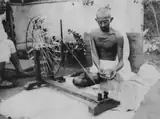
The movement did not win self-rule. Its following was also narrower than its leaders hoped, mostly Hindu and educated, and strongest in the towns. Tagore, who had written its songs, withdrew as it turned to coercion and violence, and later examined its failures in his novel Ghare Baire (The Home and the World, 1916). Yet nearly every method of the later mass campaigns was first tried here, from the boycott of foreign cloth and the bonfire to the hartal, national schools, volunteer corps and the idea that buying Indian goods was a political act. Gandhi, writing in Hind Swaraj in 1909, put the real awakening of India after the partition of Bengal. When he launched the Non-Cooperation Movement in 1920, boycott and swadeshi were at its centre, now joined to his own emphasis on non-violence and homespun khadi (Bipan Chandra et al., India's Struggle for Independence[2]). Lajpat Rai, one of the trio Swadeshi made famous, would lead a protest against the Simon Commission two decades later.
Partition of Bengal and Swadeshi timeline
| Date | Event |
|---|---|
| December 1903 | First proposals to transfer eastern districts of Bengal to Assam are published |
| February 1904 | Curzon tours eastern Bengal and speaks at Dacca |
| July 1905 | The partition is announced |
| 7 August 1905 | Calcutta Town Hall meeting adopts the boycott of British goods |
| 16 October 1905 | Partition takes effect; Bengal observes a day of mourning |
| November 1905 | Curzon leaves India and is succeeded by Lord Minto |
| August 1906 | National Council of Education founded |
| December 1906 | Congress at Calcutta adopts swaraj; Muslim League founded at Dacca |
| May 1907 | Lajpat Rai and Ajit Singh deported from Punjab |
| December 1907 | Congress splits at Surat |
| April 1908 | Muzaffarpur bombing |
| July 1908 | Tilak sentenced to six years in Mandalay |
| 1909 | Morley-Minto Reforms introduce separate electorates |
| 12 December 1911 | Annulment of the partition announced at the Delhi Durbar |