In the last week of December 1916, the Indian National Congress and the All-India Muslim League held their annual sessions in the same city, Lucknow, and approved the same scheme of constitutional reform. The Congress accepted separate electorates for Muslims, with a fixed share of seats in every legislature. In return the League joined the Congress in demanding that Indians be given real power over their own government after the First World War. It was the first time the two organisations had stood together on a common programme, and for a few years an openly negotiated bargain looked like a workable basis for Hindu–Muslim political unity (Bipan Chandra et al., India's Struggle for Independence[1]).
How did the Congress and the League come together?
Both bodies had changed since the years of the Swadeshi movement. The Congress had split at Surat in 1907, when the Moderates, who wanted gradual reform through petitions and councils, drove out the Extremists of Bal Gangadhar Tilak, who wanted swaraj and mass agitation. Tilak spent six years in prison in Mandalay. By 1916 the bitterness had faded. Gopal Krishna Gokhale and Pherozeshah Mehta, the Moderate leaders, had both died in 1915, and Annie Besant, the London-born Theosophist of Irish descent, worked to bring the two wings back together. At Lucknow the Extremists returned, and the Congress was one party again (Sumit Sarkar, Modern India[2]).
The Muslim League had been founded at Dacca in 1906 by landed and aristocratic Muslims who looked to the British to protect Muslim interests, and the Morley–Minto reforms of 1909 had given them separate electorates, in which Muslims voted for Muslim candidates. But events after 1911 shook that loyalty. The partition of Bengal, which many Muslims in East Bengal had welcomed, was reversed in 1911. Britain did nothing to help Ottoman Turkey in the Balkan wars, and in 1914 went to war against it, while the Ottoman sultan was regarded by many Indian Muslims as the caliph of Islam. Younger Muslim leaders such as the brothers Mohamed Ali and Shaukat Ali, who were interned in 1915, pulled the League towards confrontation with the government. In 1913 the League adopted self-government as its goal (Bipan Chandra et al., India's Struggle for Independence[1]).
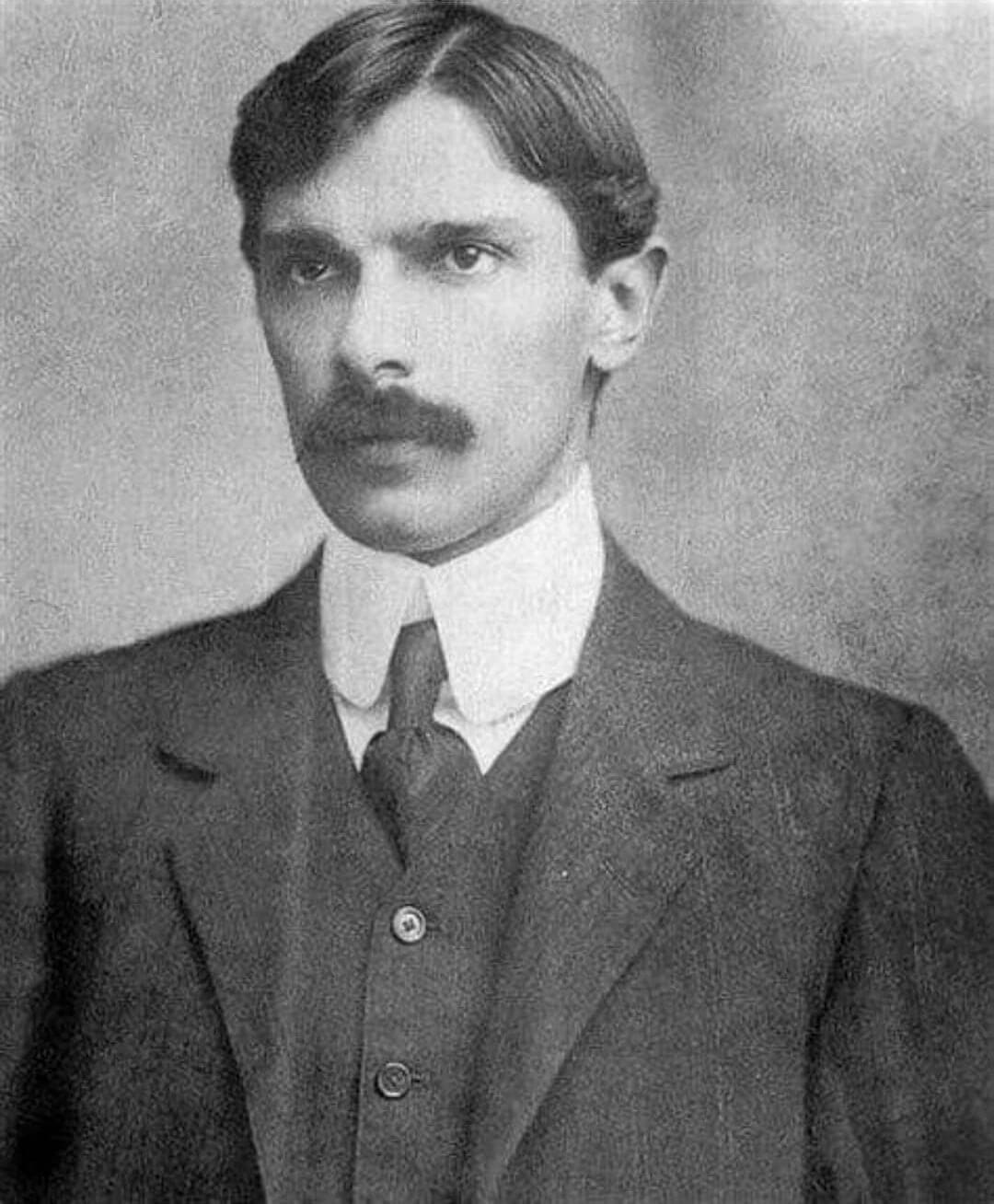
The man in between was Muhammad Ali Jinnah, a Bombay barrister and member of the Imperial Legislative Council. He had joined the League in 1913 while remaining a leading Congressman, and Gokhale had said that he had the makings of an ambassador of Hindu–Muslim unity. In November 1916 leaders of the two organisations met in Calcutta and worked out a joint scheme. At Lucknow the Congress approved it, and the League, meeting under Jinnah's presidency, did the same (Ayesha Jalal, The Sole Spokesman[3]).
What did the pact say?
The joint scheme asked for four-fifths of the members of the central and provincial legislatures to be elected, on a wider franchise. Half the members of the executive councils were to be Indians chosen by the elected members, and the legislatures were to control finance. These were large demands in 1916. They stopped short of full independence, but they would have given elected Indians much of the power of government.
The communal part of the bargain settled how Muslims would be represented. Muslims would elect their own representatives through separate electorates. They would have a third of the elected Indian seats in the central legislature and a fixed share in each province: half in the Punjab, 40 per cent in Bengal, a third in Bombay, 30 per cent in the United Provinces, a quarter in Bihar and 15 per cent in the Central Provinces and Madras. Where Muslims were a small minority, as in the United Provinces, where they were about 14 per cent of the population, they received more seats than their numbers. Where they were a majority, in the Punjab and Bengal, they received fewer. And no bill or resolution affecting a community would proceed if three-quarters of that community's members in the legislature opposed it (Encyclopaedia Britannica, "Lucknow Pact"[4]).
Some Hindu delegates at Lucknow complained that too much had been given away. Tilak answered them that the Hindus could not have yielded too much, and his support carried the Congress. Muslims in Bengal and the Punjab, who stood to lose their majorities, had reason to resent the arrangement too, and the League's leaders from the minority provinces, such as the United Provinces, gained most from it (Sumit Sarkar, Modern India[2]).
What did the pact achieve?
In 1916 Tilak and Annie Besant also launched two Home Rule Leagues, Tilak's in April at Belgaum and Besant's in September at Madras. With the Congress reunited, the League on side and the Home Rule Leagues holding meetings across the country, the demand for self-government after the war had more support behind it than any nationalist demand before. When the government of Madras interned Besant in June 1917, protests spread so widely that she was released three months later and then elected president of the Congress (Bipan Chandra et al., India's Struggle for Independence[1]).
On 20 August 1917, Edwin Montagu, the new Secretary of State for India, told the House of Commons that Britain's policy was "the increasing association of Indians in every branch of the administration" and "the progressive realisation of responsible government in India as an integral part of the British Empire". It was the first time the British government had promised India self-government as a goal. The Montagu–Chelmsford report of 1918 led to the Government of India Act 1919, which gave elected Indian ministers some departments in the provinces under a system called dyarchy. The report criticised separate electorates as a danger to the growth of a common citizenship, but kept them, because Muslims had been promised them and the Congress had now agreed (Sumit Sarkar, Modern India[2]).
Why didn't the unity last?
The reforms of 1919 fell far short of the Lucknow demands, and they arrived together with the Rowlatt Act and the massacre at Jallianwala Bagh. For a time Hindu–Muslim cooperation went further than at Lucknow. In the Khilafat and Non-Cooperation movements of 1919–22, Gandhi and the Ali brothers led a joint mass campaign. Jinnah, who distrusted mass agitation, left the Congress after it adopted non-cooperation in 1920.
After non-cooperation was called off in 1922 and the Turkish republic abolished the caliphate in 1924, communal riots spread through northern India and the alliance fell apart. In 1928 the Congress's Nehru Report proposed joint electorates with reserved seats instead of separate electorates, and rejected Jinnah's amendments. Each later British constitution, from the Communal Award of 1932 to the elections of 1937 and 1946, kept the separate electorates that the Congress had accepted at Lucknow (Ayesha Jalal, The Sole Spokesman[3]).
Historians have judged the pact in different ways. Nationalist historians have seen the acceptance of separate electorates as a mistake that built religious division into Indian politics and treated Hindus and Muslims as separate political communities. Others point out that the pact was a negotiated agreement between parties that recognised each other as partners, which was exactly what later failed to happen. For Jinnah, Lucknow was the model of a settlement he spent the next twenty years trying, and failing, to repeat.
Lucknow Pact timeline
| Date | Event |
|---|---|
| 1906 | All-India Muslim League founded at Dacca |
| December 1907 | Congress splits at Surat |
| 1909 | Morley–Minto reforms introduce separate electorates |
| 1911 | Partition of Bengal reversed |
| 1913 | League adopts self-government as its goal; Jinnah joins the League |
| November 1914 | Britain at war with Ottoman Turkey |
| April and September 1916 | Tilak and Besant found Home Rule Leagues |
| November 1916 | Congress and League leaders agree a joint scheme in Calcutta |
| December 1916 | Congress and League approve the scheme at Lucknow |
| 20 August 1917 | Montagu's declaration in the House of Commons |
| December 1919 | Government of India Act 1919 |
| 1928 | Nehru Report proposes joint electorates |