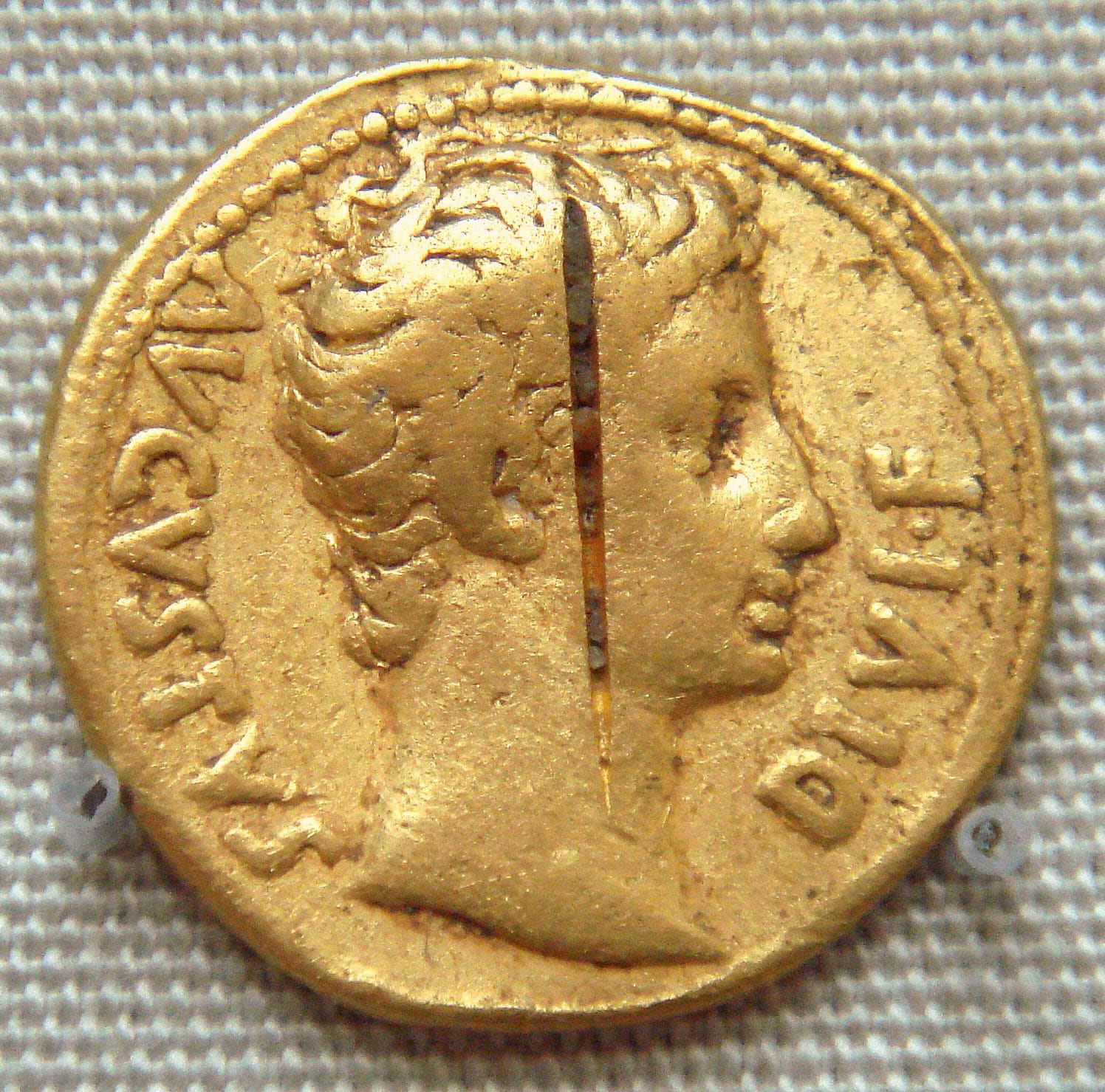
In the 70s CE the Roman writer Pliny the Elder made a complaint that is still quoted today. "In no year," he wrote, "does India drain our empire of less than fifty million sesterces," selling goods in Rome at a hundred times what they cost in India. Elsewhere he put the yearly outflow to India, China and Arabia together at a hundred million sesterces, "so dearly do we pay for our luxury and our women" (Pliny the Elder, Natural History 6.26[2] and 12.41[6]; the older English translation linked here gives the first figure, wrongly, as 550 million). Pliny was moralising, and his numbers may be guesses. But the trade he grumbled about was real, and it left traces from Egyptian harbours to the fields of Tamil Nadu.
It ran along two routes. One went by sea, across the Arabian Sea from the Red Sea ports of Roman Egypt. The other went overland, along the caravan roads later called the Silk Road, through lands ruled by the Kushans. For about three centuries after Rome took Egypt in 30 BCE, they connected India to the Mediterranean more closely than at any time before the Portuguese.
Riding the monsoon
The sea route depended on the monsoon. From about June to September the southwest monsoon blows steadily toward India, and from about November to February the northeast monsoon blows back. A ship that left Egypt's Red Sea coast in July could reach India by September, trade through the autumn and sail home in December or January on the return wind. Greek tradition credited the discovery to a pilot named Hippalus, but Indian and Arab sailors very likely knew the winds long before (Lionel Casson, The Periplus Maris Erythraei[1]). Once Rome controlled Egypt the voyages grew quickly. The geographer Strabo, writing under Augustus, heard that as many as 120 ships were now sailing to India from the single port of Myos Hormos.
The best description of this world is a short Greek handbook, the Periplus of the Erythraean Sea ("sailing around the Red Sea"), written by an unnamed merchant in the mid-1st century CE. It reads like a trader's notebook. Port by port, it lists what sells, what to buy, and who is in charge. At Barbarikon on the Indus delta, a ship could buy indigo, turquoise and lapis lazuli. At Barygaza, modern Bharuch in Gujarat, it lists Italian wine, copper, tin, coral and Roman gold and silver coin as imports, and notes that the local king expected costly gifts, among them silver vessels, singing boys and young women for his household. Further south, at Muziris and Nelkynda on the Kerala coast, the main draw was pepper, which arrived in such quantity that big ships were needed to carry it (Lionel Casson, The Periplus Maris Erythraei[1]).
The road through Kushan country
The overland route is harder to see. The name "Silk Road" is modern, coined by the German geographer Ferdinand von Richthofen in 1877, and there was never a single road. It was a web of caravan routes, and almost nobody travelled all of it. Roman merchants rarely if ever reached China (a party claiming to be envoys from Rome arrived at the Han court by sea in 166 CE, probably traders), and Chinese merchants did not reach Rome. Goods passed from hand to hand through many middlemen, especially the Parthians in Iran, who were Rome's rivals and kept the profits of the middle stretch for themselves (Encyclopaedia Britannica, "Silk Road"[5]).
India offered a way around the Parthians. In the 1st and 2nd centuries CE the Kushans, a dynasty from Central Asia, ruled an empire running from Bactria in northern Afghanistan through Gandhara and the old university city of Taxila down to Mathura on the Yamuna. They held the passes where the Central Asian caravan routes crossed the Hindu Kush into India. The Periplus says that silk from China, which it calls "Thina", came overland through Bactria to Barygaza, and also down the Ganges. At Barygaza it could be loaded onto ships bound for Egypt without ever crossing Parthian territory. Goods came down to the coast from inland cities too, including Ozene, modern Ujjain (Lionel Casson, The Periplus Maris Erythraei[1]). The roads from the northwest to the Ganga valley were old ones, travelled since at least Mauryan times. What was new was the scale of the demand at the far end.
The clearest picture of this crossroads comes from Begram, ancient Kapisa, north of Kabul. In 1937 and 1939 French archaeologists opened two sealed rooms there and found a hoard with goods from every end of the trade: painted and moulded glass and bronzes from the Roman Mediterranean, carved ivories from India, and lacquer bowls from Han China. Archaeologists still argue over the hoard's date and over whether it was a royal treasury or a merchant's store.
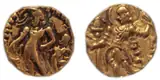
The Kushans also issued a large gold coinage, starting with Vima Kadphises around the end of the 1st century CE, at a weight close to the Roman gold aureus. Roman coins are rare finds in the Kushan north. Some historians think this is because Roman gold arriving there was melted down and re-struck as Kushan coin, though this is hard to prove.
What moved, and who paid
Pepper was the biggest single item. Black pepper from the Kerala coast became an everyday seasoning for well-off Romans, and the city of Rome had warehouses set aside for spices. At Berenike, a Roman port on the Red Sea, excavators found about 7.5 kilograms of black peppercorns still packed in a large storage jar made in India. Alongside pepper went long pepper, malabathrum (cinnamon leaf), spikenard and costus for perfumes and medicine, pearls, ivory, beryls and other gems, fine cotton cloth, indigo, and re-exported Chinese silk. In return came wine and olive oil, red Mediterranean coral, glass, tin, lead and copper, and above all coin, because the Indian side wanted few Roman products as much as the Romans wanted pepper (NCERT, Themes in Indian History I, ch. 2[4]).
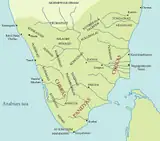
The coins are the trade's most visible trace. Roman coins have been found at well over a hundred sites in India, most of them in the south, especially around Coimbatore, Karur and Madurai. Many are silver denarii of Augustus and Tiberius, and many gold coins carry a deep slash across the emperor's face, possibly to test the metal or to mark them as bullion rather than money. On the Tamil coast the trade connected with the ports of the Sangam-age kingdoms, where poets described the Yavana ships that came with gold and left with pepper. The historian Himanshu Prabha Ray has shown that these ports were part of a wider network that also included Buddhist monasteries on the routes inland, which often grew up where traders passed and were supported by their gifts (Himanshu Prabha Ray, The Winds of Change[3]).
Was it really a drain?
Pliny's figure has shaped how the trade is remembered, but many historians now read it differently. A papyrus from the mid-2nd century CE, known as the Muziris papyrus, records a loan for a voyage to Muziris and, on its back, the valuation of a single ship's cargo, the Hermapollon's, at almost seven million drachmas. It also shows that the Roman state took a quarter of the value of such cargoes as customs duty when they entered Egypt. If ships of that size were sailing every year, the duty alone would have brought the treasury enormous sums, and the India trade may have been one of the empire's most profitable sources of revenue.
Historians have also revised the story at the Indian end. In 1945 Mortimer Wheeler excavated Arikamedu, near Puducherry, found Roman pottery and amphorae, and called it a Roman trading station. Later work showed it was an Indian port town, settled before the Roman trade began, where Mediterranean goods arrived alongside local and Southeast Asian ones, and Indian merchants and rulers ran their end of the trade.
The trade lasted into the 3rd century CE. It shrank as the Roman Empire went through decades of civil war and debased its coinage, and as the Kushan state broke up. It never stopped completely: Roman and later Byzantine merchants still came to India, and by the age of the Guptas Indian ships and ideas were heading east toward Southeast Asia as much as west. Buddhist learning travelled the same routes: in the seventh century the Chinese pilgrim Xuanzang came overland to study at Nalanda, the great monastic university of Bihar, and Yijing came by sea. By the eleventh century the Chola kings of the Tamil south were sending a navy across the Bay of Bengal against the ports of Srivijaya.