Around 320 BCE, a young man named Chandragupta Maurya overthrew the Nanda dynasty that ruled the kingdom of Magadha in the Gangetic plain, and within a few decades built the first empire to bring most of the Indian subcontinent under a single authority. Later tradition credits much of this rise to Chandragupta's advisor Chanakya (also known as Kautilya), a strategist to whom the political treatise Arthashastra is traditionally attributed — though historians caution that the detailed stories of their partnership come from sources written well after the events they describe, and cannot all be verified. What is clearer from inscriptions and later records is the scale of what Chandragupta built: an empire stretching from Afghanistan in the northwest across most of northern and central India.
An empire held together by roads and officials, not just armies
Chandragupta's son Bindusara (reigned c. 297-273 BCE) extended Mauryan authority further south into parts of the Deccan, while the Tamil kingdoms of the far south remained independent. Historians describe the Mauryan state less as a single, evenly-governed territory than as a network of core regions — Magadha, Taxila, Ujjain, and others — connected by roads and administered directly, with more distant regions left considerable local autonomy as long as they paid tribute and did not challenge imperial authority. This is one reason historians still debate exactly how centralized Mauryan rule really was, and how much its apparent unity depended on the personal authority of a strong ruler.
The Kalinga War and a change of direction
That question of a strong ruler brings the story to Bindusara's son, Ashoka, who took the throne around 268 BCE and became the most famous ruler in the dynasty. Early in his reign, Ashoka continued Mauryan expansion by conquering Kalinga, a kingdom on the eastern coast, in and around modern Odisha, that had resisted Mauryan control. The war, fought around 261 BCE, was, by Ashoka's own account carved into rock, devastating: his edicts describe roughly 100,000 people killed, many more wounded, and vastly more displaced. According to his own inscriptions, the scale of suffering caused Ashoka deep remorse, and he turned toward the teachings of Buddhism, publicly renouncing further military conquest in favor of what he called dhamma — a term usually translated as moral law or righteous conduct, encompassing respect for all living beings, honesty, and religious tolerance.
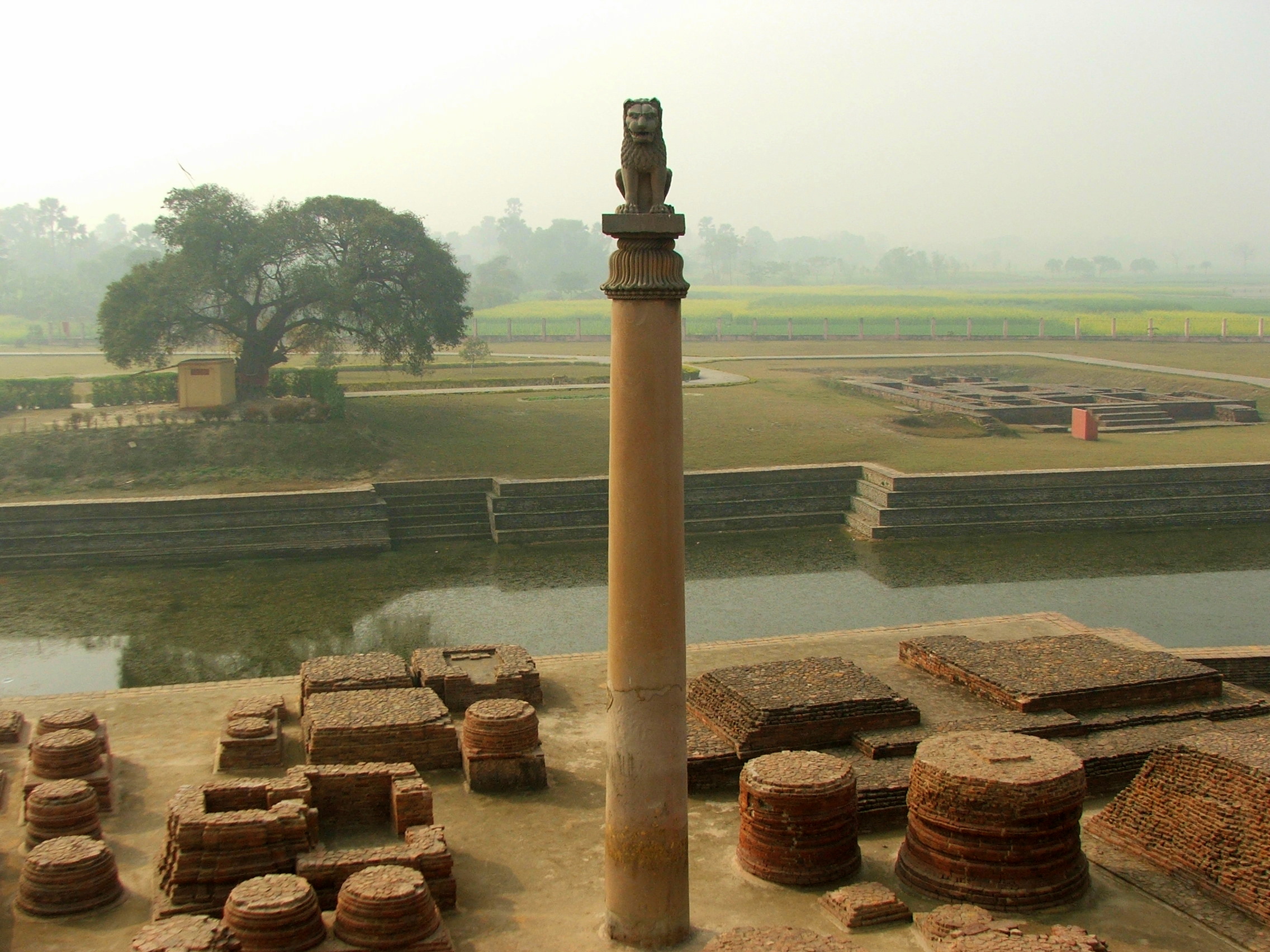
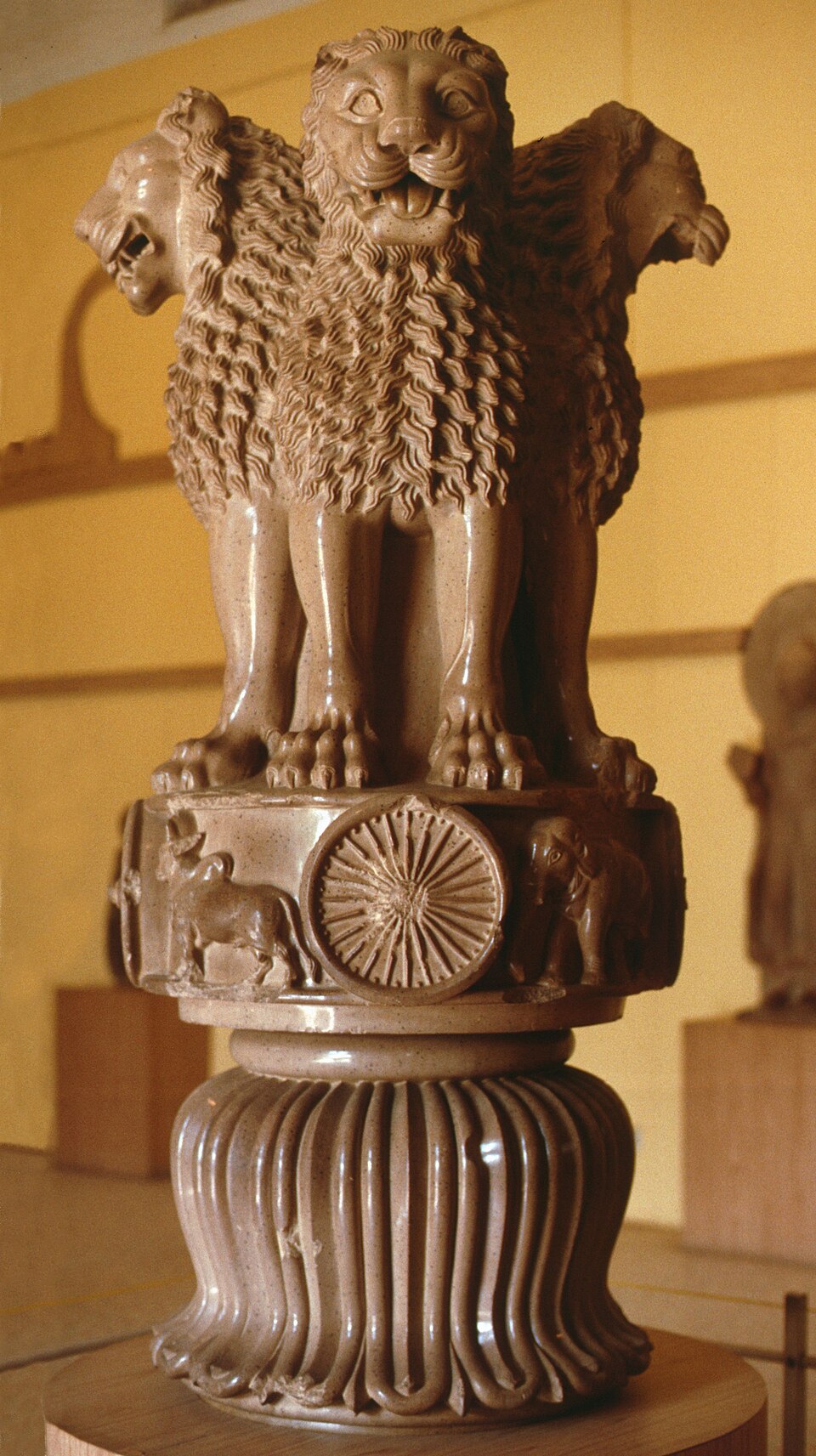
Ashoka spread this message unusually directly for an ancient ruler: he had edicts inscribed on rock faces and on tall polished sandstone pillars erected across his empire, from Afghanistan to the Bay of Bengal, written in accessible regional scripts and languages such as Prakrit rather than in the more restricted Sanskrit of priestly texts. The pillar at Sarnath, topped by four back-to-back lions above a wheel (chakra) and other animals, is the most famous survival of this program; a version of its lion capital is now independent India's national emblem. These rock and pillar edicts are among the oldest deciphered original texts to survive from the Indian subcontinent, and they remain a primary source for what we know of Ashoka's reign — though historians note that, because they are Ashoka's own official statements, they present his rule and motives in the best possible light, and should be read as a ruler's self-presentation as much as a neutral record.
Decline after Ashoka
Ashoka died around 232 BCE, and the empire did not long outlive him in its full strength. A series of weaker or shorter-reigned successors struggled to hold together the vast, loosely-integrated territory Ashoka had inherited and expanded, and the last Mauryan emperor, Brihadratha, was killed around 185-180 BCE by his own military commander, Pushyamitra Shunga, who founded the Shunga dynasty in Magadha. Historians continue to debate how much of the empire's fragmentation should be attributed to Ashoka's turn away from military conquest, weakening its coercive core, versus simple administrative overreach in governing such a large and diverse territory with the tools available in the third century BCE. What is not in serious dispute is the Mauryan Empire's significance: for roughly a century and a half it brought a larger share of the Indian subcontinent under a single political authority than any state before it, and Ashoka's edicts remain, in his own carved words, one of the earliest surviving voices of any Indian ruler.