The Chola name appears in inscriptions as far back as the Mauryan period, when Ashoka's edicts mention the Cholas as one of the Tamil kingdoms south of his empire. But the dynasty that historians usually mean by "the Cholas" is the imperial line that re-emerged in the ninth century, when a chieftain named Vijayalaya seized the town of Thanjavur from the Muttaraiyars around 848 CE. Ruling from the fertile Kaveri river delta, Vijayalaya's successors spent the next century and a half absorbing the neighboring Pallava and Pandya kingdoms, until, by the reign of Rajaraja I (985-1014), the Cholas had become the dominant power in peninsular India south of the Tungabhadra river.
An empire of temples and a navy
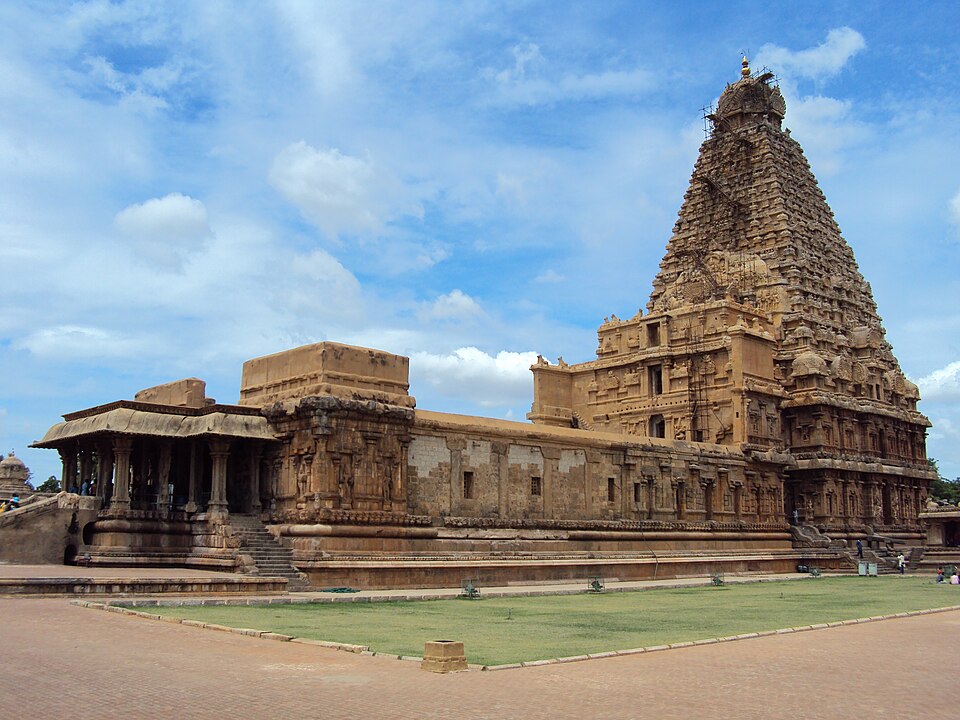
Rajaraja I's reign marks the dynasty's decisive turn toward empire. He annexed the Pandya and Chera territories, took parts of Sri Lanka, and, closer to home, commissioned the Brihadeeswarar Temple at Thanjavur, built between 1003 and 1010 and dedicated to Shiva. Its vimana (tower) rises about 66 metres and is capped by a single block of granite estimated at roughly 80 tonnes, an engineering feat that UNESCO recognizes as part of the "Great Living Chola Temples" World Heritage designation. Rajaraja's son, Rajendra I (reigned 1012-1044, initially as co-regent), extended Chola power further than any Tamil ruler before him: his armies marched north to the Ganges around 1022, and to commemorate the campaign he built a new capital, Gangaikonda Cholapuram ("the city of the Chola who took the Ganges"), with its own Brihadisvara temple completed in 1035.
Rajendra I is best remembered, though, for a naval campaign rather than a land one. Around 1025, Chola forces crossed the Bay of Bengal and struck ports controlled by the Srivijaya empire across the Malay Peninsula and Sumatra, reportedly seizing more than a dozen harbor towns. Why the Cholas launched this expedition is genuinely debated: some historians read it chiefly as an attempt to break Srivijaya's control over the maritime trade route to China and open it to Tamil merchants, while others emphasize it as a plundering raid aimed at prestige and loot rather than lasting territorial control, since the Cholas did not attempt to permanently govern the captured ports. Either way, it remains one of the few large seaborne military expeditions launched from the Indian subcontinent before the colonial era, and it left behind a lasting trace of Tamil cultural and commercial influence across maritime Southeast Asia.
Village government and a state historians still argue about
Chola inscriptions, carved by the thousands onto temple walls, give an unusually detailed picture of how the empire was actually run at the local level. At Uttaramerur, a set of tenth-century inscriptions describes a village assembly (sabha) that filled seats on rotating committees — for irrigation tanks, gardens, and justice — by drawing named palm-leaf tickets (kudavolai) from a pot, with eligibility rules covering age, land ownership, and conduct. This has often been described in popular accounts as an early form of village democracy, though historians caution against reading too much modern meaning into it: participation was restricted to propertied, usually Brahmin, households in that particular locality, and it is not clear how representative or widespread the Uttaramerur system was across the wider Chola territories.
How centralized the Chola state was overall remains one of the more active debates in Indian medieval historiography. The historian Burton Stein proposed a "segmentary state" model, arguing that Chola kings held strong ritual and symbolic authority at the center but that real administrative power over land, taxation, and local justice stayed largely with autonomous village assemblies and regional chieftains. Other historians, drawing on the sheer volume and consistency of Chola revenue and land-survey inscriptions across the macro-region, argue for a more integrated bureaucratic state with genuine central oversight, particularly under strong rulers like Rajaraja I and Rajendra I. The debate has not been resolved, and it matters for how one reads Chola power more broadly: as a loose network held together by royal prestige and temple patronage, or as a genuinely administered empire.
Art, decline, and legacy
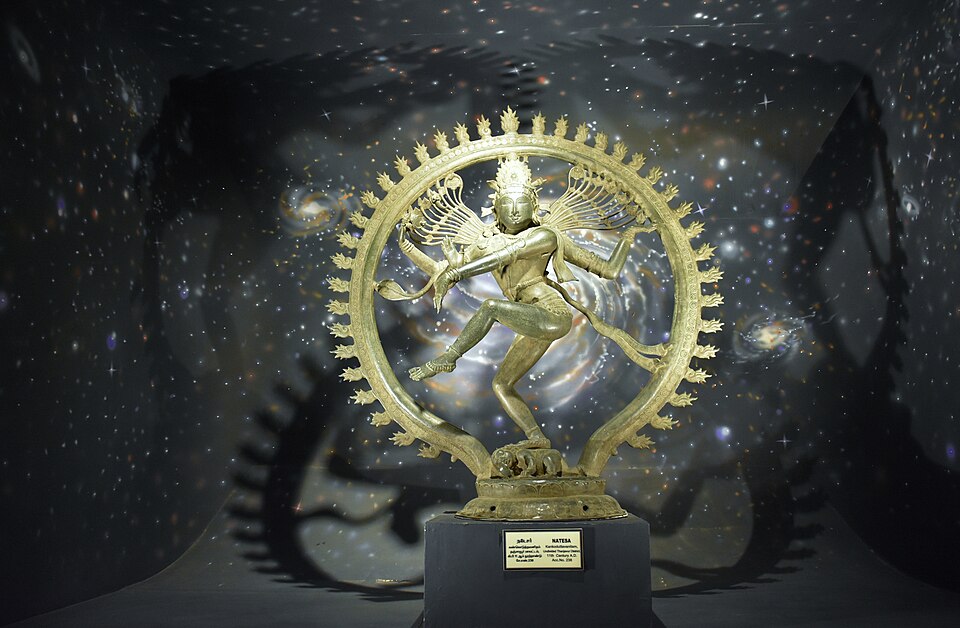
Chola patronage produced some of the most technically accomplished bronze sculpture in world art, most famously the Nataraja — Shiva as the cosmic dancer, cast using the lost-wax method and ritually carried in temple processions rather than kept static as a museum object. Chola-period bronzes and temple architecture set standards that South Indian temple building followed for centuries afterward. The empire itself began fragmenting under weaker later rulers from the mid-twelfth century, squeezed by a resurgent Pandya kingdom to the south and the rising Hoysalas to the west, and the last Chola king is generally dated to around 1279. What survived far longer than the political state was its cultural imprint: Tamil temple architecture, bronze-casting traditions, and a documented model of local administration that remains one of the richest inscriptional records left by any medieval Indian polity.