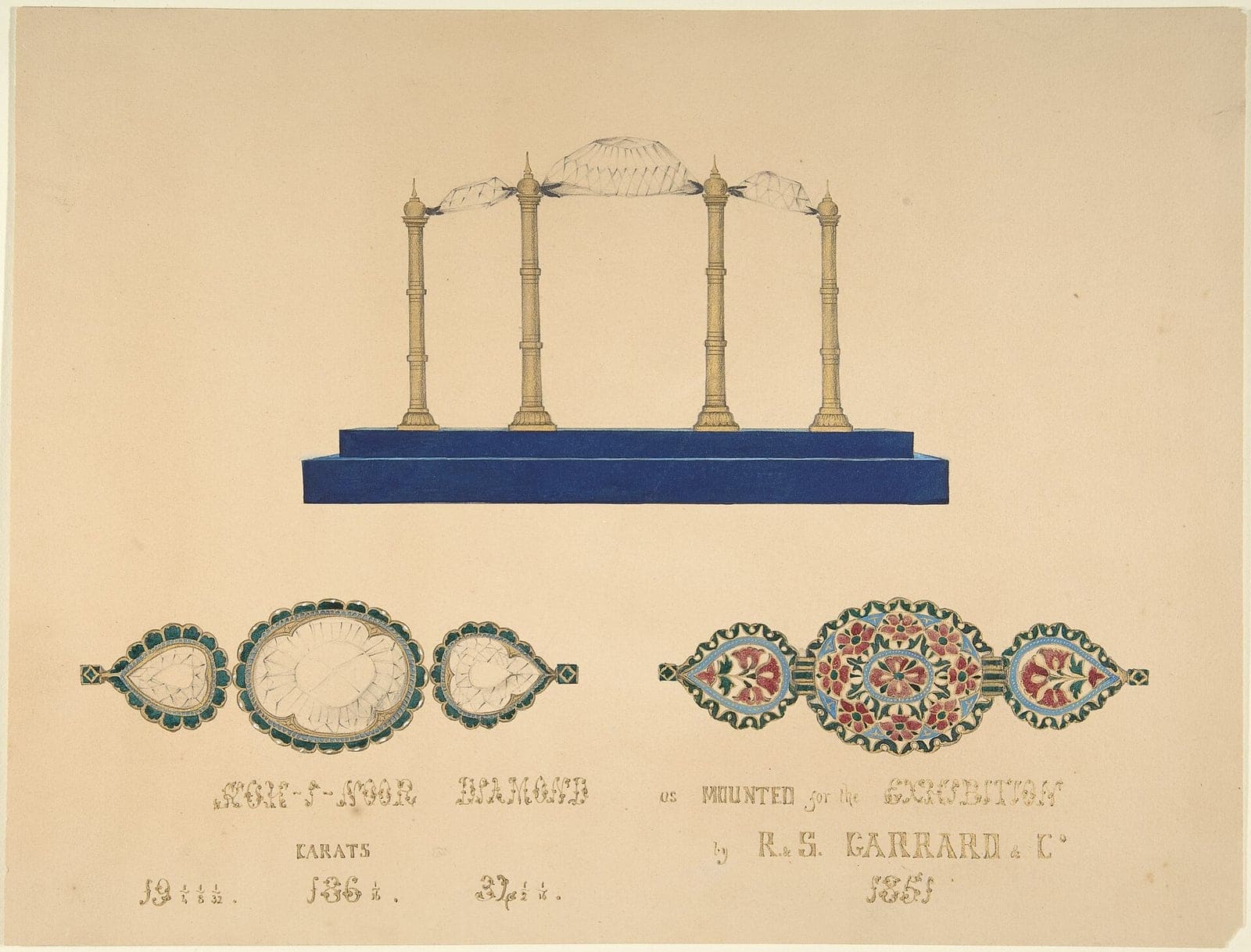
The Koh-i-Noor, Persian for "Mountain of Light", is one of the most famous diamonds in the world and one of the most disputed objects in the British royal collection. In a little over a century it passed from the Mughal emperors to a Persian conqueror, to the kings of Afghanistan, to the Sikh maharaja Ranjit Singh and finally, in 1849, to the British. It now sits in a crown in the Tower of London, and India, Pakistan, Afghanistan and Iran have all at one time said it should come back to them. Much of its earlier history is legend. The historians William Dalrymple and Anita Anand, who traced its story through the sources, found that the solid record begins only in the eighteenth century (William Dalrymple and Anita Anand, Koh-i-Noor[1]).
Where did the Koh-i-Noor come from?
No one knows where or when the diamond was found. Until the eighteenth century almost all the world's diamonds came from India, most of them from alluvial mines along the Krishna river in the territory of the Golconda sultanate, in today's Andhra Pradesh and Telangana. The Koh-i-Noor almost certainly came from there too. Later writers identified it with a great diamond that Babur received after his victory at Panipat in 1526, or with the "Great Mogul" diamond that the French jeweller Jean-Baptiste Tavernier was shown at Aurangzeb's court in 1665. Neither link can be proved (Jean-Baptiste Tavernier, Travels in India[2]).
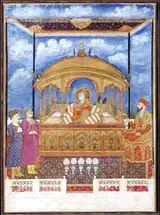
By the 1730s the diamond was certainly in the hands of the Mughal emperors. A Persian historian travelling with Nadir Shah, who sacked Delhi in 1739 as Mughal power was collapsing, described it set in the Peacock Throne that Shah Jahan, the builder of the Taj Mahal, had made a century earlier. Nadir Shah carried off the throne, the diamond and most of the Mughal treasury to Persia. According to a story first written down later, it was he who named it Koh-i-Noor.
How did the Koh-i-Noor reach Ranjit Singh?
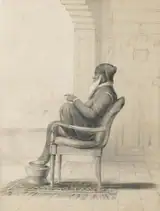
After Nadir Shah was assassinated in 1747, the diamond passed to one of his commanders, Ahmad Shah Durrani, who founded the kingdom of Afghanistan, and it stayed with his descendants through decades of feuding. Shah Shuja, one of his grandsons, wore it when he received the British envoy Mountstuart Elphinstone at Peshawar in 1809. That same year he lost his throne, and after years of exile and imprisonment he took refuge in Lahore, the capital of the Sikh Empire. Maharaja Ranjit Singh pressed him for the diamond, and on 1 June 1813 Shah Shuja handed it over (William Dalrymple and Anita Anand, Koh-i-Noor[1]).
Ranjit Singh wore the diamond in an armband on great occasions, and showed it to visitors as a sign that power in the north-west had passed to the Sikhs. When he was dying in 1839, it was said that he wished it to be given to the temple of Jagannath at Puri, but his courtiers did not carry this out. In the ten years of murder and civil war that followed, the diamond passed from one short-lived ruler of Lahore to the next, ending with the boy Duleep Singh, Ranjit Singh's youngest son.
How did the British get the Koh-i-Noor?
The East India Company defeated the Sikhs in two wars, in 1845–46 and 1848–49, and in March 1849 annexed the Punjab. The Treaty of Lahore, signed in the name of the ten-year-old Duleep Singh, stated that "the gem called the Koh-i-Noor" should be surrendered by the Maharaja of Lahore to the Queen of England. The Governor-General, Lord Dalhousie, insisted on this clause; he wanted the diamond to go to the Queen as a trophy of conquest, rather than to the Company. The diamond was shipped to Britain in 1850 and presented to Queen Victoria on 3 July 1850 (William Dalrymple and Anita Anand, Koh-i-Noor[1]).
Duleep Singh was separated from his mother, Jind Kaur, placed under the care of a British guardian, Dr John Login, and sent to England in 1854, where he became a favourite of the Queen. Lady Login recorded that when Victoria showed him the recut diamond, he handed it back to her with a bow. In later life Duleep Singh became bitter about the loss of his kingdom, tried to return to the Punjab and died in Paris in 1893 (Lady Login, Sir John Login and Duleep Singh[3]).
Why was it cut down?
The diamond went on show at the Great Exhibition in London in 1851. Crowds queued to see it and were disappointed: cut in the old Indian style, which kept as much weight as possible, it looked more like a lump of glass than a sparkling gem. Prince Albert had it recut in 1852 by a Dutch diamond-cutter working for the crown jewellers, Garrard. The process took thirty-eight days and reduced it from about 186 carats to 105.6 carats, making it brighter but much smaller.
Queen Victoria wore it as a brooch. A legend grew up that the diamond brought bad luck to any man who wore it, and after her death it was set only in the crowns of queens: Queen Alexandra in 1902, Queen Mary in 1911, and Queen Elizabeth, the wife of George VI, in 1937. It remains in her crown, on display with the Crown Jewels in the Tower of London.
Who owns it now?
India asked for the diamond's return soon after independence, and has raised it several times since. Pakistan claimed it in 1976, on the grounds that it was taken from Lahore. The Taliban government of Afghanistan claimed it in 2000, and Iran has also staked a claim. The British government's position is that it was acquired legally under the Treaty of Lahore and will stay in the royal collection. In India the question reached the Supreme Court in 2016, when the government's lawyer said that the diamond had been given, not stolen. The government then said it would keep trying to bring it back (William Dalrymple and Anita Anand, Koh-i-Noor[1]).
Koh-i-Noor timeline
| Date | Event |
|---|---|
| 1630s | Shah Jahan's Peacock Throne is made; the diamond is later recorded on it |
| 1739 | Nadir Shah sacks Delhi and takes the diamond to Persia |
| 1747 | Nadir Shah assassinated; the diamond passes to Ahmad Shah Durrani |
| 1809 | Shah Shuja wears it to receive Mountstuart Elphinstone, then loses his throne |
| 1 June 1813 | Shah Shuja surrenders it to Ranjit Singh in Lahore |
| 1839 | Ranjit Singh dies |
| 29 March 1849 | Treaty of Lahore: the diamond is to be surrendered to the Queen |
| 3 July 1850 | Presented to Queen Victoria |
| 1851 | Shown at the Great Exhibition in London |
| 1852 | Recut from about 186 to 105.6 carats |
| 1937 | Set in the crown of Queen Elizabeth (the Queen Mother) |
| 1976 | Pakistan claims the diamond |