On 31 December 1600, Queen Elizabeth I granted a royal charter to a group of London merchants trading under the name the Governor and Company of Merchants of London Trading into the East Indies — the corporation that later generations would simply call the East India Company. The charter gave the company a fifteen-year monopoly on English trade east of the Cape of Good Hope, a purely commercial privilege aimed at breaking into the spice trade long dominated by Portuguese and Dutch merchants. Its first Indian foothold came in 1611 at Masulipatnam on the Bay of Bengal coast, followed in 1613 by a trading post at Surat, granted under permission from the Mughal court. For more than a century afterward, the company operated much as its charter intended: as a trading concern, exchanging English silver and goods for Indian textiles, spices, and saltpetre, protected by small garrisons at fortified settlements such as Madras, Bombay, and Calcutta.
From merchants to conquerors
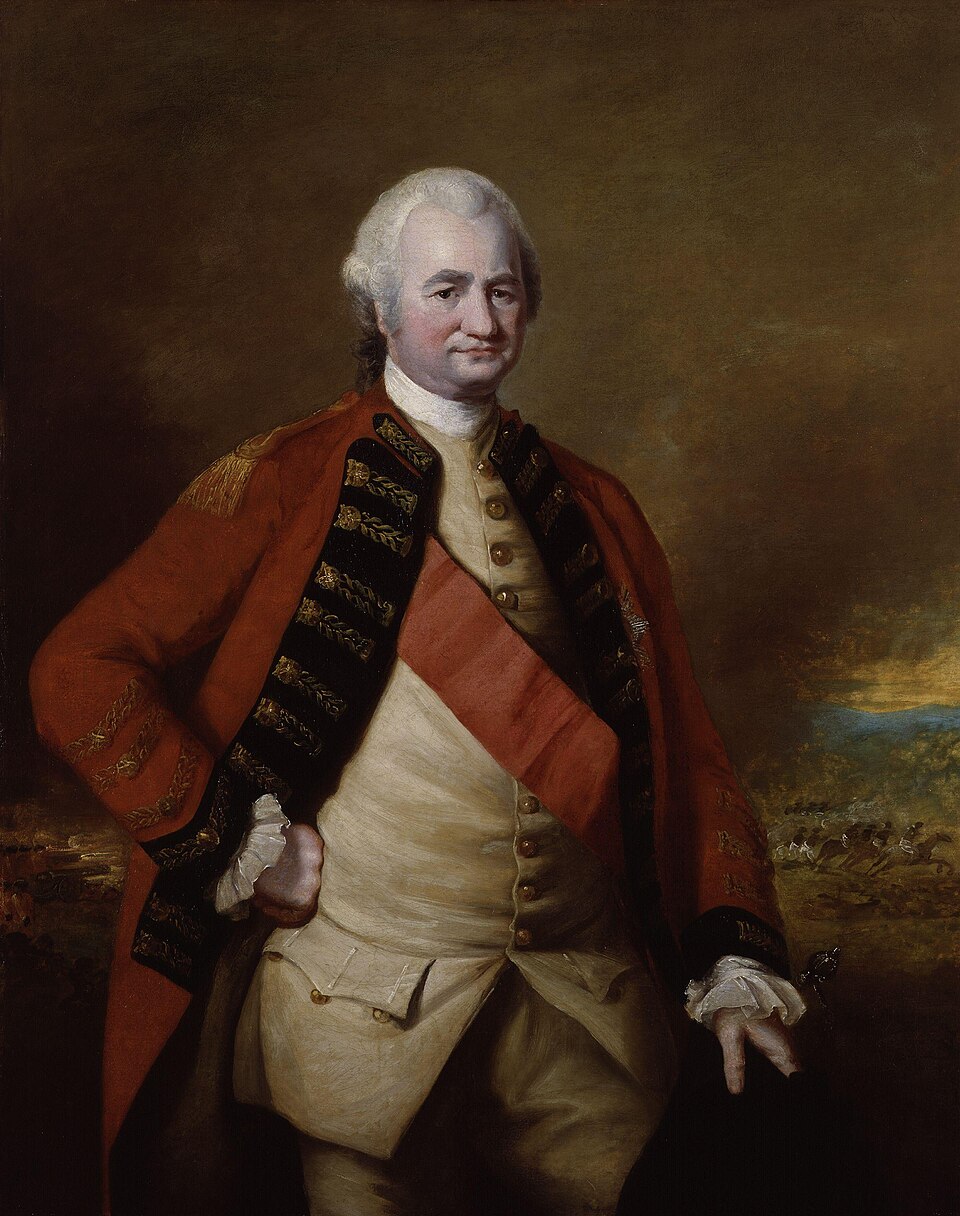
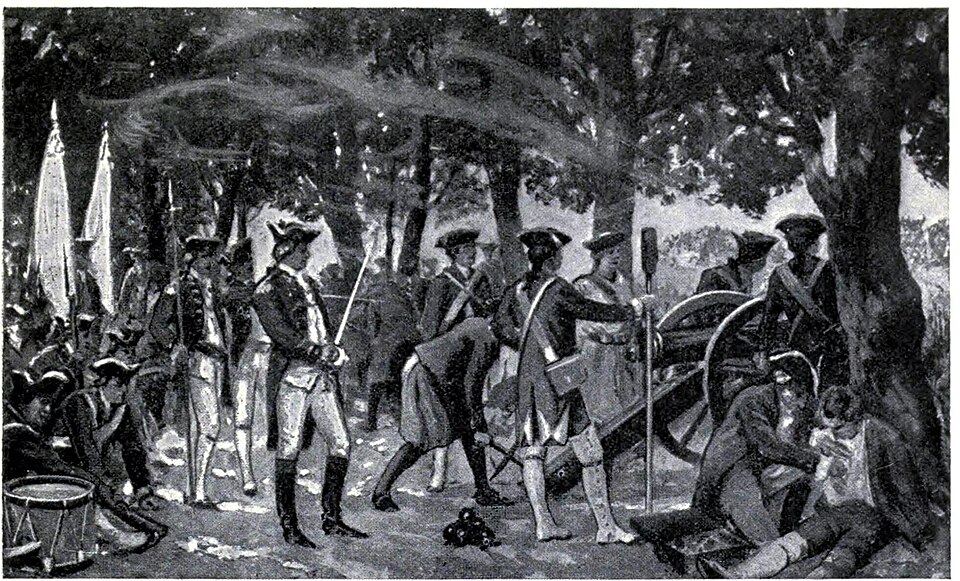
That balance shifted decisively in Bengal in the mid-eighteenth century. Tension between the company and Siraj-ud-Daulah, the young Nawab of Bengal, over fortifications and trading privileges came to a head on 23 June 1757 at the Battle of Plassey, where a company force under Robert Clive, numbering some 3,000 men, defeated a much larger Bengal army. The outcome owed less to battlefield superiority than to a conspiracy: Clive had secretly agreed with Mir Jafar, the nawab's own commander, to hold his troops back from the fighting in exchange for being installed as the new nawab afterward. Plassey did not by itself create an empire, but it gave the company effective control over the wealth and administration of Bengal, then among the richest provinces in India, through a compliant client ruler. Seven years later, at the Battle of Buxar (1764), a combined force of the Nawab of Bengal, the Nawab of Awadh, and the Mughal emperor Shah Alam II was defeated in turn, and in 1765 the emperor formally granted the company the diwani — the right to collect land revenue — over Bengal, Bihar, and Orissa, through the Treaty of Allahabad. A commercial company had become the tax-collecting government of some 20 million people, answerable in theory to a Mughal emperor whose actual authority it had already eclipsed.
Company rule and its costs
The years immediately after the diwani grant exposed how badly suited a profit-driven trading company was to governing a famine-prone agrarian society. When the monsoon failed in 1769 and 1770, the company's administration continued to demand the full land revenue from a starving Bengal peasantry rather than suspending collection, and continued grain purchases for its own army and staff added further strain. The Great Bengal Famine of 1770 is estimated, in figures repeated by contemporary officials including Governor-General Warren Hastings, to have killed roughly ten million people, close to a third of the affected population — though, as with most pre-modern famine mortality figures, historians caution that exact numbers cannot be independently verified and should be read as informed estimates rather than a precise count. The disaster, alongside financial scandal and mismanagement, alarmed Parliament in London, which passed the Regulating Act of 1773 and later Pitt's India Act of 1784 to bring the company's Indian government under closer state supervision, even as the company itself continued to rule and to expand its territory through war and annexation across the following eight decades.
The company's direct rule over India ended only after the Revolt of 1857, when the British Parliament passed the Government of India Act 1858, transferring all its Indian territories and administrative powers to the British Crown. The company itself lingered on as a shell for a few more years before being formally wound up under the East India Stock Dividend Redemption Act of 1873, dissolving in 1874. In under two centuries it had gone from a London trading syndicate chartered to compete for pepper and cloth to the government of the most populous territory Britain ever controlled — a transformation historians generally treat not as the product of a single deliberate plan, but as a series of contingent military and financial decisions in Bengal that, once taken, proved very difficult to reverse.