In 1206, Qutb-ud-din Aibak, a formerly enslaved military commander who had risen to govern the Indian territories of the Ghurid sultan Muhammad of Ghor, declared himself an independent ruler in Delhi after his patron's death. That act is conventionally treated as the founding of the Delhi Sultanate, a state that, under five successive dynasties, dominated large parts of North India for the next three centuries: the Mamluk or "Slave" dynasty (1206-1290), the Khalji dynasty (1290-1320), the Tughlaq dynasty (1320-1414), the Sayyid dynasty (1414-1451), and the Lodi dynasty (1451-1526).
Consolidation and a queen on the throne
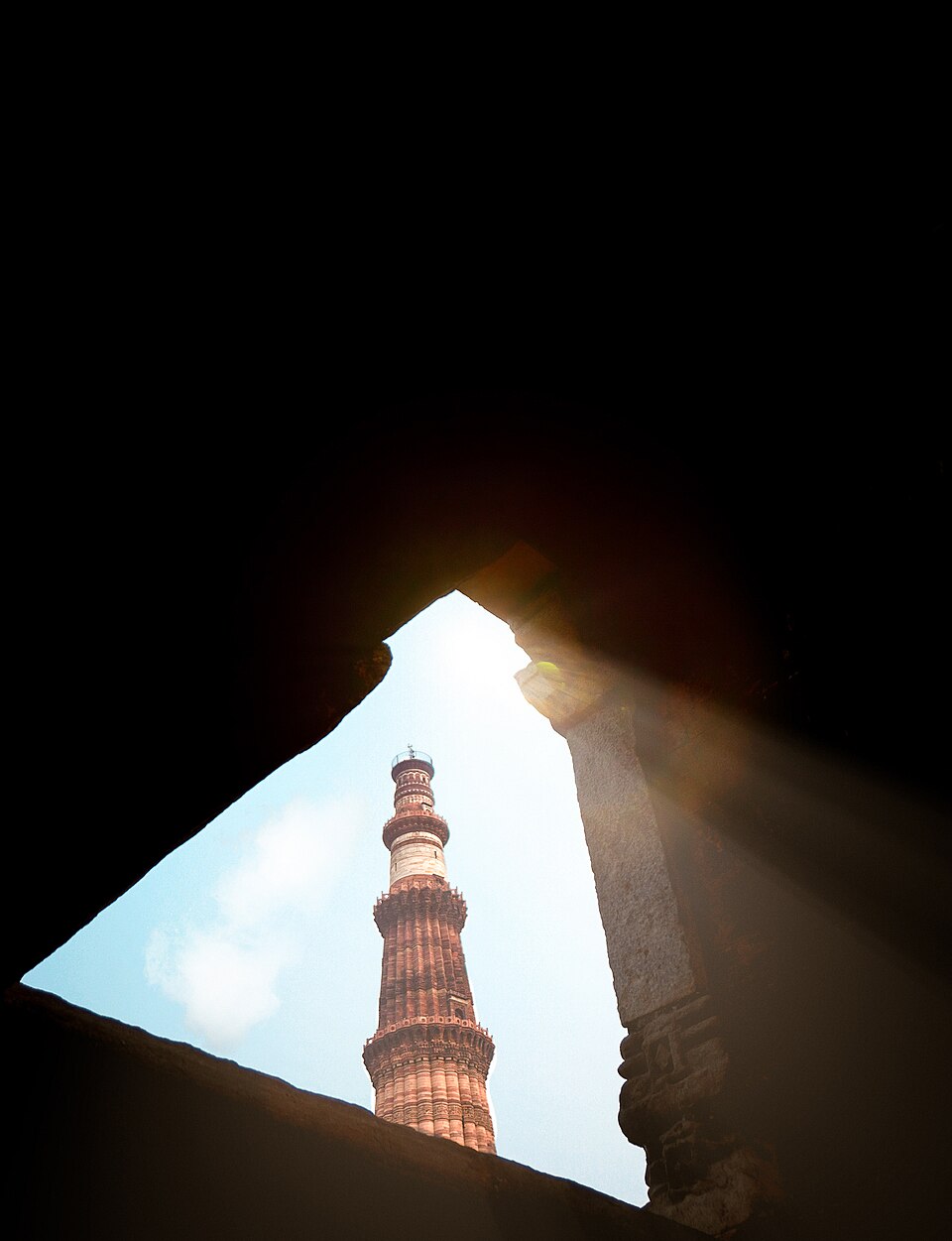
Aibak's successor Iltutmish (reigned 1211-1236) is generally credited with turning a fragile military foothold into a functioning state — he secured recognition from the Abbasid caliphate in Baghdad, organized a system of land assignments (iqtas) to pay and control nobles and soldiers, and began the Qutb Minar, a minaret at Delhi begun under Aibak and completed under Iltutmish, standing roughly 73 metres tall and among the tallest brick minarets in the world. After Iltutmish's death, his daughter Razia briefly ruled as sultan (1236-1240) — an unusual event for the period, and one contemporary chroniclers noted with a mix of respect and unease at a woman holding the throne in her own right rather than as a regent. Her reign ended in rebellion and her death, and rule passed through several more Mamluk sultans before the dynasty was overthrown by the Khaljis in 1290.
Alauddin Khalji's markets and the Mongol threat
The Khalji sultan Alauddin Khalji (reigned 1296-1316) expanded the sultanate's territory deep into the Deccan through military campaigns, but he is remembered at least as much for an unusual peacetime policy: strict, state-enforced price controls across Delhi's markets, covering grain, cloth, horses, and even everyday items down to needles and combs, backed by government-appointed market supervisors and informants. Historians generally read this less as a general economic philosophy than as a targeted measure to keep the cost of provisioning a large standing army low enough to defend against repeated Mongol incursions from Central Asia, which struck the Delhi Sultanate's northwestern frontier several times in the late thirteenth and early fourteenth centuries; the 1303 invasion, which came close to taking Delhi itself, was among the most serious. Alauddin's success in repeatedly repelling these attacks is one of the reasons the Mongols, unlike in much of Central and West Asia, never established lasting rule over North India.
An empire overstretched: Muhammad bin Tughlaq
The sultanate reached its greatest territorial extent under Muhammad bin Tughlaq (reigned 1325-1351), whose reign is remembered for two famously disruptive experiments. He ordered the capital temporarily shifted roughly 1,100 kilometres south from Delhi to Daulatabad in the Deccan, apparently to better govern and defend his southern territories, then reversed the decision after several years, at considerable cost and disruption to the population that had been relocated. He also introduced token bronze and copper coins meant to circulate at the value of silver, a policy that collapsed when counterfeiting became widespread and public confidence in the currency failed. The Moroccan traveler Ibn Battuta, who served for a time as a judge in Muhammad bin Tughlaq's court and left a detailed travel account known as the Rihla, is one of the principal outside sources historians use to reconstruct daily life and court politics of this period, though, like any single traveler's memoir, his account reflects his own vantage point and should be weighed alongside other evidence rather than taken as an unqualified record.
Temple destruction, religion, and a debate historians take seriously
Several Delhi Sultanate campaigns, and earlier Ghaznavid and Ghurid raids that preceded the sultanate, involved the destruction or plunder of Hindu and Jain temples, most famously the repeated raids on the Somnath temple in Gujarat. Popular narratives have often framed this simply as religiously motivated iconoclasm. Specialist historians, including Richard Eaton, whose research catalogued instances of temple desecration across the period, argue the picture is more specific and more political: temples were often royal patronage projects that symbolized a rival king's sovereignty, so destroying or looting one could function as an act of conquest directed at a defeated rival's political legitimacy, not only or even primarily an attack on Hindu belief itself — and some sultans, including Delhi Sultanate rulers, also patronized or protected Hindu and Jain temples and institutions elsewhere in their territories. This does not erase the real religious dimension contemporaries themselves sometimes described, but it means historians caution against a single uncomplicated explanation, and the balance between political and religious motive in any specific episode remains genuinely debated rather than settled.
Decline and the road to Panipat
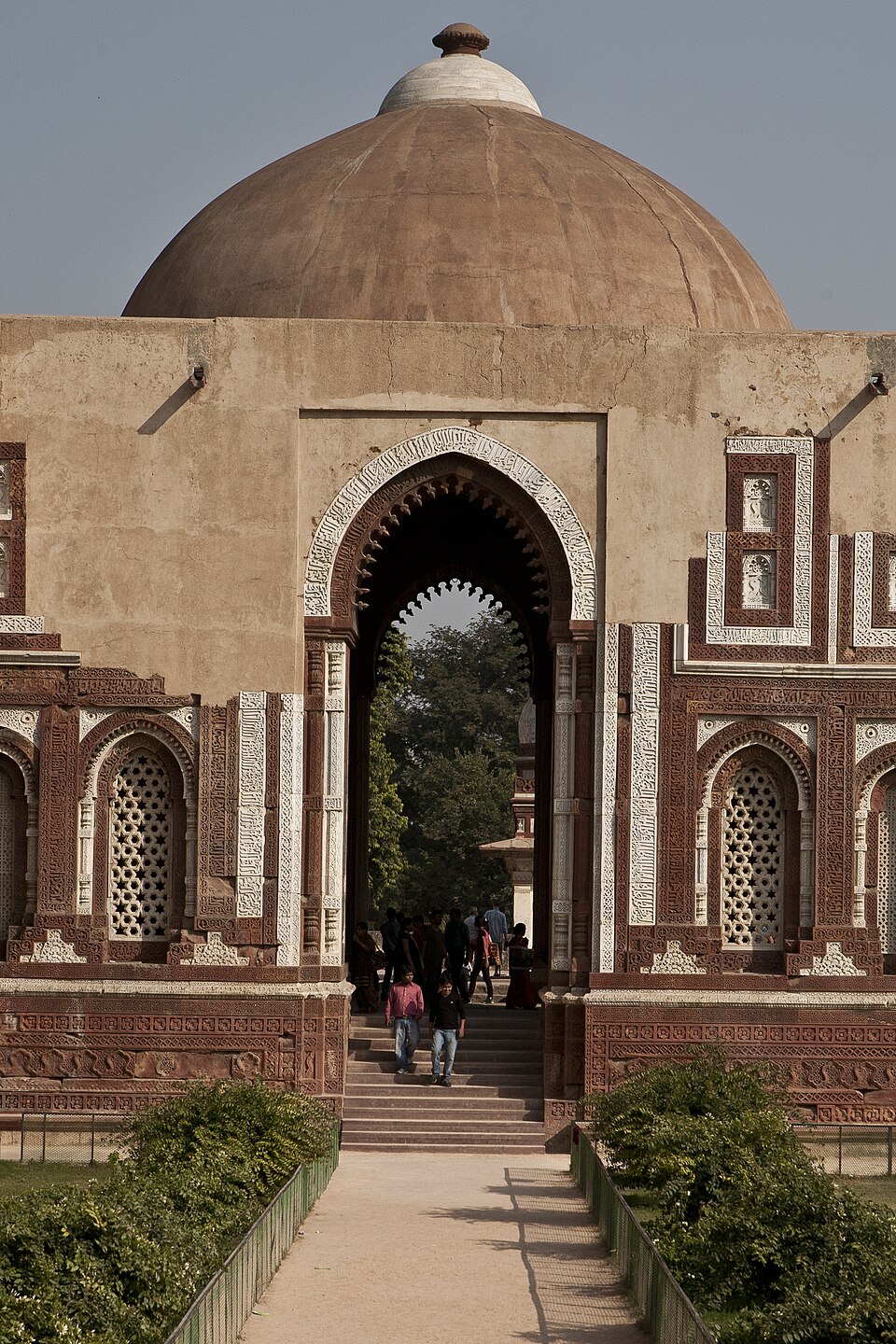
The sultanate never fully recovered from the Central Asian conqueror Timur's devastating sack of Delhi in 1398, which left the city's population and administration badly damaged. The weakened Sayyid and then Lodi dynasties that followed ruled over a much-reduced and increasingly contested territory, as regional sultanates in Bengal, Gujarat, Malwa, and the Deccan, along with the rising Vijayanagara empire in the south, asserted independence. The Delhi Sultanate finally ended in 1526, when the last Lodi ruler, Ibrahim Lodi, was defeated and killed at the First Battle of Panipat by Babur, whose victory opened the way for the Mughal Empire. Three centuries of Sultanate rule left a lasting architectural and administrative legacy — from the Qutb complex to the iqta system of land revenue assignment — that later Indo-Islamic states, including the Mughals, would build directly upon.