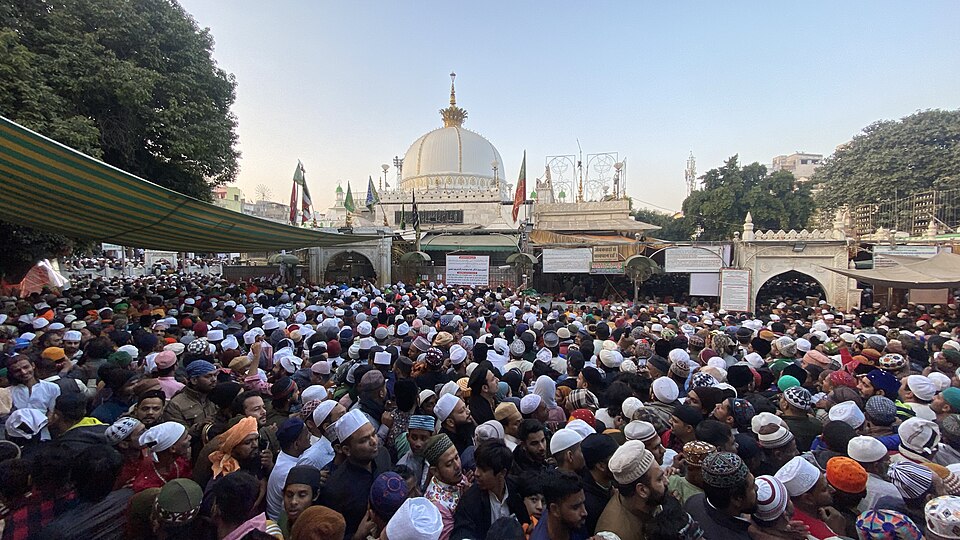
Two devotional currents ran through medieval Indian religious life for roughly a thousand years, overlapping in time and sometimes in spirit without being the same movement: bhakti, a Hindu tradition of intense personal devotion to a chosen god, and Sufism, the mystical strand of Islam that stressed a believer's direct, loving relationship with God over legal or ritual formality. Both emphasized emotional, personal experience of the divine over intermediaries and formal ritual, both produced poetry and song rather than only theology, and both spread substantially through languages ordinary people spoke rather than the classical languages — Sanskrit and Arabic or Persian — of religious scholarship. That shared shape has led some writers to describe them as a single syncretic wave; most historians today treat them as related but distinct traditions with their own separate roots, which happened to develop in the same historical space and occasionally interacted directly.
Bhakti's long road from Tamil temples to the Hindi heartland
Bhakti as an organized devotional tradition is generally traced to Tamil-speaking South India in the seventh to ninth centuries, where two groups of wandering poet-saints, the Vaishnava Alvars and the Shaiva Nayanars, composed hymns of intense personal love for Vishnu and Shiva respectively, later compiled into the Nalayira Divya Prabandham and the Tirumurai. From the eleventh century, philosophers such as Ramanuja gave bhakti a systematic theological foundation, and the tradition spread northward over the following centuries through figures including the fourteenth-century teacher Ramananda, reaching a wide following across North India by the fifteenth and sixteenth centuries.
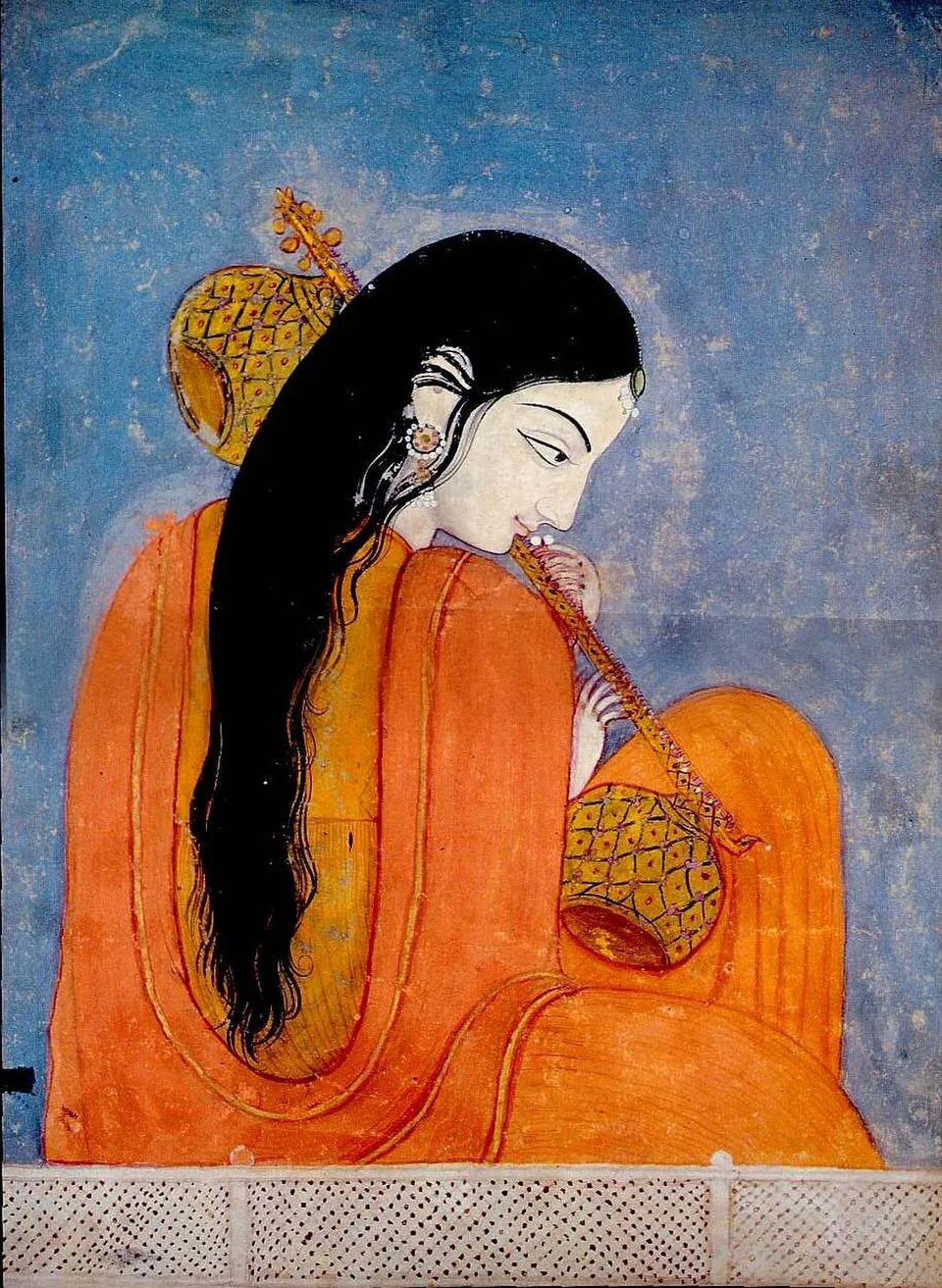
Northern bhakti split broadly into two streams. Saguna bhakti worshipped God with form and attributes — Krishna and Rama were the most common focus — and its major voices included Mirabai, a Rajasthani princess whose devotional songs to Krishna are still widely sung, and later Tulsidas, whose Hindi retelling of the Ramayana became hugely influential. Nirguna bhakti, by contrast, worshipped a formless, attributeless divine and tended toward sharper social critique: Kabir, a weaver by trade working in and around Varanasi, composed verses that mocked empty ritual in both Hindu and Muslim practice and rejected caste distinction outright, while Guru Nanak, founder of what became the Sikh tradition, built a related but ultimately distinct religious community around similar themes of formless devotion and social equality. In Karnataka, the twelfth-century Lingayat movement associated with Basava went further still, rejecting caste and Vedic ritual authority altogether in favor of direct devotion to Shiva.
Historians debate how much bhakti actually dismantled caste hierarchy in practice, as opposed to offering a spiritual equality that coexisted with largely unchanged social structures outside the devotional community itself — many bhakti saints came from low-caste or artisan backgrounds and directly criticized Brahminical privilege, yet caste distinctions persisted broadly across the societies bhakti moved through. Some scholars go further and describe bhakti less as a wholesale social reform movement than as a religious revival and reworking of older devotional currents already present in Vedic and post-Vedic Hindu tradition, rather than an entirely new departure.
Sufism and the Chishti order in India
Sufi orders (silsilahs) reached India alongside the political expansion of Turkic and Afghan Muslim rule from the twelfth century onward, and the Chishti order became the most influential and widely rooted in the subcontinent. Moinuddin Chishti, who settled in Ajmer — already an established Hindu pilgrimage town — around the late twelfth century, built a following that deliberately reached across religious lines, and his shrine (dargah) at Ajmer remains a major pilgrimage site for Muslims and, commonly, Hindus as well. His successors, including Nizamuddin Auliya in Delhi (died 1325), continued this pattern: Nizamuddin Auliya ran a community kitchen (langar) open to all regardless of faith, held musical devotional assemblies (sama) as a path to spiritual experience, and was famously close to the poet and musician Amir Khusrau. Sufi teachers generally emphasized love of God, service to the poor, and a personal spiritual path under a master (pir), in some tension with the more legalistic scholarly Islam (the ulema) practiced at court, and Delhi Sultanate and later Mughal rulers had a variously supportive and wary relationship with Sufi orders depending on the ruler.
Interaction, and where historians remain cautious
Bhakti and Sufi traditions coexisted for centuries across the same regions, and points of direct contact are documented: Kabir's verses draw on both Hindu and Islamic devotional vocabulary, and Sufi shrines have long attracted devotees across religious lines in the way Nizamuddin Auliya's own langar did in his lifetime. But historians including Rekha Pande caution against assuming Sufism caused or triggered the bhakti movement's growth: ecstatic devotional singing in local languages was already an established South Indian practice well before large-scale Islamic presence in the subcontinent, which points toward largely independent, parallel development rather than one tradition simply generating the other. The more defensible claim is narrower and better supported: that the two traditions, moving through overlapping social space over several centuries, absorbed some shared vocabulary and practice from each other at specific times and places, while remaining rooted in their own separate theological histories.