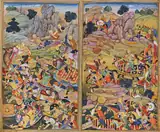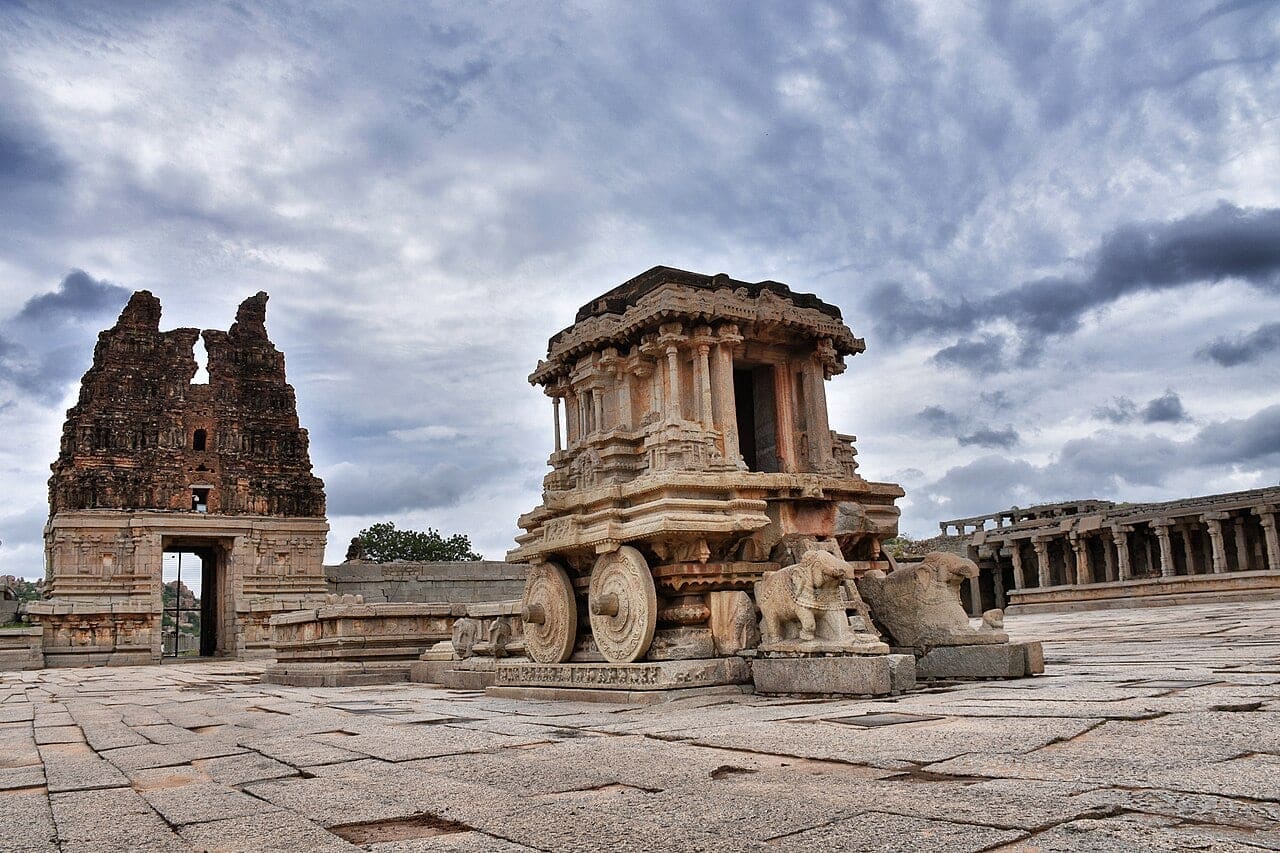
In January 1565 the four sultanates of the northern Deccan, which had spent most of the previous half-century fighting each other, put their armies together and marched south against the Vijayanagara Empire. On 23 January they met the Vijayanagara army near the Krishna River in northern Karnataka. By the end of the day the regent who ruled Vijayanagara, Aliya Rama Raya, had been captured and beheaded, and his army had broken and fled. The capital, one of the largest and richest cities in the world, lay open, and the victors spent months plundering it. The kingdom survived for another eighty years further south, but it never recovered its old power, and the city at Hampi was never lived in again on its old scale (Richard M. Eaton, A Social History of the Deccan[1]).
Who was Rama Raya?
Vijayanagara reached its height under Krishnadevaraya, who died in 1529. After a disputed succession, the throne passed in 1542 to a young prince, Sadashiva Raya, but real power was held by Krishnadevaraya's son-in-law, Rama Raya, who is often called Aliya ("son-in-law") Rama Raya. With his brothers Tirumala and Venkatadri, he ran the kingdom for more than twenty years, while Sadashiva was kept in the background (Burton Stein, Vijayanagara[2]).
Rama Raya had served for a time at the court of Golconda before his rise, and he knew Deccan politics well. North of Vijayanagara lay the five sultanates that had emerged from the break-up of the Bahmani kingdom: Bijapur, Ahmadnagar, Golconda, Bidar and Berar. They fought constantly, over the rich Raichur doab and over each other's borders. Rama Raya made himself the arbiter of their quarrels, allying with one against another and taking territory and tribute in return. He also employed Muslim soldiers and officers in large numbers in his own army.
Why did the sultans unite?
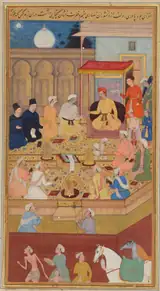
By the early 1560s Rama Raya had overplayed his hand. In 1561–62 he joined Bijapur and Golconda in an invasion of Ahmadnagar, and Muslim chroniclers later complained of the destruction and desecration his troops caused there. His demands on his allies grew, and his habit of switching sides made every sultan fear he would be next. The sultans settled their differences through a series of marriage alliances. Husain Nizam Shah of Ahmadnagar married his daughter Chand Bibi to Ali Adil Shah of Bijapur, and in late 1564 Bijapur, Ahmadnagar, Golconda and Bidar gathered their armies. Berar stayed out (Richard M. Eaton, A Social History of the Deccan[1]).
How was the battle fought?
The allies camped near the town of Talikota, north of the Krishna, which gave the battle its name, although the fighting took place some distance to the south, between the villages of Rakkasagi and Tangadagi. Rama Raya, who was then about seventy, or by some accounts older, led the Vijayanagara army in person. The chroniclers give huge numbers for both sides, which should not be taken literally, but the Vijayanagara army was probably larger (Robert Sewell, A Forgotten Empire[3]).
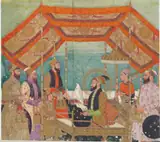
At first the battle went well for Vijayanagara, and the flanks of the allied army were pushed back. The centre, held by Husain Nizam Shah, had massed artillery, and the Persian historian Ferishta says that the guns were loaded with bags of copper coins, which tore through the Vijayanagara ranks at close range. Some accounts, including Portuguese ones, say that two Muslim commanders in Vijayanagara's service changed sides in the middle of the battle. Rama Raya, directing the fighting from a litter, was captured. He was brought before Husain Nizam Shah, who had him beheaded, and his head was displayed on a lance. When his army saw it, they fled (Burton Stein, Vijayanagara[2]).
What happened to the city of Vijayanagara?
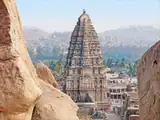
Tirumala, who had survived the battle, did not try to defend the capital. He fled south with Sadashiva and, according to later accounts, with much of the royal treasure loaded on elephants. With its army gone, the city was looted by the victorious armies and by bandits and local groups. Sewell, drawing on Portuguese sources, describes months of plunder and destruction. Palaces and many temples were burned or broken, and the population scattered. When the Italian traveller Cesare Federici passed through in 1567, he found the city deserted, its houses standing empty and wild animals living among them (Robert Sewell, A Forgotten Empire[3]).
The kingdom itself lived on. Tirumala made himself king and founded the Aravidu dynasty, ruling first from Penukonda and later from Chandragiri and Vellore, until the last major Vijayanagara king was driven out in 1646. But the governors of the far south, the nayakas of Madurai, Thanjavur and Ikkeri, and the Wodeyars of Mysore, became independent rulers in all but name (Burton Stein, Vijayanagara[2]).
Was Talikota a war of religions?
For a long time Talikota was told as a story of Hindu against Muslim. Robert Sewell's A Forgotten Empire, published in 1900, the first major English history of Vijayanagara, presented the kingdom as a Hindu bulwark against Islam and the battle as its tragic fall. That view became popular in both colonial and nationalist writing (Encyclopaedia Britannica, "Battle of Talikota"[4]).
Most historians today, among them Richard Eaton and Burton Stein, see the battle mainly as Deccan power politics. The sultanates had fought each other far more often than they had fought Vijayanagara, and they had all at different times allied with it. Vijayanagara's court used Persianate dress, titles and architecture, and its army included many Muslims. The coalition of 1565 was formed against one ruler, Rama Raya, whose aggressive diplomacy threatened them all, and it fell apart soon after the victory (Richard M. Eaton, A Social History of the Deccan[1]). The sultans did not occupy Vijayanagara or try to rule its lands. Within a few years they were fighting each other again, and Bijapur and Golconda spent the next decades taking territory in the south. Their own independence ended in 1686–87, when both were conquered by Aurangzeb.
Battle of Talikota timeline
| Date | Event |
|---|---|
| 1529 | Death of Krishnadevaraya |
| 1542 | Sadashiva Raya becomes king; Rama Raya holds real power |
| 1561–1562 | Rama Raya joins Bijapur and Golconda in invading Ahmadnagar |
| 1564 | Bijapur, Ahmadnagar, Golconda and Bidar form an alliance |
| 23 January 1565 | Battle near Talikota; Rama Raya is killed |
| 1565 | Vijayanagara is sacked; Tirumala flees south with the court |
| 1567 | Cesare Federici finds the city deserted |
| c. 1570 | Tirumala founds the Aravidu dynasty at Penukonda |
| 1646 | The last major Vijayanagara king loses his kingdom |
| 1686–1687 | Aurangzeb conquers Bijapur and Golconda |