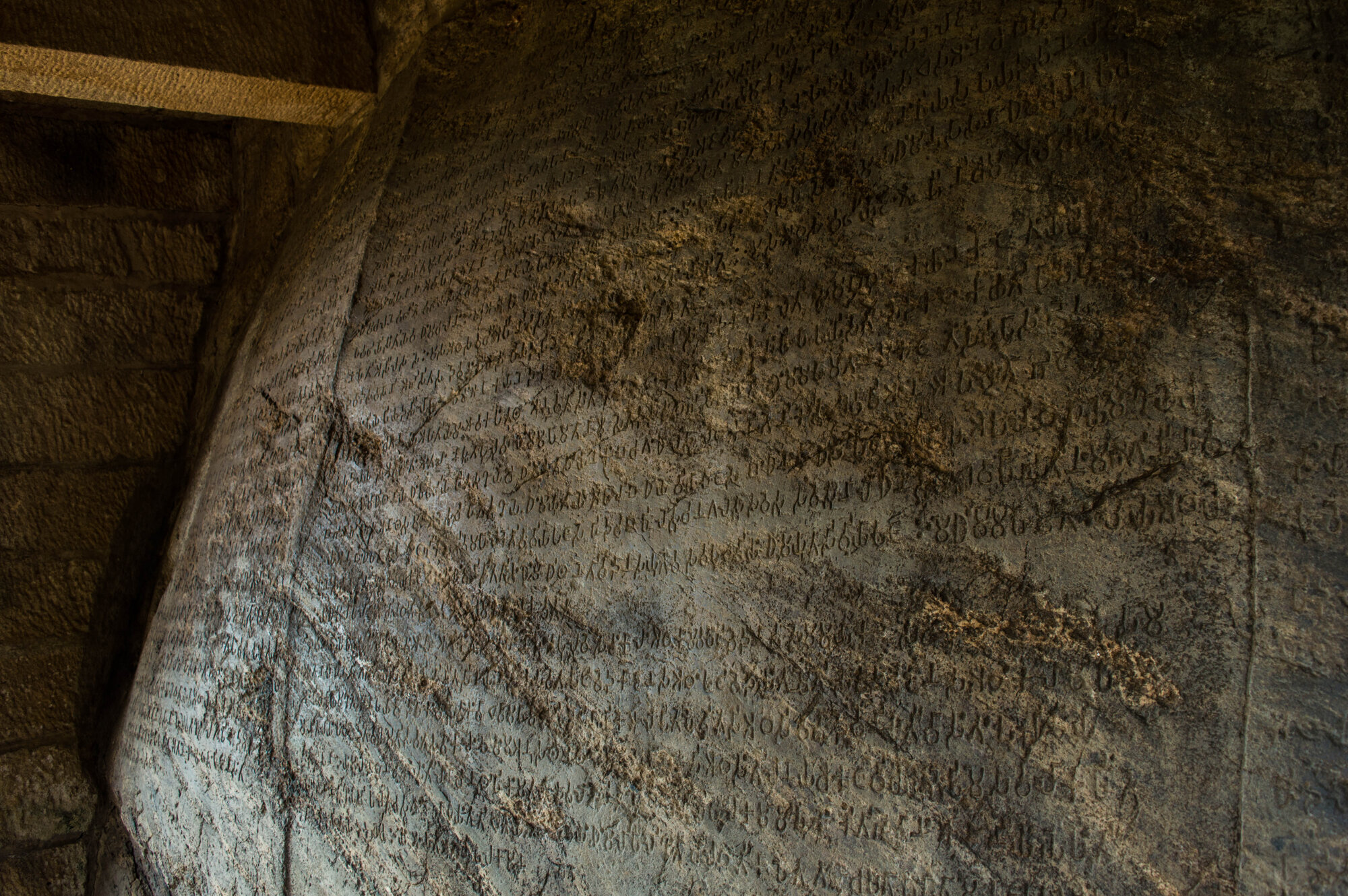
By the time work began on Major Rock Edict XIII, Ashoka had already won the war it describes. What the edict does next is unusual for an ancient ruler: rather than celebrating the victory, it dwells on the cost. Carved into stone at sites from Afghanistan to Karnataka, it states that the conquest of Kalinga, fought around 261 BCE, left some 100,000 dead, many more wounded, and vastly more displaced — and that the sight of this suffering left Ashoka himself remorseful. Few inscriptions from the ancient world are this self-critical, which is part of why historians treat the edicts as one of the most valuable — and most carefully managed — historical sources to survive from early India.
The confession that changed at the border
Edict XIII was inscribed at more than a dozen sites across Ashoka's empire, but not at the two rock edict locations inside Kalinga itself, Dhauli and Jaugada. There, in place of the war's casualty figures, officials cut a different message: an appeal for impartial justice, patience with wrongdoers, and a reminder that "all men are my children." Historians such as Romila Thapar read this substitution as deliberate political sensitivity, addressed to the very population that had just been conquered, rather than evidence of the harsher edict never having existed. It is a small but telling sign that Ashoka's inscriptions were not a single uniform decree, but a communications program tailored to its audience.
Dhamma as a program of government
After Kalinga, Ashoka's edicts describe a turn toward what he called dhamma — a term he used broadly, for a code of civic ethics rather than a specific creed. In practical terms, the edicts describe wells dug and shade and fruit trees planted along roads, rest houses built for travelers, and medical treatment established for people and, notably, for animals. Other edicts restrict the slaughter of certain species, discourage elaborate and wasteful ceremonies, and urge respect toward parents, elders, and ascetics of every religious community, not only Buddhists. Historians disagree over how much of this reflects genuine ethical conviction versus a ruler's search for a unifying civic vocabulary across a vast and religiously diverse empire — most likely, the edicts suggest, it was both at once.
Written in five scripts, then forgotten for two thousand years
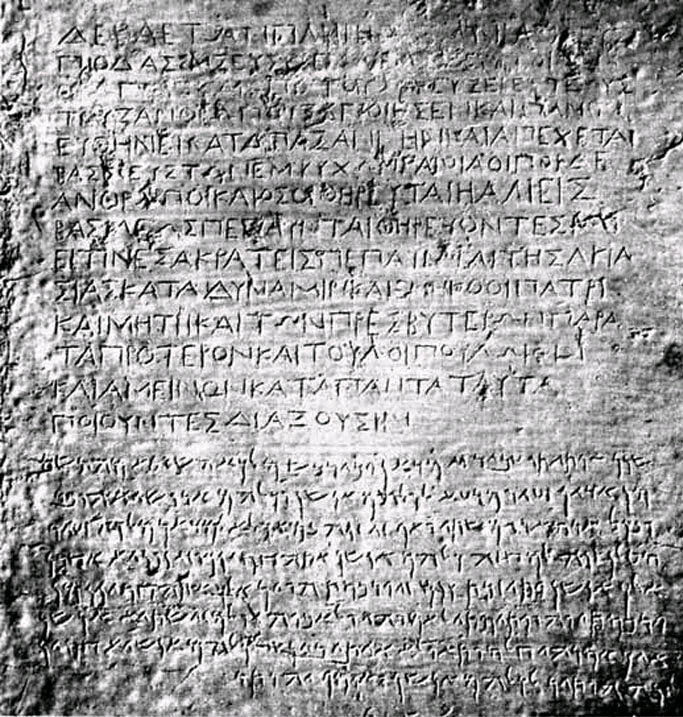
Carrying that message across such a large empire meant writing it differently depending on where it would be read. Most edicts, composed in the Prakrit language, used the Brahmi script; in the northwest, around modern Pakistan, versions at Shahbazgarhi and Mansehra instead used Kharosthi, a script derived from Aramaic and read right to left. At Kandahar in Afghanistan, officials went further still, inscribing a bilingual edict in Greek and Aramaic for a population shaped by earlier Achaemenid and Hellenistic rule. None of these scripts remained legible for long after the Mauryan state declined, and Ashoka's name faded from active memory in India for nearly two millennia. It took until 1837 for the British scholar James Prinsep to decipher Brahmi, using short, repeated inscriptions on pillars to work out its alphabet. What he found was a ruler who referred to himself not as "Ashoka" but as Devanampiya Piyadasi, "Beloved of the Gods, of Gracious Mien" — and it was only by cross-referencing that title against Sri Lankan Buddhist chronicles, the Dipavamsa and Mahavamsa, that scholars confirmed Piyadasi and Ashoka were the same person.
Missionaries beyond the empire
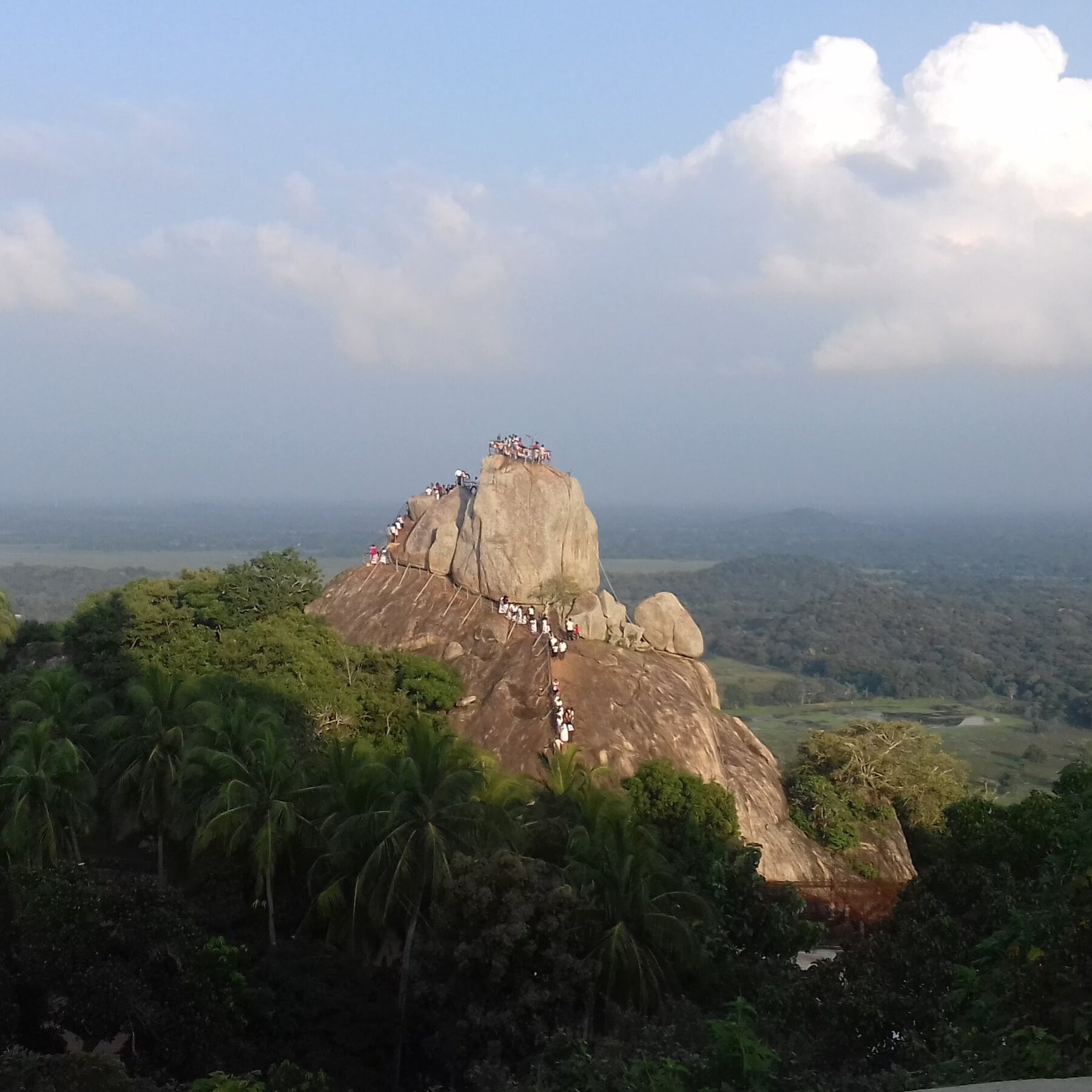
Buddhist tradition, recorded mainly in those same Sri Lankan chronicles rather than in the edicts themselves, credits Ashoka with convening a Third Buddhist Council at Pataliputra to settle disputes within the monastic community, after which missions were dispatched outward to spread the dhamma. The best-documented of these went to Sri Lanka, led by Mahinda — traditionally described as Ashoka's son — who is said to have converted King Devanampiya Tissa at Mihintale, near Anuradhapura, laying the foundation for Theravada Buddhism on the island. Separately, in his own edicts, Ashoka claims to have sent envoys of dhamma to a list of distant Hellenistic kings, including Antiochus II of Syria and Ptolemy II of Egypt. No independent record from those courts confirms the envoys arrived or had any effect, so historians treat the claim the same way they treat the rest of the edicts: as Ashoka's own account of his reign, worth taking seriously but not at face value.
Ashoka died around 232 BCE, and no later Mauryan ruler continued his inscription program at anything like the same scale. What survived was not a lasting empire — that unraveled within decades — but a body of carved text unmatched by any other Indian ruler of the period: a rare case of a government explaining itself, in its own words, in more than one language, to more than one audience, and admitting, at least once, that it had gotten something terribly wrong.