On the afternoon of 13 April 1919, a crowd of several thousand people had gathered in Jallianwala Bagh, an open patch of waste ground in the middle of Amritsar, hemmed in on every side by the backs of houses and high walls. It was Baisakhi, the spring harvest festival and one of the most important days in the Sikh calendar, and many in the garden had walked in from nearby villages to visit the Golden Temple a short distance away. Others had come to hear speeches against a new law and the arrest of two popular local leaders. Shortly after five o'clock, Brigadier-General Reginald Dyer marched a detachment of soldiers into the garden through its narrow main entrance, lined them up, and, without any warning to disperse, ordered them to open fire. They kept firing for about ten minutes, until their ammunition was nearly exhausted.
The official British count put the dead at 379. Indian inquiries put it far higher. The killing turned many Indians who had still believed in British fair play against colonial rule, and within little more than a year it had helped carry Gandhi into his first national campaign against the Raj.
A law, two arrests, and a city on edge
During the First World War the Government of India had governed with emergency powers to detain political suspects without trial. In March 1919, with the war over, it passed the Rowlatt Act to keep those powers in peacetime. The act was pushed through the Imperial Legislative Council over the opposition of every elected Indian member. Its critics summed it up in a slogan: na dalil, na vakil, na appeal, no argument, no lawyer, no appeal. Gandhi called for a nationwide hartal, a day of strikes and closed shops, and the protests that followed were among the first to spread across the whole country.
Punjab was under particular strain. It had supplied a large share of India's wartime soldiers, often through heavy-handed recruitment, and it had come out of the war with high prices and disease. Its Lieutenant-Governor, Sir Michael O'Dwyer, ran the province on the principle that any sign of unrest should be crushed at once. On 10 April, his administration arrested and deported two Amritsar leaders, Dr. Saifuddin Kitchlew and Dr. Satyapal, who had organised peaceful protests together and drawn Hindus and Muslims onto the same platform. When a crowd marched to demand their release, troops fired on it. The city then exploded: banks and public buildings were burned, five Europeans were killed, and an English missionary, Marcella Sherwood, was beaten in a narrow lane and left for dead before local residents rescued her.
Dyer arrived in Amritsar on the evening of 11 April and took control of the city. On the morning of 13 April he marched through parts of the town with a drummer and a proclamation banning public meetings, but it was read in only some neighbourhoods, and many in the city, let alone the visitors who arrived for Baisakhi, did not hear it. That afternoon he learned a meeting was being held in the Bagh.
Ten minutes in the garden
Dyer brought about 90 soldiers: some 50 riflemen, Gurkhas and Baluchi and Pathan soldiers of the Indian Army, and 40 Gurkhas armed only with khukris. He also brought two armoured cars mounted with machine guns, but the lane into the garden was too narrow for them. His riflemen formed up on a raised patch of ground near the entrance and fired straight into the crowd. People ran for the few narrow exits and tried to climb the walls; the troops fired at the places where the crowd was thickest. Many jumped into a well in the garden to escape the bullets. When the firing stopped, by the official count 1,650 rounds had been fired. Dyer marched his men out and left the dead and wounded where they lay. A curfew he had imposed kept families from coming out after dark to help them, and many of the wounded died during the night.
How many people died is still disputed. The Hunter Committee, the official British inquiry, accepted a figure of 379 dead and estimated the wounded at about three times that number. That count was built from names reported to the authorities, at a time when reporting a dead relative could mean admitting they had been at an illegal meeting. The Indian National Congress's own inquiry, whose members included Madan Mohan Malaviya, Motilal Nehru and Gandhi, put the toll at around 1,000, and historians today generally accept that the official figure was an undercount without being able to fix a precise number.
Martial law and the crawling order
Martial law was declared in Amritsar and other Punjab districts in the days that followed. In Amritsar, Dyer ordered that any Indian passing along the lane where Marcella Sherwood had been attacked must do so on all fours, the so-called crawling order, and men were publicly flogged nearby. Elsewhere in the province, aircraft machine-gunned and bombed a crowd at Gujranwala, and people were made to salute British officers, whipped for minor offences, and tried in summary courts. Press censorship meant that much of India learned the details only months later.
Inquiries, and two verdicts on Dyer
Under pressure, the government set up the Disorders Inquiry Committee in October 1919, chaired by the Scottish judge Lord Hunter, with three Indian members among its eight. Dyer's testimony did more damage to his reputation than anything his critics said. He told the committee he had fired without warning, that he had kept firing until the crowd dispersed, that he would have used the machine guns if he could have got the armoured cars into the garden, and that tending the wounded was not his job. His aim, he explained, had been to produce a "moral effect" across Punjab. The committee's report, completed in March 1920, condemned his decision to fire without warning and to continue firing as the crowd fled, though it stopped short of calling for punishment. Its Indian members wrote a minority report that went further, criticising the whole conduct of martial law.
Dyer was relieved of his command and retired. In London, Winston Churchill, then Secretary of State for War, called the shooting "an episode which appears to me to be without precedent or parallel in the modern history of the British Empire" and "a monstrous event", and the House of Commons backed the government. But the House of Lords passed a motion in Dyer's favour, and a fund raised by the Morning Post newspaper for "the man who saved India" collected more than £26,000. For many Indians, that reaction mattered almost as much as the massacre itself. It suggested that a large part of the British public saw nothing wrong in what had happened.
How historians read it
For a long time, Dyer's defenders framed the massacre as one officer's misjudgement in a city on the verge of revolt. Historians have moved away from that view. The historian Kim A. Wagner, working through the military and administrative records in Amritsar 1919, argues that Dyer acted in a colonial culture shaped by the memory of the 1857 uprising, in which British officials read every protest as the first sign of another rebellion and saw exemplary violence as the way to stop it. On that reading, the massacre was an extreme case of how British officials in India already thought about keeping order. Where historians differ is mostly on how far up the chain of command responsibility runs: O'Dwyer endorsed Dyer's action at the time, and the martial law regime that followed was a provincial policy rather than one man's decision.
After 1919
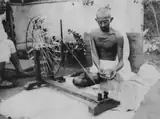
Rabindranath Tagore, India's first Nobel laureate, wrote to the Viceroy, Lord Chelmsford, at the end of May 1919, asking to be relieved of the knighthood he had received in 1915. Gandhi, who had supported British recruitment during the war, concluded that cooperation with the Raj was no longer possible. In August 1920 he returned the Kaiser-i-Hind medal he had been awarded for his ambulance work in South Africa, and the same month he launched the Non-Cooperation Movement, joining the Punjab grievances to the Khilafat cause in a single campaign.
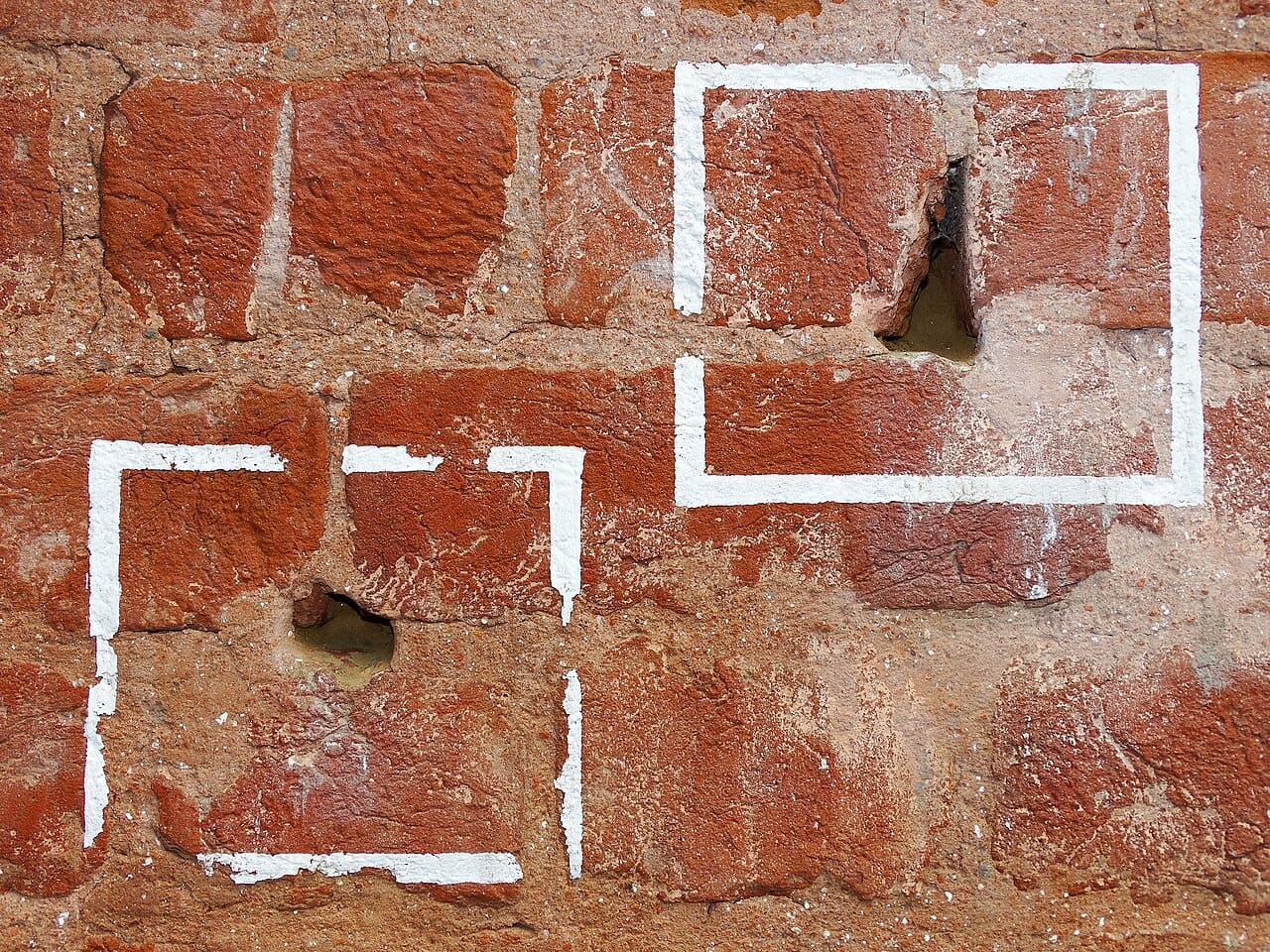
The Bagh was bought by a public trust soon afterwards, and a memorial designed by the American architect Benjamin Polk was inaugurated in 1961. The bullet holes in its walls are still preserved and marked, and the well into which people jumped is preserved as the Martyrs' Well. In March 1940, Udham Singh, a Punjabi revolutionary who said he had been in Amritsar in 1919, shot Michael O'Dwyer dead at a meeting in London; he was hanged that July. Dyer himself had died in England in 1927. British prime ministers have since called the massacre "deeply shameful" (David Cameron, 2013) and a "shameful scar" on British Indian history (Theresa May, 2019), but no formal apology has been made.