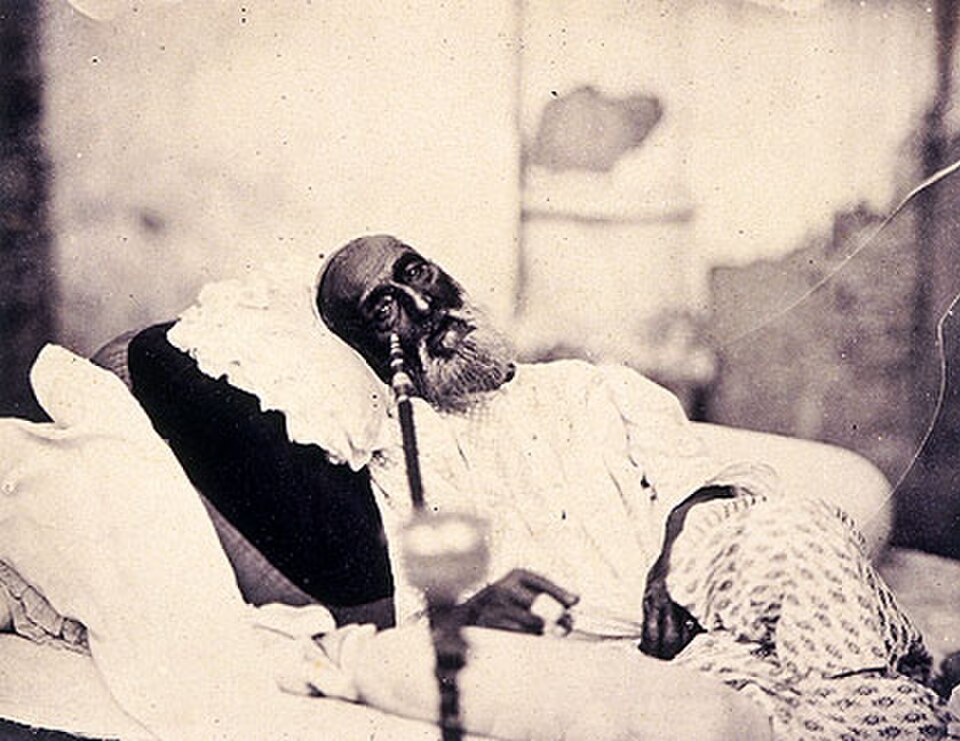
In May 1857, sepoys of the British East India Company's Bengal Army rose up at Meerut, beginning more than a year of warfare that shook company rule across northern and central India. Historians describe the uprising's causes as layered rather than singular: decades of territorial annexation, including Lord Dalhousie's Doctrine of Lapse, had dispossessed rulers and unsettled landholders; heavy land revenue demands and the decline of traditional weaving and craft economies had bred economic grievance; and within the army itself, sepoys resented pay, promotion, and service conditions that treated them as inferior to British troops. The immediate spark was narrower and more specific: the new Pattern 1853 Enfield rifle required soldiers to bite off the end of a greased paper cartridge before loading, and a rumor spread through the ranks that the grease was made from cow and pig fat, an offense to Hindu and Muslim religious practice alike. In March 1857, a sepoy named Mangal Pandey attacked his officers at the Barrackpore garrison over the cartridge issue; he was court-martialled and executed in early April, an episode later given outsized symbolic weight in nationalist memory as an opening act of resistance.
From Meerut to Delhi — and beyond
The rebellion proper began at Meerut on 10 May 1857, when sepoys who had been imprisoned for refusing the new cartridges were freed by their comrades, who then killed several British officers and marched overnight to Delhi. There, with no substantial British garrison to oppose them, the sepoys turned to the aged, largely powerless Mughal emperor Bahadur Shah Zafar and proclaimed him the restored sovereign of Hindustan — a symbolic act that reflected how, even after a century of decline, the Mughal throne still carried unmatched legitimacy as a rallying point. The revolt spread quickly through the United Provinces, Bihar, and parts of central India, drawing in not only sepoys but deposed rulers, landholders, and peasants with their own grievances: Nana Sahib at Kanpur, where a prolonged siege ended in the killing of British hostages and a brutal reprisal; defenders of Lucknow, which endured a months-long siege; and the Rani of Jhansi, Lakshmibai, who led her own troops in battle and became one of the revolt's most enduring symbols. By mid-1858 the British had recaptured Delhi, Kanpur, Lucknow, and Jhansi, and organized resistance had largely collapsed, though scattered fighting continued into 1859.
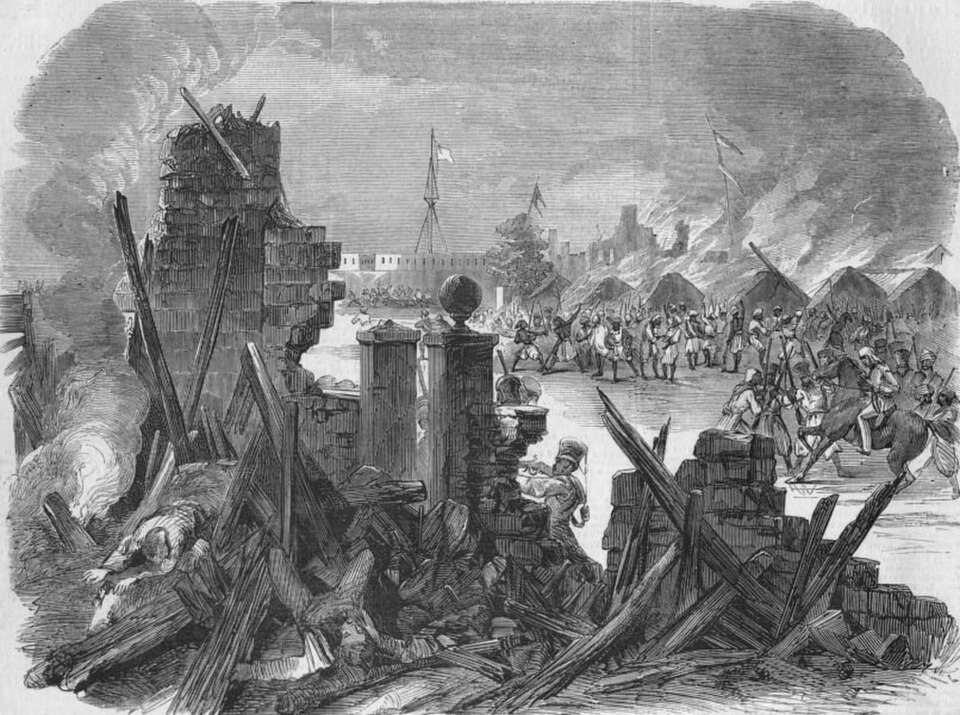
A mutiny, a war of independence, or both — and an unsettled toll
What to call the events of 1857-58 has been debated for more than a century and a half. Colonial-era British writers generally described it as a "sepoy mutiny" — an army rebellion rooted in specific grievances, without wider political purpose. Indian nationalist writers from the early twentieth century onward, prominently Vinayak Damodar Savarkar, instead framed it as India's "First War of Independence," a unified national uprising against foreign rule. Most professional historians today reject both extremes: the rebellion drew in far more than disaffected soldiers, uniting sepoys, deposed princes, religious leaders, and ordinary peasants and artisans across a wide belt of northern and central India, which makes "mere mutiny" an inadequate description — but it also lacked a shared command structure, a common political program, or the concept of a unified Indian nation that "war of independence" implies, since regional and dynastic loyalties, rather than a shared nationalism, motivated many participants. The human cost is similarly difficult to state with precision: roughly 13,000 British and allied soldiers are estimated to have died, alongside tens of thousands of rebel sepoys, but the number of Indian civilians killed in the fighting and, especially, in the sweeping British reprisals that followed the recapture of rebel towns, is not reliably documented — estimates from serious historians have ranged from the tens of thousands into the hundreds of thousands, and some Indian historians argue the true figure may never be established because displaced populations cannot be distinguished from the dead in surviving records. What is not disputed is the revolt's consequence: in 1858 the British Parliament abolished East India Company rule altogether, transferring India to direct Crown administration under a new Viceroy — the beginning of what is usually called the British Raj.