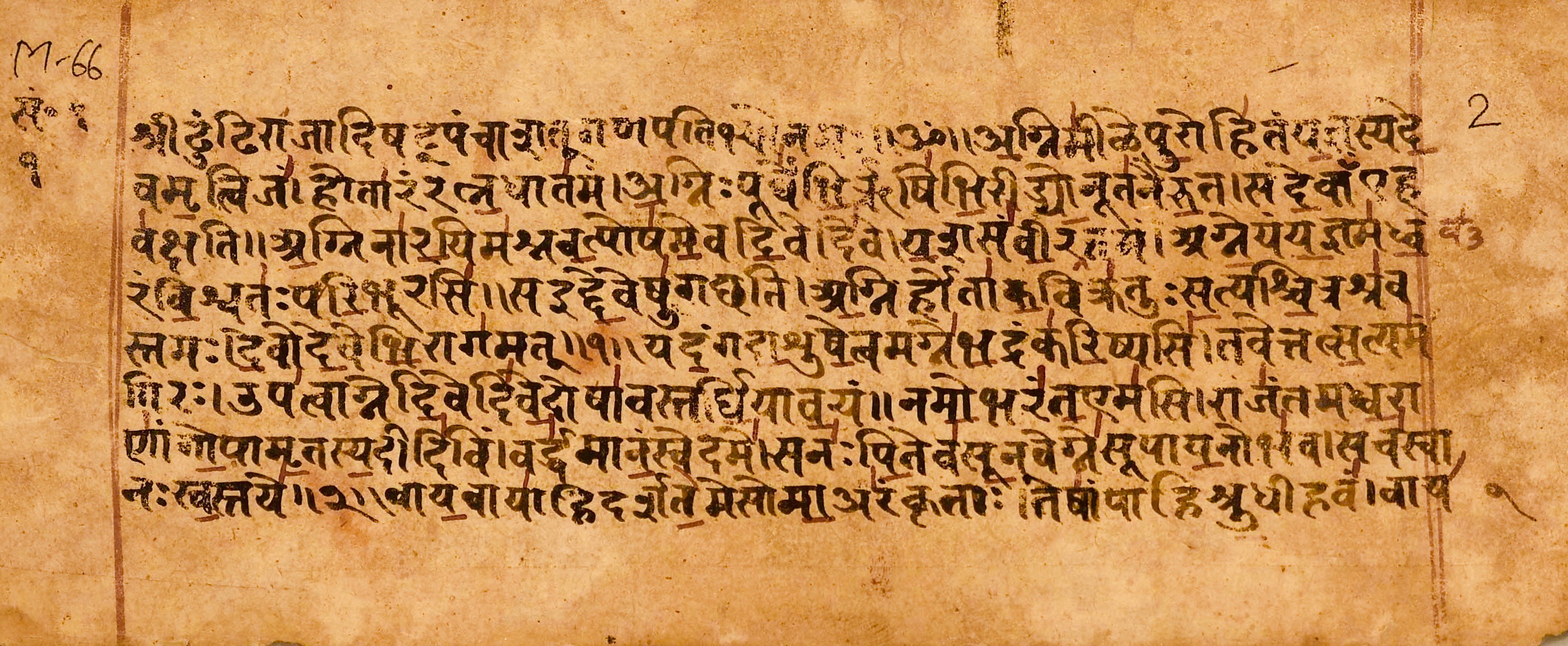
For nearly a thousand years after the last great Indus cities fell silent, most of what historians know about the northern subcontinent comes from a single, vast body of orally composed religious poetry: the Vedas. The period from roughly 1500 BCE to 600 BCE is called the Vedic Age, and scholars generally split it into two phases — an Early Vedic (or Rigvedic) period lasting to about 1000 BCE, and a Later Vedic period running from about 1000 to 600 BCE. The name comes from four collections, the Rigveda, Yajurveda, Samaveda, and Atharvaveda, of which the Rigveda — more than a thousand hymns addressed to gods such as Indra, Agni, and Varuna — is the oldest layer, preserved for centuries through exact oral memorization before it was ever written down. Mainstream scholarship holds that Indo-Aryan-speaking peoples migrated into the northwestern subcontinent in the centuries following the Indus Valley Civilization's decline, bringing an early form of Sanskrit and the beginnings of Vedic religious practice with them; a minority of Indian scholars have argued instead for an indigenous origin of the Aryans within the subcontinent, but this view remains outside the international academic mainstream.
Life and belief in the Early Vedic period
The society reflected in the Rigveda was semi-nomadic and pastoral, organized around kin-based tribes (jana) rather than territorial states, with cattle as the primary measure of wealth and a frequent cause of conflict. Political authority rested with a tribal chief, or rajan, whose power was checked by two assemblies: the sabha, a smaller council of elders and influential men, and the samiti, a broader tribal gathering that could weigh in on the chief's decisions. Religious life centered on yajna, fire sacrifices performed by priests in exchange for hymns of praise and offerings, seeking prosperity, cattle, and victory in battle from the gods rather than the more abstract spiritual goals of later Hinduism. Society at this stage was comparatively fluid: the Rigveda shows some occupational distinctions but nothing resembling a rigid, hereditary caste order.
The Later Vedic shift: iron, kingdoms, and varna
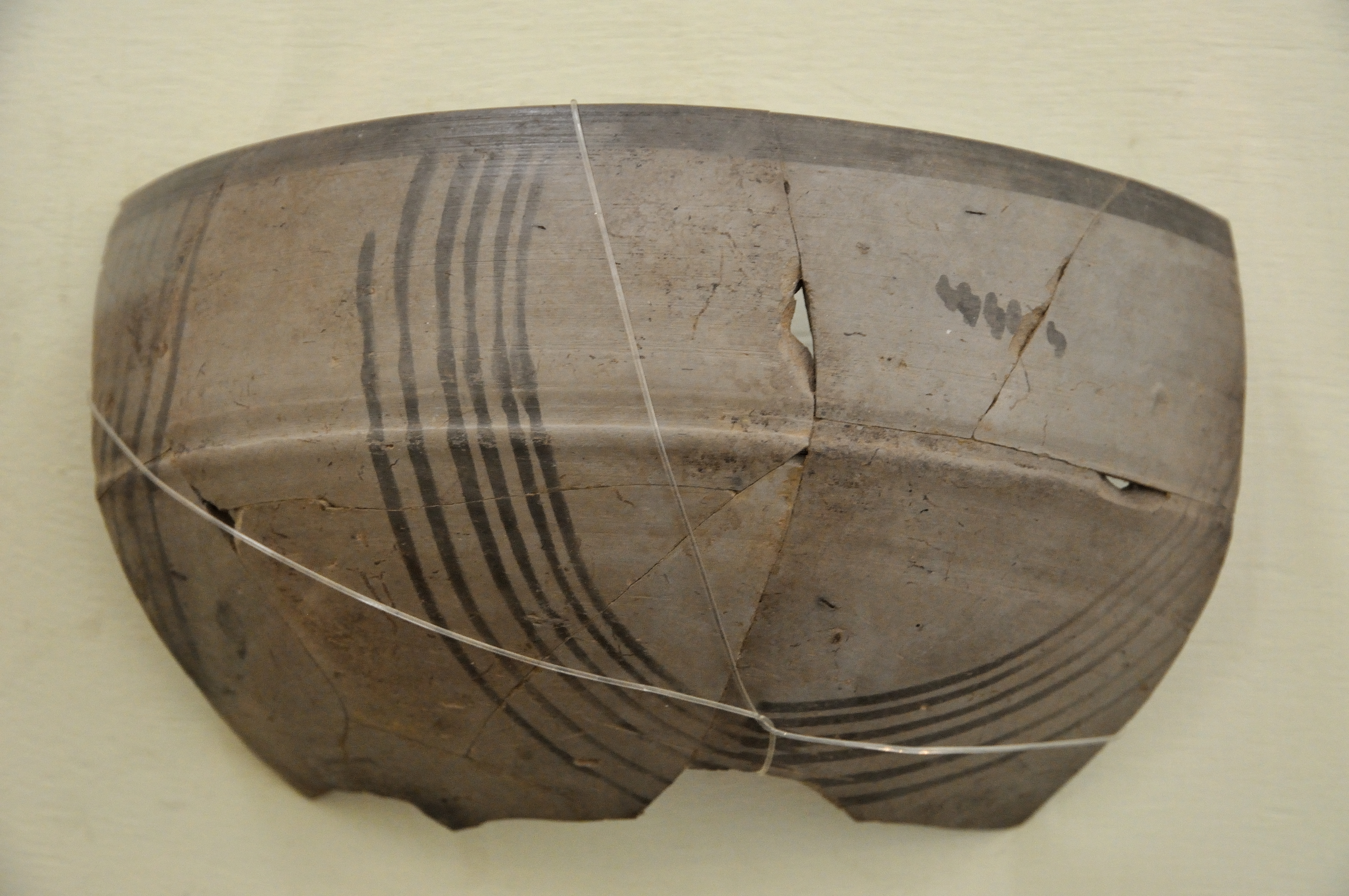
By around 1000 BCE, Vedic-speaking communities had moved east from the Punjab into the fertile Gangetic plain, a shift historians trace archaeologically through Painted Grey Ware pottery — a distinctive fine grey ceramic associated with early iron tools and settled village life across this region. Iron technology allowed heavier forest clearance and more intensive agriculture, which in turn supported larger, more settled populations and the growth of bigger political units, most notably the Kuru-Panchala realm in the upper Gangetic plain, often treated as the first significant state to emerge after the Indus cities. Kingship grew more hereditary and more elaborate, marked by long, expensive royal consecration rituals described in later Vedic texts, and the sabha and samiti gradually lost influence to the king's court. This period also saw the four-fold varna order — Brahmins, Kshatriyas, Vaishyas, and Shudras — harden into something closer to the birth-based system familiar from later Indian history, a change not present in the Rigveda's earlier, looser social picture. Religious thought grew more elaborate too: the Brahmanas explained and systematized sacrificial ritual in prose, while the Upanishads, composed toward the end of the Later Vedic period, turned toward philosophical questions about the self (atman) and ultimate reality (brahman) that would shape later Indian philosophy for millennia.
Debates historians still have
Much of the Vedic Age's chronology rests on internal textual analysis rather than firm archaeological dates, since the Vedas describe no kings, dynasties, or events that can be independently cross-checked against inscriptions the way Mauryan or Gupta history can be. Scholars broadly agree on the sequence of Rigveda, other Samhitas, Brahmanas, and Upanishads, and on the rough centuries involved, but exact dates for individual texts remain estimates rather than certainties, and the identity, timing, and scale of the Indo-Aryan migration continue to generate genuine scholarly debate, sharpened in recent decades by ancient DNA studies that most specialists read as supporting a migration into South Asia but that remain contested in parts of the public conversation in India. What is not seriously disputed is the Vedic Age's importance: the language, religious vocabulary, and social categories that took shape in these centuries — Sanskrit, the varna order, the philosophical questions of the Upanishads — fed directly into the mahajanapadas and empires, Mauryan and later, that followed.