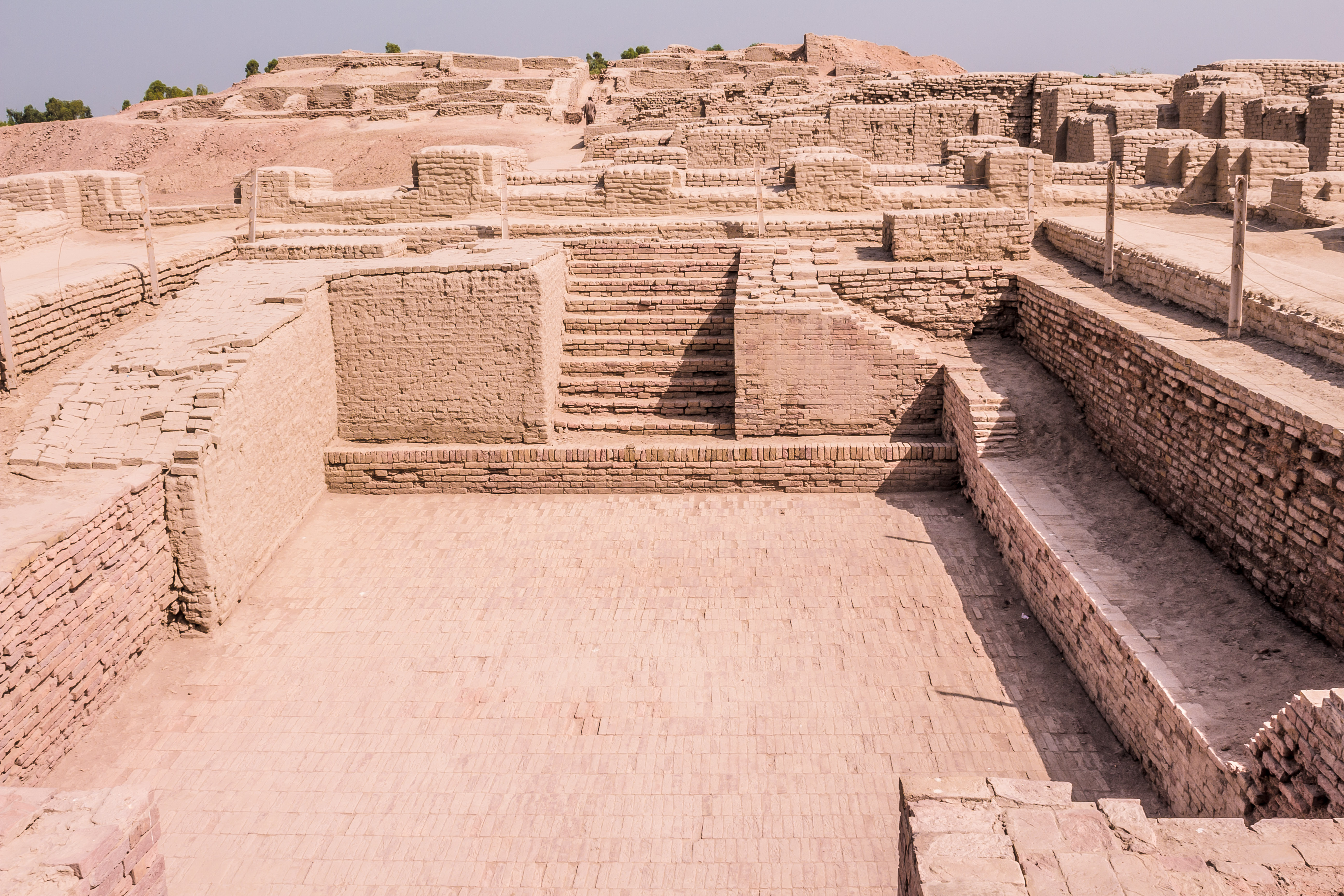
By 2600 BCE, in the valley of the Indus and its tributaries, people were living in cities with covered drains, public wells, and granaries — centuries before comparable urban planning appears almost anywhere else in the world. The Indus Valley Civilization (sometimes called the Harappan Civilization, after the first site excavated) is one of the world's three earliest urban civilizations, alongside Mesopotamia and ancient Egypt, and by far the most extensive of the three: at its height it stretched from near the Iran-Pakistan border in the west to close to modern Delhi in the east.
A civilization of planned cities
Archaeologists divide the civilization into three broad phases: an Early Harappan period (roughly 3300-2600 BCE) of village farming communities, a Mature Harappan period (2600-1900 BCE) when cities flourished, and a Late Harappan period (1900-1300 BCE) of gradual decline and dispersal. Over 1,000 settlements have been identified across the Indus and the now-dry Ghaggar-Hakra river system, but two sites stand out: Mohenjo-daro and Harappa, both in present-day Pakistan, whose scale suggests they were major regional centers — possibly even twin capitals of a single state.
Mohenjo-daro, identified in 1919-20 by R. D. Banerji of the Archaeological Survey of India, is the best preserved of these cities. It was laid out on a grid, with a raised citadel mound overlooking a lower residential town, brick houses of one and two storeys, and a remarkable public structure known as the Great Bath — a brick-and-bitumen pool nearly 12 metres long, most likely used for ritual bathing. Beneath the streets ran covered drains that carried wastewater away from houses, and more than 700 wells supplied the city, roughly one for every three houses — sanitation infrastructure many cities would not match again for millennia. Bricks across the civilization's cities were made to standard ratios, and merchants used a uniform system of stone weights, suggesting some form of shared administrative or commercial authority across enormous distances.
Trade, writing, and a script no one has read
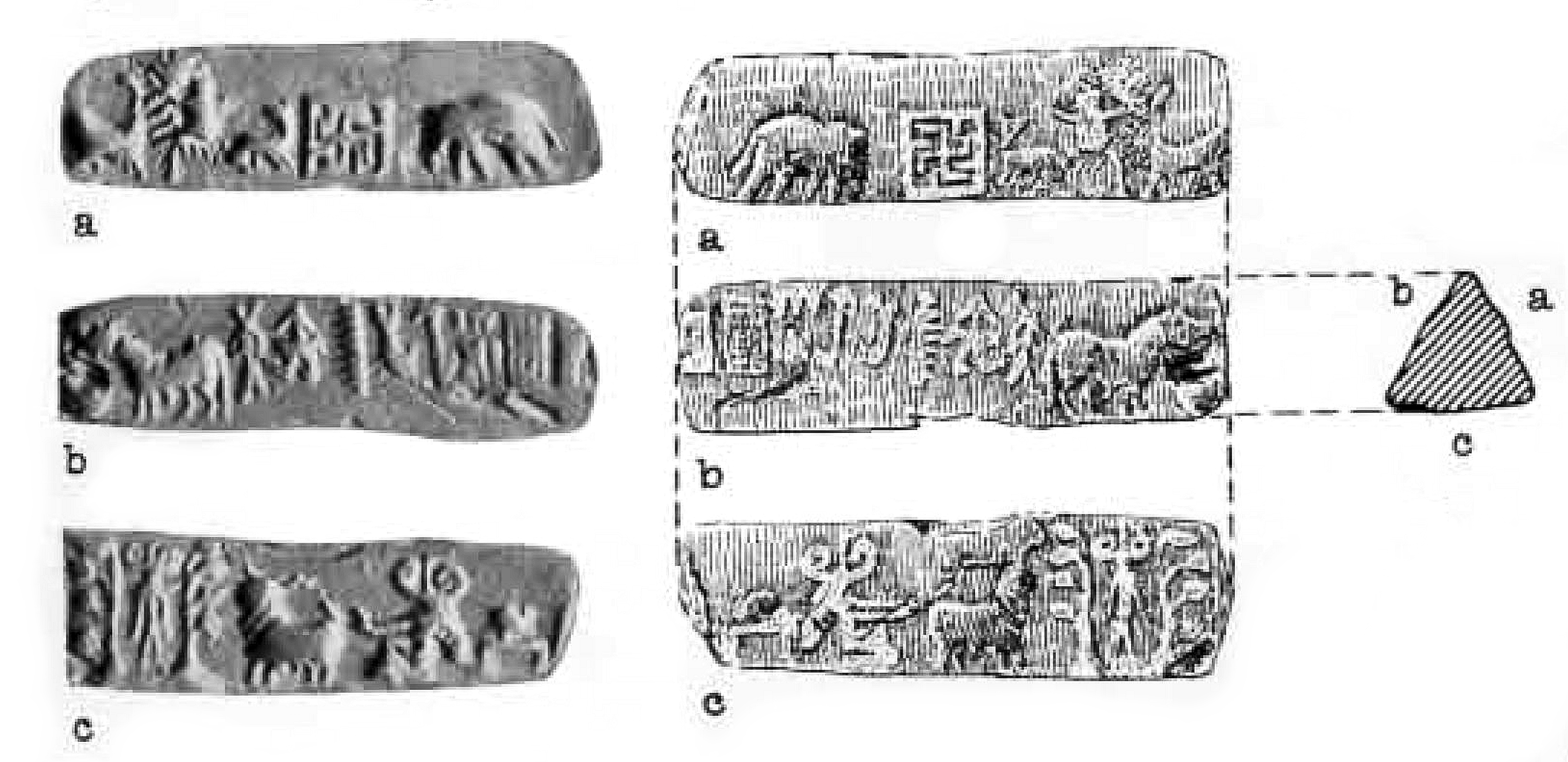
The Indus cities traded widely: carnelian beads, ivory, and cotton textiles moved outward, while materials such as lapis lazuli came in from as far as Afghanistan, and Indus seals and goods have turned up at Mesopotamian sites, pointing to maritime and overland links with Sumer. Indus artisans and merchants used a script of short inscriptions, most often stamped onto small steatite seals alongside animal motifs — a unicorn-like bull is the most common. Despite more than a century of attempts, the Indus script has never been deciphered: no bilingual inscription comparable to the Rosetta Stone has been found, and most surviving texts are too short to test decipherment claims against. This means historians still cannot say with confidence what language the Indus people spoke. It remains a genuinely open, actively debated question — most specialists favor an early Dravidian-language connection, but this is not settled fact, and no religious texts, king lists, or royal names survive to tell the story the way later Vedic or Mauryan sources do.
Decline and legacy
By around 1900 BCE the great cities were shrinking, and by 1300 BCE urban life along the Indus had effectively ended, though rural Late Harappan communities persisted and gradually merged into other regional cultures further east and south. The causes remain debated rather than definitively solved: leading explanations point to a weakening of the summer monsoon and the drying up of the Ghaggar-Hakra river system — identified by some scholars, though not all, with the Rigveda's Saraswati — which would have undercut the agriculture that fed the cities; other historians emphasize shifting trade patterns or internal political change. There is no solid archaeological evidence for the once-popular idea of a violent invasion ending the civilization. What is well established is that the Indus Valley Civilization's urban and technical achievements — its drainage systems, standardized weights, and planned streets — mark it as one of the great early experiments in city life anywhere in the ancient world, one that a city like Mohenjo-daro sustained for the better part of a thousand years before its streets, quietly, emptied out.