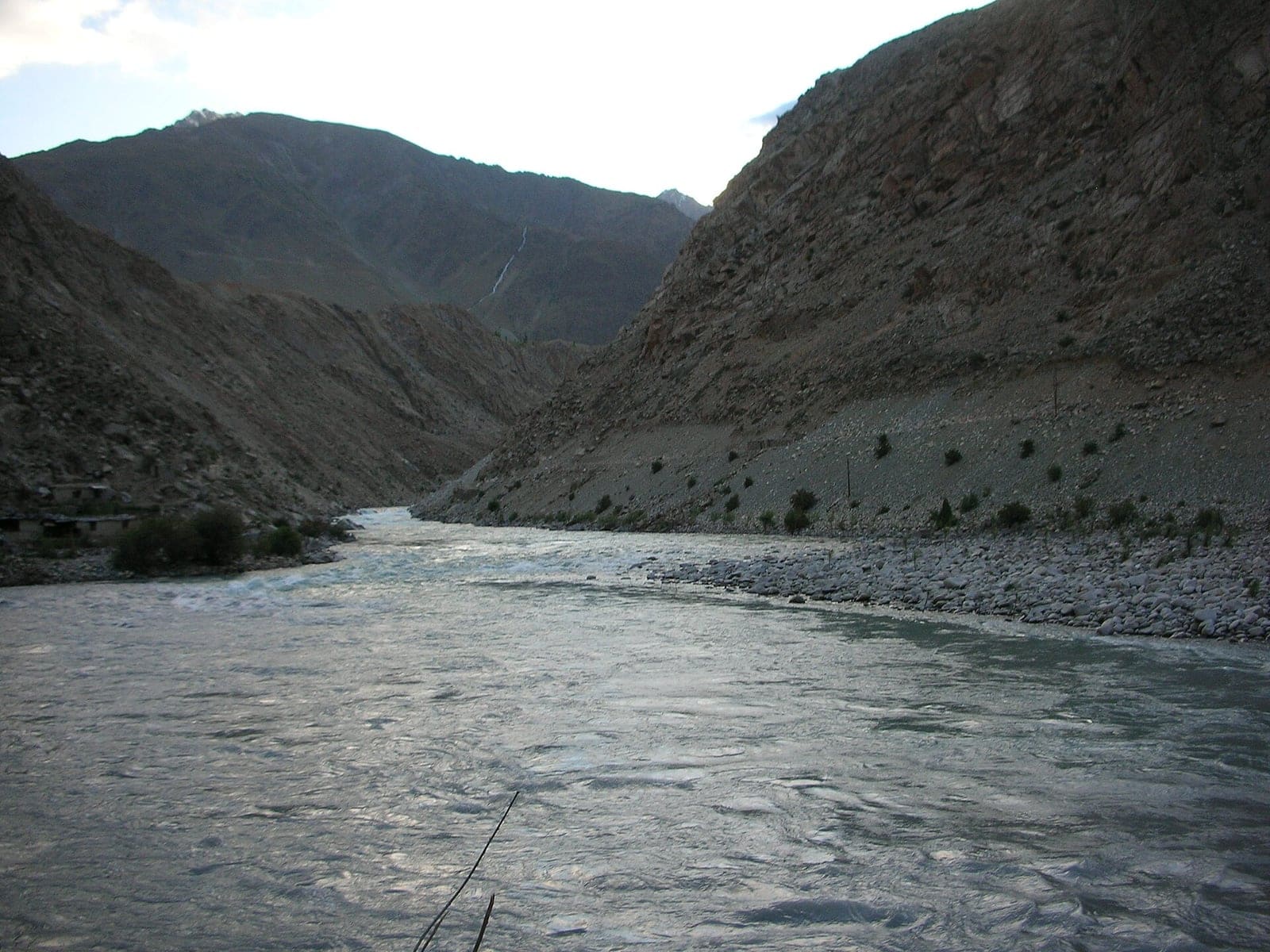
In early May 1999, shepherds grazing their animals in the mountains near Kargil, in Ladakh, reported seeing armed men on the ridges. Indian Army patrols sent up to investigate found that the heights above the Srinagar–Leh highway, along a stretch of more than a hundred kilometres of the Line of Control, had been occupied. The intruders were mostly soldiers of Pakistan's Northern Light Infantry, though Pakistan at first insisted they were Kashmiri militants. Over the next twelve weeks India fought to drive them out, in battles at altitudes of up to 5,500 metres. The fighting ended in July with Pakistan's withdrawal, at a cost of 527 Indian soldiers killed. Coming a year after both countries had tested nuclear weapons, it was the first war between two nuclear-armed states (Kargil Review Committee, From Surprise to Reckoning[1]).
How did the war begin?
The Line of Control, which has divided Kashmir since the war of 1971 and the Simla Agreement, runs across some of the highest and coldest terrain in the world. In winter both armies pulled back from many posts on the Kargil heights, where temperatures fall far below freezing and snow closes the passes. In the winter of 1998–99, Pakistani troops crossed the Line and occupied the empty Indian posts and other ridges, in the Mushkoh, Dras, Kaksar and Batalik sectors. From there they could direct artillery fire on the highway that supplied Indian troops in Ladakh and on the Siachen glacier (Kargil Review Committee, From Surprise to Reckoning[1]).
The timing shocked India. In February 1999 the Indian prime minister, Atal Bihari Vajpayee, had travelled by bus to Lahore and signed the Lahore Declaration with Pakistan's prime minister, Nawaz Sharif, promising to resolve their disputes peacefully. The Pakistani journalist and historian Shuja Nawaz has shown that the Kargil operation was planned by a small group of generals around the army chief, Pervez Musharraf. They believed India would not be able to dislodge them before winter, and that the operation might force the world to pay attention to Kashmir. How much Sharif knew and approved has been disputed ever since (Shuja Nawaz, Crossed Swords[2]).
How was the war fought?
At first India badly underestimated the scale of the intrusion. A patrol led by Captain Saurabh Kalia was captured in mid-May, and the soldiers' mutilated bodies were returned weeks later. By late May the Army had launched Operation Vijay, bringing in troops from across the country. On 26 May the Air Force began air strikes, Operation Safed Sagar, the first use of air power in Kashmir since 1971. It lost two fighter aircraft and a helicopter in the first days, and had to adapt its tactics to bomb small positions on high peaks. The government decided that Indian forces would not cross the Line of Control, which kept the war limited and won India international support (Ramachandra Guha, India after Gandhi[4]).
The infantry battles were fought up near-vertical slopes, mostly at night, against enemies dug in above them. Artillery, including the Bofors guns bought in the 1980s, fired thousands of shells to support each attack. On the Tololing ridge above Dras, attacks failed for weeks, with heavy losses, before 2 Rajputana Rifles took it on 13 June. Point 5140 fell to 13 Jammu and Kashmir Rifles on 20 June; its company commander, Captain Vikram Batra, signalled his success with the line "Yeh dil maange more", from a soft-drink advertisement, and was killed weeks later on Point 4875. On the night of 3–4 July, troops of 18 Grenadiers and 8 Sikh captured Tiger Hill, the peak that overlooked Dras town and the highway (Kargil Review Committee, From Surprise to Reckoning[1]).
Four soldiers won the Param Vir Chakra, India's highest award for gallantry: Captain Vikram Batra and Lieutenant Manoj Kumar Pandey, both posthumously, and Grenadier Yogendra Singh Yadav and Rifleman Sanjay Kumar, who survived. It was also the first Indian war shown on television. Reporters filed from the front, and every night the news showed coffins arriving home.
How did it end?
As Indian troops took back the heights, Pakistan came under pressure from abroad to withdraw. The United States, which had imposed sanctions on both countries after the nuclear tests, made clear that it saw Pakistan as the aggressor. On 4 July 1999, Nawaz Sharif flew to Washington and met President Bill Clinton at Blair House. Clinton told him the United States would not mediate over Kashmir as a reward for the intrusion, and Sharif agreed to pull Pakistani forces back behind the Line of Control. The American diplomat Strobe Talbott later described how close the crisis had come to wider war, and how worried Washington had been about the nuclear dimension (Strobe Talbott, Engaging India[3]).
Fighting continued as Indian troops cleared the last positions. On 26 July 1999, India announced that all the intruders had been evicted. The day is now marked as Kargil Vijay Diwas. India's official toll was 527 killed and more than 1,300 wounded. Pakistan's losses have never been officially stated, and estimates differ widely.
What changed after Kargil?
In Pakistan, the war's failure helped widen the split between Sharif and the army. In October 1999, when Sharif tried to dismiss Musharraf, the army removed the prime minister in a coup, and Musharraf ruled Pakistan until 2008 (Shuja Nawaz, Crossed Swords[2]).
In India, the government appointed a committee chaired by the strategic analyst K. Subrahmanyam to find out why the intrusion had gone undetected. Its report, From Surprise to Reckoning, found failures in intelligence gathering and in sharing what was known, and its recommendations led to a review of the whole national security system. New bodies followed, among them the Defence Intelligence Agency and the Integrated Defence Staff, and the proposal from that review for a single senior military adviser was finally carried out two decades later, when the post of Chief of Defence Staff was created in 2019. The memorial at Dras, below Tololing, lists the names of the dead (Kargil Review Committee, From Surprise to Reckoning[1]).
Kargil War timeline
| Date | Event |
|---|---|
| May 1998 | India and Pakistan test nuclear weapons |
| Winter 1998–99 | Pakistani troops occupy heights across the Line of Control |
| 21 February 1999 | Vajpayee and Sharif sign the Lahore Declaration |
| Early May 1999 | Shepherds report intruders; Indian patrols confirm |
| 26 May 1999 | Indian Air Force begins air strikes |
| 13 June 1999 | Tololing recaptured |
| 20 June 1999 | Point 5140 recaptured |
| 4 July 1999 | Tiger Hill recaptured; Sharif meets Clinton in Washington |
| 7 July 1999 | Captain Vikram Batra killed on Point 4875 |
| 26 July 1999 | India declares the intruders evicted |
| October 1999 | Musharraf seizes power in Pakistan |
| 2000 | The Kargil Review Committee's report is published |