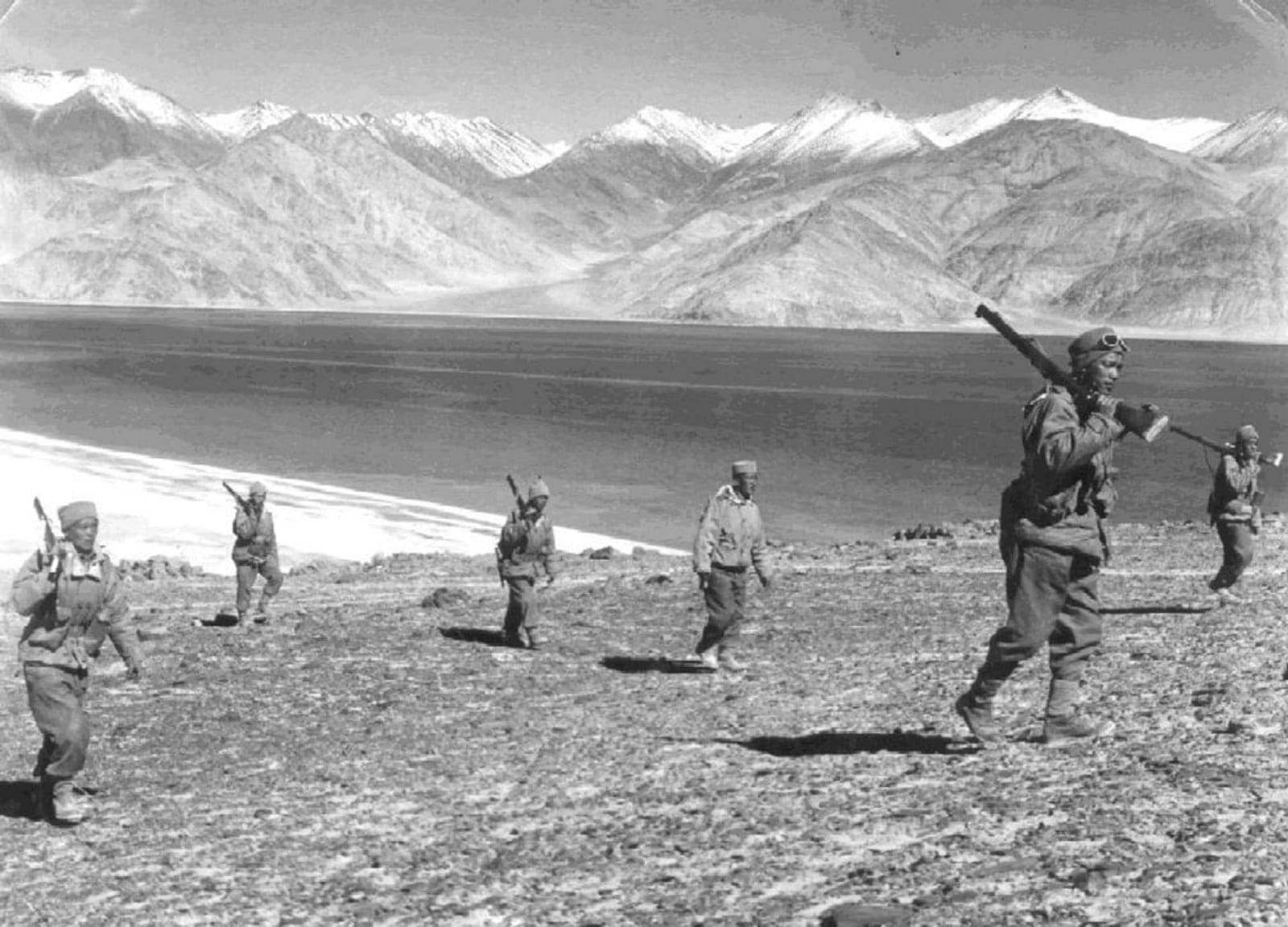
On 20 October 1962, Chinese troops attacked Indian army posts at both ends of the Himalayan border, in Ladakh in the west and in the North-East Frontier Agency (NEFA, today's Arunachal Pradesh) in the east. In a month of fighting, often at heights above 4,000 metres, the Indian army suffered a series of defeats. Then, on 21 November, China declared a ceasefire, withdrew its troops in the east to roughly where they had started, and kept the territory it wanted in the west. The war was short, and by the standards of the century it was small. But it shocked a country that had believed China was its friend, ended the reputation of its first Prime Minister as a master of foreign policy, and changed how India thought about defence (Srinath Raghavan, War and Peace in Modern India[1]).
How did friendship turn to war?
In the early 1950s India and the new People's Republic of China were on good terms. India was among the first countries to recognise the communist government, and when China took control of Tibet in 1950, India protested but accepted it. In April 1954 the two countries signed an agreement on trade with Tibet built on five principles of peaceful coexistence, known in India as Panchsheel. Nehru visited China that October, and Zhou Enlai came to India. "Hindi-Chini bhai-bhai", Indians and Chinese are brothers, became a popular slogan (Ramachandra Guha, India after Gandhi[3]).
The 1954 agreement said nothing about the border, and the two countries disagreed about where it lay. In the west, India claimed Aksai Chin, a high, almost uninhabited plateau between Ladakh and Tibet, on the basis of British surveys of the nineteenth century. China regarded it as part of Xinjiang and Tibet, and in 1956–57 built a road across it linking the two. India learned of the road only in 1957, from a Chinese newspaper. In the east, India held the McMahon Line, drawn by the British at the Simla Convention of 1914 along the crest of the Himalaya, which China had never accepted (Neville Maxwell, India's China War[2]).
In March 1959 a rising in Lhasa was crushed and the Dalai Lama fled to India, where he was given asylum. Relations went sharply downhill. In August 1959 Chinese troops attacked an Indian post at Longju in the east, and in October ten Indian policemen were killed in an ambush at the Kongka Pass in Ladakh. Zhou Enlai came to Delhi in April 1960 and, by most accounts, hinted at a bargain: China would accept the McMahon Line in the east if India accepted China's position in Aksai Chin. Nehru, under pressure from Parliament and public opinion, refused to negotiate on that basis.
What was the forward policy?
From November 1961, India adopted what was called the forward policy: setting up small army posts in territory it claimed, sometimes behind Chinese positions, to assert its claims and block further Chinese advances. Nehru and his Defence Minister, V. K. Krishna Menon, believed that China would not fight. The army chiefs had doubts but carried out the policy. Many posts were tiny, poorly supplied and could only be reached on foot or by air drop. The army had too few troops in the mountains, no proper winter clothing for many units, and old rifles (Srinath Raghavan, War and Peace in Modern India[1]).
Neville Maxwell, a British journalist whose book drew on the classified Indian army inquiry into the war, argued that the forward policy provoked China into a war it had tried to avoid. Srinath Raghavan and others have offered a more balanced picture, in which both governments misread each other, but they too agree that India's leaders badly overestimated their position and underestimated China's willingness to use force.
What happened in the fighting?
In September 1962 Chinese troops surrounded an Indian post at Dhola, on the Namka Chu below the Thag La ridge in the east. Ordered to drive them out, the Indian 7 Infantry Brigade took up positions along the river in a valley overlooked by the Chinese on the heights. On 20 October the Chinese attacked and destroyed the brigade, capturing its commander, Brigadier John Dalvi. Within days they took Tawang. In Ladakh, Chinese forces overran the forward posts in the Chip Chap and Galwan valleys (Neville Maxwell, India's China War[2]).
After a lull, China launched a second offensive in mid-November. In the east the Indian positions at Se La and Bomdila collapsed, and the road to the Assam plains lay open. At Walong, near the Burmese border, Indian units fought hard before withdrawing. In Ladakh, at Rezang La, a company of the 13th Battalion of the Kumaon Regiment under Major Shaitan Singh held a pass above Chushul on 18 November until almost every man was dead. Shaitan Singh was awarded the Param Vir Chakra after his death (Srinath Raghavan, War and Peace in Modern India[1]).
In Delhi, panic set in. Krishna Menon had already been forced to resign. The new corps in NEFA was commanded by Lieutenant General B. M. Kaul, a favourite of Nehru's with little combat experience, who fell ill on the eve of the Chinese attack. Nehru wrote to President Kennedy asking for American air support. The United States, which had been dealing with the Cuban Missile Crisis in the war's first week, sent transport planes and arms. Then, on 21 November, China announced a unilateral ceasefire and said it would withdraw twenty kilometres behind the line it had held in 1959. In the east it did so. In the west it kept Aksai Chin (Ramachandra Guha, India after Gandhi[3]).
What did the war change?
India's official figures recorded about 1,380 soldiers killed, around 1,700 missing and nearly 4,000 taken prisoner. The defeat was a national humiliation. On 27 January 1963, Lata Mangeshkar sang "Ae Mere Watan Ke Logon", a lament for the soldiers by the poet Pradeep, in front of Nehru in Delhi, and it remains the war's best-known memorial. Nehru, who had made non-alignment and friendship with China central to his foreign policy, never recovered his authority, and he died in May 1964 (Ramachandra Guha, India after Gandhi[3]).
The army was rapidly expanded and re-equipped, new mountain divisions were raised, and defence spending roughly doubled. The Indo-Tibetan Border Police was created to guard the frontier. An internal army inquiry, the Henderson Brooks–Bhagat report, examined the failures of 1962, but it has never been officially published. The defeat also changed India's neighbourhood. In 1963 China and Pakistan signed a border agreement, and Pakistan's leaders concluded that India was weaker than it looked, one of the reasons they would gamble on war three years later in the Indo-Pakistan War of 1965.
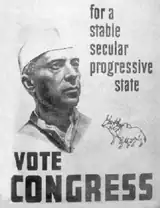
The border itself was never settled. The Line of Actual Control that emerged from the ceasefire still divides the two countries. There were clashes at Nathu La in Sikkim in 1967, and in 2020 soldiers on both sides died in hand-to-hand fighting in the Galwan valley, one of the places where the war of 1962 had begun. A decade earlier India had held its first general election in a mood of confidence, and the defeat of 1962 left its leaders far less sure of the country's strength (Srinath Raghavan, War and Peace in Modern India[1]).
India-China War timeline
| Date | Event |
|---|---|
| 1950 | China takes control of Tibet |
| April 1954 | Panchsheel agreement on Tibet; "Hindi-Chini bhai-bhai" |
| 1956–1957 | China builds a road across Aksai Chin |
| March 1959 | The Dalai Lama flees to India |
| August–October 1959 | Clashes at Longju and the Kongka Pass |
| April 1960 | Zhou Enlai visits Delhi; talks fail |
| November 1961 | India adopts the forward policy |
| 20 October 1962 | China attacks in Ladakh and on the Namka Chu |
| Late October 1962 | Tawang falls; first lull in the fighting |
| 31 October 1962 | Krishna Menon is removed as Defence Minister |
| 18 November 1962 | Battle of Rezang La; Se La and Bomdila fall around the same days |
| 21 November 1962 | China declares a unilateral ceasefire |
| 27 January 1963 | Lata Mangeshkar sings "Ae Mere Watan Ke Logon" |
| May 1964 | Nehru dies |