On 16 August 1946, the All-India Muslim League called on Muslims across India to observe a day of "Direct Action" to show their determination to win Pakistan. In most places the day passed with strikes and meetings. In Calcutta it began four days of killing between Hindus and Muslims. Gangs armed with knives, clubs and firebombs attacked people in the streets and in their homes, bodies lay in the lanes and floated in the Hooghly, and by the time the army restored order about 4,000 people were dead and tens of thousands had fled their neighbourhoods. The Great Calcutta Killing was followed within weeks by massacres in Noakhali and Bihar. Many historians see it as the point after which the Partition of India became very hard to prevent (Yasmin Khan, The Great Partition[1]).
Why did the League call for Direct Action?
In March 1946 Britain sent three Cabinet ministers to India to arrange a transfer of power. Their plan, announced on 16 May, rejected a fully sovereign Pakistan but proposed a loose union: a central government dealing only with defence, foreign affairs and communications, and provinces grouped into three sections, two of them with Muslim majorities in the north-west and the east. The Muslim League accepted the plan in June, seeing in the groups the basis of a future Pakistan. The Congress accepted it with its own reading of the grouping clauses (Ayesha Jalal, The Sole Spokesman[4]).
On 10 July, Jawaharlal Nehru, the new Congress president, told a press conference in Bombay that the Congress would enter the Constituent Assembly free of any commitments and suggested that the groups might never come about. To the League this proved that the Congress would use its majority to undo the bargain. At the end of July the League withdrew its acceptance of the plan and resolved on "direct action" to achieve Pakistan. Jinnah told the League's council that it was bidding goodbye to constitutional methods. The League set 16 August as Direct Action Day, with hartals and public meetings across India to explain its resolution (Ayesha Jalal, The Sole Spokesman[4]).
What happened in Calcutta?
Bengal had a Muslim League government, elected that spring and led by Huseyn Shaheed Suhrawardy. His government declared 16 August a public holiday, which the Congress and Hindu politicians protested would let League supporters force shops and offices to close. Calcutta was already tense. The city was crowded with migrants and the poor, still marked by the famine of 1943, and both communities had armed volunteer groups. League speeches and newspapers in the weeks before were full of militant language, and Hindu organisations prepared too (Suranjan Das, Communal Riots in Bengal[3]).
Fighting broke out in the morning, as League supporters tried to close Hindu shops and were resisted. In the afternoon a huge crowd gathered for a League rally at the Ochterlony Monument on the Maidan, where Suhrawardy spoke. As people went home, the attacks on Hindus and their shops spread across the city. On 17 August, Hindus and Sikhs struck back, and for two more days killing and burning went on in neighbourhood after neighbourhood, mostly against the poor: labourers, cart-pullers, slum-dwellers. The army was not deployed in force until the second and third days (Yasmin Khan, The Great Partition[1]).
Who was to blame has been argued since. Suhrawardy spent long hours in the police control room at Lalbazar, and British officials and Hindu leaders accused him of holding back the police and delaying the army. The Governor, Sir Frederick Burrows, was criticised for acting slowly. Historians such as Suranjan Das and Joya Chatterji have shown that the killing was organised on both sides: Muslim League volunteers and local strongmen were behind much of the violence on the first day, and Hindu groups, some linked to the Hindu Mahasabha and to Congress-minded volunteer bodies, carried out much of it afterwards. Both communities lost large numbers of people, and historians differ on which suffered more (Joya Chatterji, Bengal Divided[2]).
How did the violence spread?
In October 1946, Muslim mobs attacked Hindus in the districts of Noakhali and Tippera in East Bengal, where Hindus were a minority. Hundreds were killed, and there were forced conversions, abductions of women and the burning of homes. Tens of thousands fled. Reports of Noakhali, often exaggerated, then set off retaliation in Bihar from late October, where Hindu crowds killed several thousand Muslims in villages across the province. In November Muslims were massacred at the fair at Garhmukteshwar in the United Provinces, and in March 1947 Sikhs and Hindus were killed in the Rawalpindi district of the Punjab (Yasmin Khan, The Great Partition[1]).
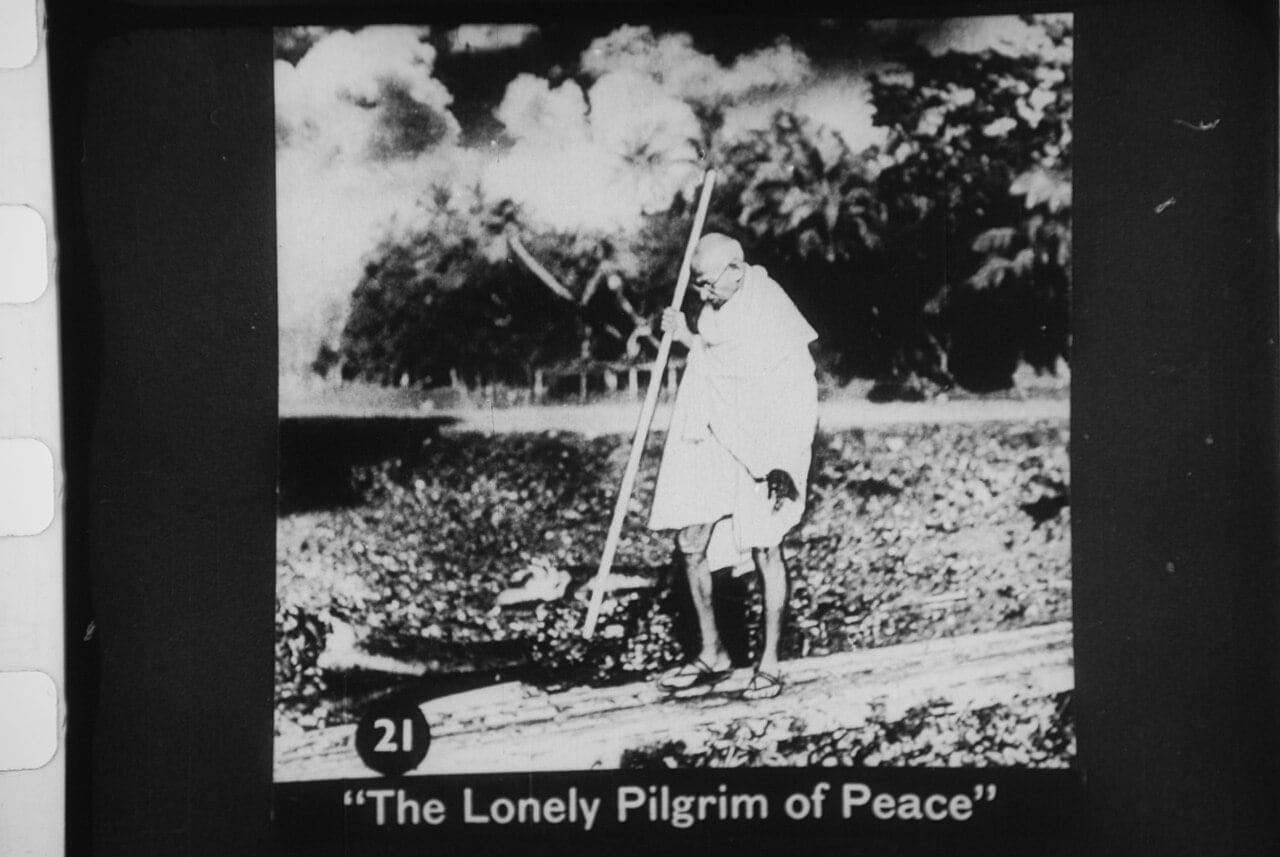
Gandhi went to Noakhali in November 1946. For four months, at the age of seventy-seven, he walked from village to village, often barefoot, staying in the homes of Muslims and Hindus and urging Hindus to return and Muslims to protect them. He then went to Bihar to do the same among the Muslim victims there. In August 1947, as independence came, he and Suhrawardy moved into a damaged house in Beliaghata, a riot-torn part of Calcutta, and when killing broke out again Gandhi fasted until both sides' leaders pledged peace. Calcutta was largely calm during the partition violence that devastated the Punjab, and Lord Mountbatten called Gandhi his one-man boundary force.
What changed after Calcutta?
Before August 1946, Partition was one possible outcome among several, and many in both the Congress and the League still saw the Pakistan demand as a bargaining position. After Calcutta, Noakhali and Bihar, leaders on both sides came to believe that Hindus and Muslims might not be able to live under one government without endless violence. The League entered the Interim Government in October 1946 but its ministers worked against the Congress from inside, and the League refused to join the Constituent Assembly. Within a year, the Congress accepted Partition as the price of peace, and Bengal itself was divided (Joya Chatterji, Bengal Divided[2]).
Riots had happened in India before. What was new in 1946 was the organised, neighbourhood-by-neighbourhood killing, the targeting of women and the flight of minorities, and all of it happened again on a far larger scale in the Punjab in 1947.
Direct Action Day timeline
| Date | Event |
|---|---|
| 24 March 1946 | The Cabinet Mission arrives in India |
| 16 May 1946 | The Cabinet Mission announces its plan |
| 6 June 1946 | The Muslim League accepts the plan |
| 10 July 1946 | Nehru's press conference in Bombay |
| 29 July 1946 | The League withdraws its acceptance and resolves on direct action |
| 16–19 August 1946 | The Great Calcutta Killing |
| 2 September 1946 | Interim Government led by Nehru takes office |
| October 1946 | Violence in Noakhali and Tippera; the League joins the Interim Government |
| Late October–November 1946 | Massacres in Bihar and at Garhmukteshwar |
| November 1946–March 1947 | Gandhi walks through Noakhali |
| March 1947 | Killings in Rawalpindi district |
| August–September 1947 | Gandhi and Suhrawardy in Beliaghata; Gandhi's Calcutta fast |