On 8 April 1929, two young men in the visitors' gallery of the Central Legislative Assembly in New Delhi threw two bombs onto the floor of the house, away from the benches. The bombs made a great noise and some smoke, and injured a few members slightly. The men, Bhagat Singh and Batukeshwar Dutt, threw down leaflets, shouted "Inquilab Zindabad", "Long live revolution", and waited to be arrested. They belonged to the Hindustan Socialist Republican Association, a small group of revolutionaries in their teens and twenties. Over the next two years their trials, hunger strikes and executions made them heroes across India, at the same moment as Gandhi was leading the non-violent Civil Disobedience Movement (Bipan Chandra et al., India's Struggle for Independence[4]).
Who were the HSRA?
The organisation began as the Hindustan Republican Association, founded in 1924 by revolutionaries in the United Provinces who had lost faith in Gandhi after he called off non-cooperation in 1922. In August 1925 its members robbed a train carrying government money at Kakori near Lucknow. Four of them, Ram Prasad Bismil, Ashfaqulla Khan, Roshan Singh and Rajendra Lahiri, were hanged in December 1927.
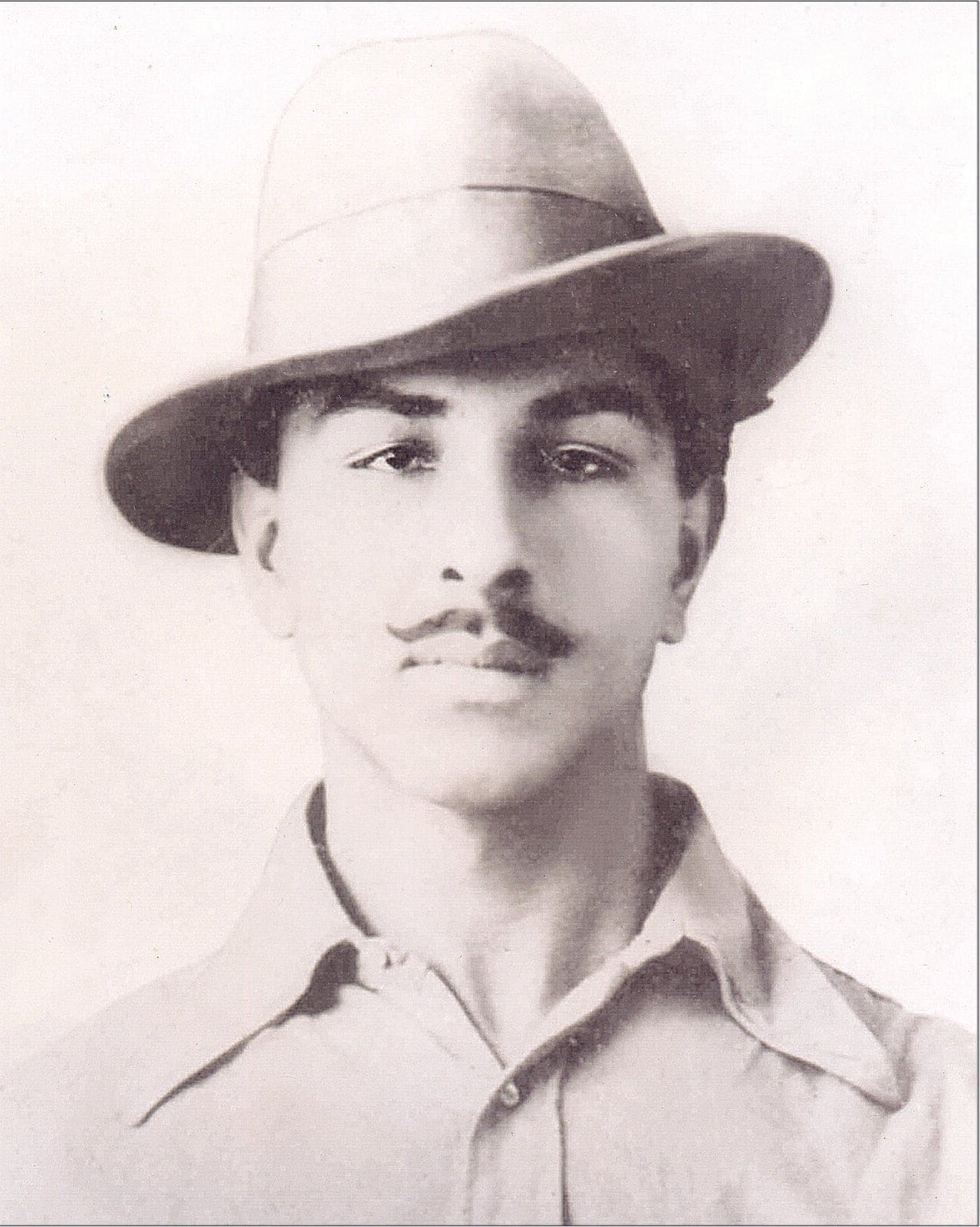
Bhagat Singh was born in 1907 near Lyallpur in the Punjab, into a family of nationalists: his uncle Ajit Singh had been deported in 1907 for organising peasants. As a boy of eleven he visited Jallianwala Bagh after the massacre of 1919. He studied at the National College in Lahore, read widely in socialist and anarchist writing, and in 1926 helped found the Naujawan Bharat Sabha, a youth organisation in the Punjab.
In September 1928 young revolutionaries from the Punjab, the United Provinces, Bihar and Rajasthan met among the ruins of Feroz Shah Kotla in Delhi and renamed their organisation the Hindustan Socialist Republican Association. The new name stated its goal: a socialist republic in which, they said, the exploitation of one person by another would end. Chandrashekhar Azad, who had escaped the Kakori arrests, led its armed wing (Bipan Chandra et al., India's Struggle for Independence[4]).
Why did they kill Saunders and bomb the Assembly?
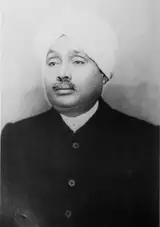
On 30 October 1928, police in Lahore charged a procession against the Simon Commission, and the Punjab leader Lala Lajpat Rai was beaten with lathis. He died on 17 November. The HSRA decided to kill James Scott, the police superintendent they held responsible. On 17 December, Bhagat Singh and Shivaram Rajguru shot dead a young assistant superintendent, John Saunders, mistaking him for Scott, and Azad shot a head constable, Chanan Singh, who chased them. Posters put up in Lahore the next day announced that Lajpat Rai had been avenged. Bhagat Singh cut his hair, put on a hat and left Lahore for Calcutta, travelling as the husband of Durgawati Devi, the wife of his comrade Bhagwati Charan Vohra (Kuldip Nayar, Without Fear[1]).
The Assembly bombing four months later had a different purpose. The government was pushing through two laws, the Public Safety Bill, which allowed it to deport foreign radicals, and the Trade Disputes Bill, which restricted strikes. The HSRA planned the bombing as a protest that would hurt no one and turn the courtroom into a platform. Its leaflet began with a line taken from the French anarchist Auguste Vaillant: "It takes a loud voice to make the deaf hear." Bhagat Singh and Dutt had decided in advance that they would not run (Bhagat Singh, Select Speeches and Writings[3]).
What happened at the trials?
In their statement to the court, the two men argued that revolution did not mean bloodshed or personal vendettas. They wrote that "the sword of revolution is sharpened on the whetting-stone of ideas". They were sentenced to transportation for life in June 1929. By then the police had found HSRA bomb factories in Lahore and Saharanpur, Sukhdev and others had been arrested, and two members, Jai Gopal and Hans Raj Vohra, had turned approver and agreed to give evidence. Bhagat Singh was brought back to Lahore to stand trial for the killing of Saunders with more than twenty others in what became known as the Lahore Conspiracy Case.
In jail the prisoners went on hunger strike, demanding to be treated as political prisoners, with books, newspapers and decent food. Jatin Das, a Bengali revolutionary who had taught the group to make bombs, refused food for 63 days and died on 13 September 1929. His body was taken by train from Lahore to Calcutta, and crowds gathered at the stations along the way (Kuldip Nayar, Without Fear[1]).
The trial dragged on, with the accused shouting slogans and refusing to cooperate. In May 1930 the Viceroy, Lord Irwin, issued an ordinance that set up a special tribunal of three judges, with no appeal except to the Privy Council in London, and allowed the case to continue without the accused present. On 7 October 1930 the tribunal sentenced Bhagat Singh, Sukhdev and Rajguru to death. A. G. Noorani, who studied the record, argued that the special tribunal and the way it was run denied the accused a fair trial (A. G. Noorani, The Trial of Bhagat Singh[2]).
How did it end?
The movement lost its other leaders the same year. Bhagwati Charan Vohra was killed in May 1930 when a bomb he was testing exploded. On 27 February 1931, police surrounded Chandrashekhar Azad in Alfred Park in Allahabad. He fought until, by the accepted account, he used his last bullet on himself so that he would never be taken alive.
In jail Bhagat Singh read and wrote constantly. In October 1930 he wrote "Why I Am an Atheist", a reply to a fellow prisoner who thought his rejection of God was vanity. His prison notebook is full of notes from Marx, Lenin, Bertrand Russell and others (Bhagat Singh, Select Speeches and Writings[3]).
Early in 1931 Gandhi negotiated the Gandhi–Irwin Pact, and many Indians hoped it would save the three condemned men. Gandhi raised the sentences with Irwin, but the pact did not include them, and how hard he pressed has been argued about ever since. Bhagat Singh, Sukhdev and Rajguru were hanged in Lahore Central Jail on the evening of 23 March 1931, a day earlier than expected. Their bodies were taken out secretly and cremated near Hussainiwala on the Sutlej, where their memorial now stands. Gandhi was met with black flags when he arrived for the Congress session at Karachi a few days later, and the Congress passed a resolution praising the men's bravery while dissociating itself from political violence (Bipan Chandra et al., India's Struggle for Independence[4]).
Bhagat Singh was twenty-three. Batukeshwar Dutt was sent to the Andaman Islands and lived until 1965. Today Bhagat Singh is claimed by almost every political tradition in India, from the left, which reads his socialism and atheism, to nationalists who remember the young man in the hat, though his own writings show he wanted to be remembered for his ideas.
HSRA timeline
| Date | Event |
|---|---|
| October 1924 | Hindustan Republican Association founded |
| 9 August 1925 | Kakori train robbery |
| December 1927 | Bismil, Ashfaqulla Khan, Roshan Singh and Lahiri hanged |
| 8–9 September 1928 | HSRA founded at Feroz Shah Kotla, Delhi |
| 30 October 1928 | Lala Lajpat Rai beaten at Lahore; he dies on 17 November |
| 17 December 1928 | John Saunders shot dead in Lahore |
| 8 April 1929 | Bombs thrown in the Central Legislative Assembly |
| 13 September 1929 | Jatin Das dies on hunger strike |
| May 1930 | Special tribunal set up by ordinance |
| 7 October 1930 | Death sentences for Bhagat Singh, Sukhdev and Rajguru |
| 27 February 1931 | Chandrashekhar Azad killed in Allahabad |
| 23 March 1931 | Bhagat Singh, Sukhdev and Rajguru hanged in Lahore |