When British rule ended in August 1947, sovereignty did not automatically extend across the whole subcontinent. Roughly 565 princely states, ranging from tiny estates to the sprawling territory of Hyderabad, had never been directly administered by the British Crown; each was ruled internally by a hereditary prince while accepting British "paramountcy" — a relationship of subordination on matters of foreign policy, defence, and succession. The Indian Independence Act, 1947, which created the two new dominions of India and Pakistan, ended paramountcy on 15 August 1947, formally leaving every state free to accede to either new dominion or to remain outside both. Together, these states covered roughly two-fifths of the subcontinent's land area and close to a quarter of its population, and their possible fragmentation into dozens of separate sovereignties was among the most serious threats facing the new Indian union.
Persuasion first, pressure when it failed
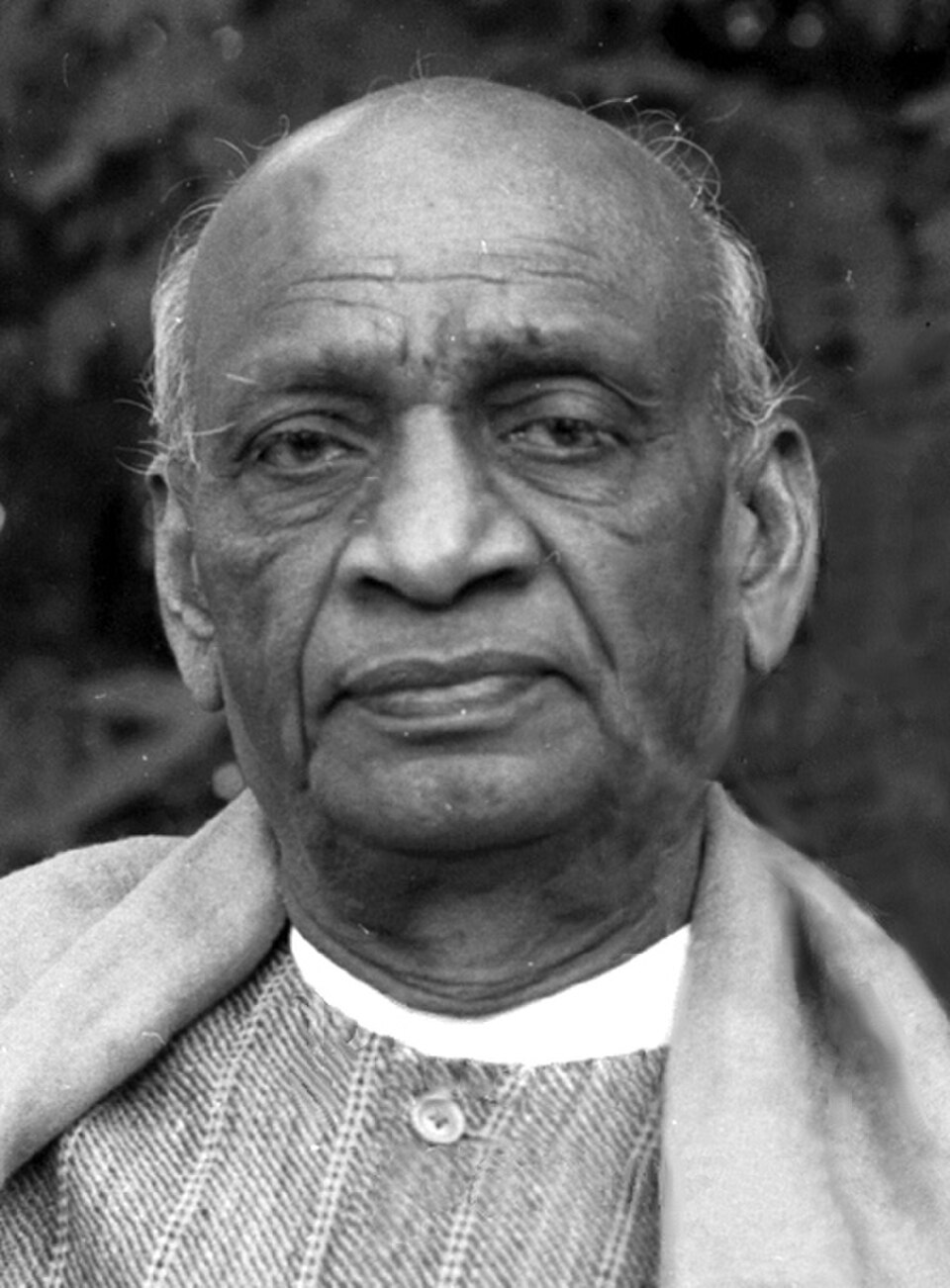
Responsibility for handling this problem fell to Vallabhbhai Patel, the Congress leader who became India's deputy prime minister and minister for states, and to V. P. Menon, an Indian Civil Service officer who had earlier helped negotiate the transfer of power itself and now became secretary of the new States Department. Their approach combined diplomacy with a clear sense of leverage. Menon drafted a short, standard Instrument of Accession under which a ruler surrendered control over only three subjects — defence, external affairs, and communications — to the government of India, while retaining authority over internal administration. Patel then worked the political and personal channels: he appealed to rulers' sense of shared nationality, pointed out that most states had no realistic prospect of independent survival once British protection ended, and made clear that generous privy purses and continued ceremonial status awaited rulers who acceded promptly. Given how few states bordered Pakistan, and how strongly public sentiment inside most states already favoured joining India, the great majority of rulers signed the Instrument of Accession before or within days of 15 August 1947 — a remarkably fast resolution for what had looked, only months earlier, like a source of prolonged chaos.
Three states that would not sign
Three states did not fall into line so easily, and each was resolved differently. Junagadh, a small state on the Gujarat coast with a Hindu-majority population but a Muslim ruler, announced accession to Pakistan in August 1947 despite having no land border with it; India responded with an economic blockade, the Nawab fled the state, and an interim government took over pending a plebiscite in February 1948 that went overwhelmingly in favour of India. Hyderabad, the largest and wealthiest princely state, sat entirely inside Indian territory under a Muslim Nizam who wanted to remain independent; talks broke down amid rising violence from the Nizam's irregular Razakar militia and a separate Communist-led peasant uprising in Telangana, and in September 1948 the Indian army moved into the state in a five-day operation code-named Operation Polo. Hyderabad's forces surrendered and the state acceded to India, but the operation and the communal violence that followed it left a heavy and disputed toll: a government-appointed inquiry, the Sunderlal Committee, estimated tens of thousands killed, while some later historians have argued the true figure was considerably higher — a question that, unlike the broad outcome of accession itself, has never been fully settled.
Jammu and Kashmir presented a third, more lasting problem. Its Hindu ruler, Maharaja Hari Singh, presided over a Muslim-majority population and initially sought to keep the state independent of both dominions. That hope ended in October 1947, when armed tribal fighters from Pakistan's northwest frontier invaded the state; Hari Singh appealed to India for military help and, in response, signed the Instrument of Accession on 26 October 1947. India's government accepted the accession but linked it to a promised plebiscite once the fighting stopped and normal conditions returned — a plebiscite that, amid the war that followed and a ceasefire brokered by the United Nations at the start of 1949, was never held. Kashmir's status has remained a live dispute between India and Pakistan ever since, in a way that sets it apart from the otherwise largely completed integration of the rest of princely India.
From accession to full integration
Signing the Instrument of Accession was only the first step. Over the following two years, Menon's department negotiated further Merger Agreements that dissolved hundreds of smaller states directly into neighbouring Indian provinces, while grouping others — including Saurashtra, the princely states of Rajasthan, and the Punjab states union known as PEPSU — into new administrative unions. By the time India's Constitution came into force in January 1950, the patchwork of princely India had been reorganized into the states and unions that formed part of the new republic, an outcome that owed as much to Patel and Menon's mix of persuasion and firmness as it did to any inevitability in the states' choice to join.